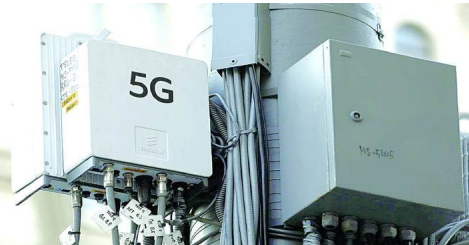
Nigeria’s mobile landscape has moved toward newer network generations, but 5G is still out of reach for the majority of users because of expensive handsets, spotty coverage and high infrastructure costs, according to recent data and industry commentary.
What do the latest connection statistics reveal?
In May 2023, 2G accounted for 58.36 % of reported mobile connections, 4G held 25.06 % and 5G was a mere 0.12 %. By August 2026, 4G surged to 54.77 % while 2G fell to 36.05 % and 5G rose to 4.92 % — figures released by the Nigerian Communications Commission (NCC). The numbers show progress but also highlight the slow trickle of the newest technology to the broader populace.
Why are 5G‑compatible phones so costly?
Kingsley Uwazie, Chief Technology Officer of NATCOM Development and Investment Limited (trading as NTEL), explained that Nigerians have a strong appetite for data, yet the price of devices capable of accessing 5G creates a major barrier. “The 5G ecosystem is in its maturity phase. It has been proven that there is an appetite. Nigerians have an appetite to consume data. But there is a barrier to acquiring the devices and using the technology,” he said.
Consumers need 5G‑enabled smartphones, but even with subsidies from operators such as MTN Nigeria and Airtel Nigeria, the price gap remains wide. A handset that costs about N50,000 after a subsidy can exceed N200,000 without it. The market contracted by 11 % in Q2 2026, according to research firm Omdia, as rising memory‑chip costs—partly driven by AI and data‑centre demand—pressurise manufacturers.
Across Africa, sub‑$100 smartphone shipments fell 34 % year‑on‑year in the same quarter. In Nigeria, a Condia assessment showed price hikes for models from Tecno, Infinix, Oppo and itel between January and June 2026. For example, the itel S‑Series Ultra’s midpoint price rose from roughly N263,500 to N316,400, while the Infinix Zero Series moved from about N550,000 to N637,500. Omdia warned that, if component costs stay high, Nigerian smartphone prices could climb another 15‑30 % before the end of 2026.
How uneven is the current 5G coverage?
Even owners of compatible phones face inconsistent service. MTN’s 2023 pilot listed Lagos, Abuja, Port Harcourt, Ibadan, Kano, Owerri and Maiduguri as launch cities, while Airtel began rollout in Lagos, Ogun, Rivers and the Federal Capital Territory, focusing on selected zones. A December 2025 Ookla‑based analysis showed Lagos’s average 5G coverage gap at 55.4 %, meaning a 5G‑capable phone could not connect for more than half the measured time. MTN’s gap was about 50 % and Airtel’s 77 %. Abuja recorded a 47.4 % gap. These figures reflect time‑based access gaps rather than land‑area coverage, underscoring the difficulty of obtaining reliable service.
What drives the high operating costs for 5G sites?
Deploying 5G demands substantial investment in infrastructure, power and transmission. Uwazie estimated that running a telecom site in Nigeria costs between $2,000 and $3,000 per month, compared with roughly $300 in China and $500 in India. “If you deploy 5G in areas where only two people have 5G‑enabled phones, it means those two people can’t cater for the operating expenditure required to deploy 5G. The operating expenditure of running mobile networks in Nigeria is extremely high. It is a combination of both power and transmission, keeping that site up,” he explained. The limited pool of compatible devices therefore weakens the business case for expanding coverage, especially in low‑subscriber regions.
Is digital inclusion at risk?
The hurdles extend beyond 5G to broader digital inclusion goals. The GSMA’s smartphone adoption report indicated that only 27 % of Nigerians owned a smartphone in 2024, leaving a mobile‑internet usage gap close to 60 %. The NCC announced in April 2026 that it was exploring ways to make cheaper smartphones available and that Nigeria had been chosen for pilot projects by the GSMA’s Handset Affordability Coalition to boost access to affordable 4G phones. However, rising global component costs threaten to derail these initiatives.
Affordable devices and dependable connectivity are vital for mobile banking, digital education, e‑commerce and job creation. Expanding network reach alone will not bridge the divide if consumers cannot afford internet‑enabled phones. For 5G to become mainstream in Nigeria, handset prices must fall, coverage must improve and operators need sustainable cost‑reduction strategies. Until these barriers are removed, 5G adoption will stay concentrated among affluent users in well‑served locations.