
Dapo Abiodun, the Governor of Ogun State, has stated that prior to May 2023, Nigeria's most significant economic hardship was not the fuel subsidy, but rather the foreign exchange subsidy. He asserts that it caused deeper damage to the naira and investor confidence.
During a statement made on Tuesday at the National Economic Council (NEC) Conference held at the State House in Abuja, Abiodun explained that although the petrol subsidy is a politically sensitive issue that garners public attention, it has had less of a detrimental effect than the prolonged foreign exchange interventions, which distorted the market and promoted speculation.
He referenced comments made by Olayemi Cardoso, the Governor of the Central Bank of Nigeria (CBN), during a panel discussion at the conference, who identified forex subsidies as a significant drain on the economy.
Abiodun highlighted that the dual subsidy system has undermined trust in the naira, compelling both individuals and businesses to prefer holding dollars due to the rapid depreciation of the local currency, making it less attractive as a reserve.
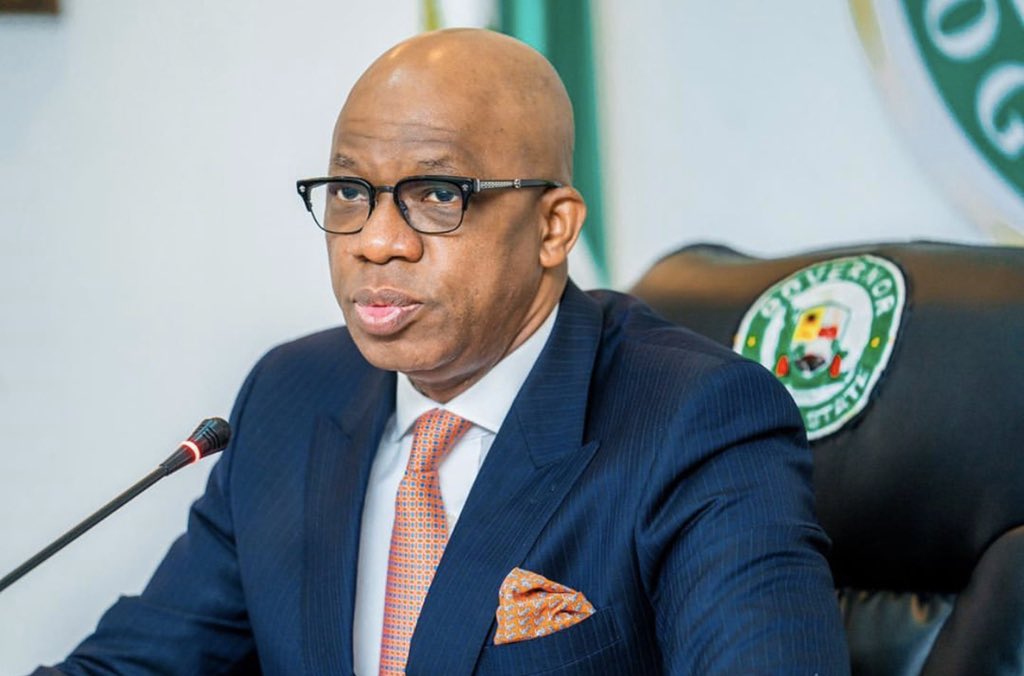
Despite these issues, he acknowledged that recent fiscal and monetary reforms introduced by President Bola Tinubu’s administration have contributed to stabilizing the foreign exchange market and restoring confidence.
"There is stability in the forex market. Confidence in the market has returned, and there is renewed faith in holding the naira," Abiodun articulated.
The governor underscored that macroeconomic stability is crucial for attracting investments, warning that the mere existence of infrastructure is not enough to drive capital inflows without reliable and consistent policies in place.
Abiodun mentioned that investors are primarily focused on the transparency of the exchange rate and the ability to repatriate their returns, rather than just the physical assets, and he cautioned that uncertainty in the forex landscape serves as a deterrent to long-term investment.
While he acknowledged the reforms undertaken thus far as significant, Abiodun stressed that forthcoming efforts must emphasize enhancing security, improving electrical supply stability, and accelerating the development of infrastructure.
He pointed out that security is critical for investment, asserting that even the best policies and roads will not entice capital if communities remain unsafe.
Furthermore, he spoke about substantial federal infrastructure projects, such as the Lagos–Calabar Coastal Highway and the Sokoto–Badagry corridor, as transformative initiatives that could enhance trade, mobility, and national integration.
From Ogun State's viewpoint, the coastal highway has positively impacted the potential for port development and facilitated the movement of goods.
In terms of power sector reforms, Abiodun commended the President for approving legislation that allows states to generate, transmit, and distribute electricity, referring to it as a pivotal moment for the sector.
He revealed that Ogun State has initiated regulations in its electricity market and is making efforts to establish a state grid to attract investments and foster public-private partnerships.
Additionally, Abiodun remarked that enhanced cooperation between federal and state governments, coupled with discussions surrounding state policing and further devolution of powers, is vital for sustaining reforms and tackling security challenges at the grassroots level.
Comments (0)
You must be logged in to comment.
Be the first to comment on this article!