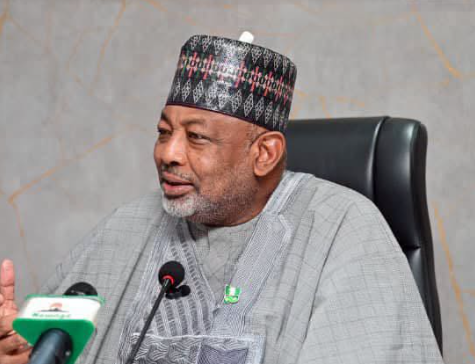
Between June and August 2027, an estimated 33.5 million Nigerians could face severe food and nutrition insecurity, according to a technical projection by the Cadre Harmonisé. Speaking on Monday, the Minister of Agriculture and Food Security, Senator Abubakar Kyari, cautioned political actors against interpreting this technical evaluation as an electoral assessment of the Federal Government led by President Bola Tinubu.
What are the key facts regarding the food security projection?
- The projection indicates that 33.5 million people may experience severe food insecurity during the lean season between June and August 2027.
- The figure represents a slight decrease compared to the 34.8 million people projected for the same timeframe in 2026.
- The assessment was formulated by the Permanent Inter-State Committee for Drought Control in the Sahel (CILSS) alongside international partners like the Food and Agriculture Organisation (FAO) and the World Food Programme (WFP).
- Minister Abubakar Kyari stated: “Food insecurity is a longstanding and structural challenge that has developed over many years and predates this administration.”
How did the government respond to the opposition's claims?
Minister Kyari strongly criticized opposition figures attempting to tie the analytical forecast to the administration's re-election ambitions, labelling such narratives as deliberate distortions. He explained that the Cadre Harmonisé framework is designed strictly to identify nutrition and agricultural risks early, enabling governments and global partners to deploy timely interventions rather than forecast election outcomes.
The assessment was developed with technical support from several bodies, including the United Nations Children's Fund (UNICEF), FEWS NET, and the Integrated Food Security Phase Classification (IPC). Kyari pointed out that the methodology does not carry out retrospective evaluations to verify the accuracy of past predictions.
What factors are driving food insecurity in the country?
According to the Ministry of Agriculture and Food Security, the primary drivers of agricultural vulnerabilities include climate change, erratic rainfall patterns, prolonged dry spells, and disruptions linked to the Super El Niño phenomenon. These environmental conditions have continuously hindered planting schedules, particularly for smallholder farmers who rely heavily on rain-fed agriculture.
Despite these structural hurdles, the federal administration has rolled out several mitigating strategies. These include expanding access to fertilizers and agricultural inputs, boosting farm mechanization, scaling up dry-season farming, and improving agricultural financing through the Bank of Agriculture. Furthermore, enhanced security in previously volatile farming districts—such as Marte and Guzamala in Borno State—has allowed data collectors to access regions that were once impassable, enabling more accurate assessments.
While acknowledging that these measures will not eradicate structural food deficits overnight, Kyari maintained that the agricultural sector has made notable strides under the current leadership. He urged politicians to avoid reducing the welfare of millions of citizens to mere campaign rhetoric, assuring the public that the administration remains open to constructive criticism while utilizing empirical data to protect livelihoods.