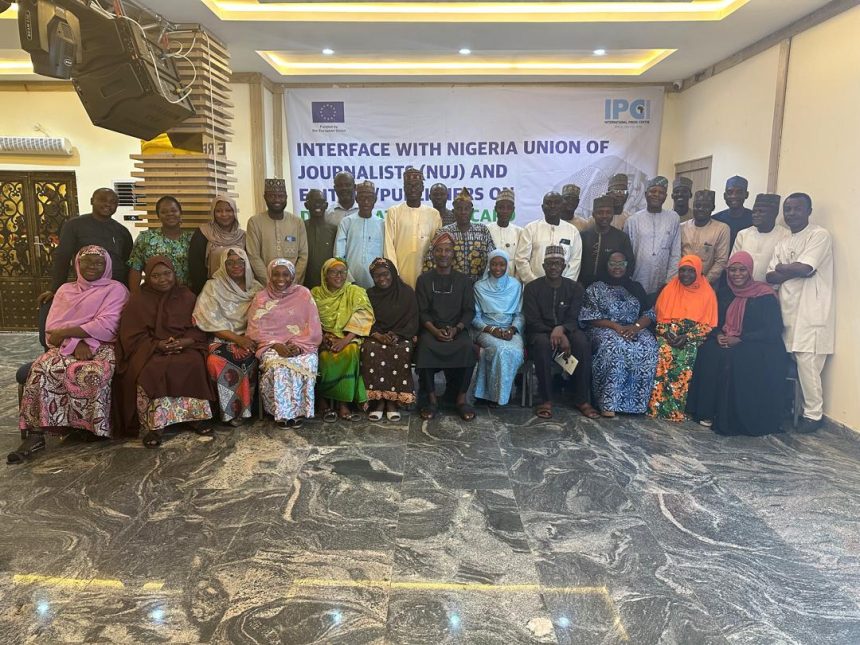
An Associate Professor in the Department of Information and Media Studies at Bayero University, Kano, Ruquayyah Yusuf Aliu, has cautioned that the increasing adoption of artificial intelligence and other emerging technologies is making it progressively harder for members of the public to tell apart authentic digital content from fabricated images, videos, and misleading information. She made the appeal while addressing journalists during a media training programme designed to equip them with the skills needed for accurate, in-depth, and accountable election reporting ahead of the 2027 general elections.
Aliu urged media practitioners to strengthen their investigative reporting, fact-checking, and accountability journalism as the 2027 elections approach, so as to curb the spread of misinformation and disinformation across the country. She said the training was intended to remind journalists of their professional obligations during the electoral period, especially the importance of verifying information before publishing or sharing it.
According to her, fact-checking would help journalists establish whether information was authentic, AI-generated, or deliberately manipulated. She maintained that truth remains the foundation of journalism, adding that proper verification would reinforce public confidence in the media and shield citizens from misleading information.
'To journalists, fact-checking means ensuring that everything we use is the truth and nothing but theought to be the truth,' she said.
Aliu also encouraged journalists to take a proactive stance in identifying and debunking fake news, misinformation, and disinformation, particularly as political activities gather momentum ahead of the 2027 elections.
Also speaking, Olusola Oludiran, a fact-checker and reporter with Nigeria Democratic Report, the media arm of the International Press Centre (IPC), said election coverage should go beyond merely reporting political campaigns and the activities of politicians. He stressed the need for journalists to hold political actors accountable.
He observed that the information space is increasingly saturated with conflicting narratives, false claims, and manipulated content, making it difficult for citizens to determine which information to trust.
Oludiran warned that the growing sophistication of AI-generated materials, including deepfake videos, manipulated images, and misleading audiovisual content, poses a serious threat to credible election reporting.
He further disclosed that the training was part of a series of capacity- building programmes being organised nationwide to prepare journalists for the challenges posed by emerging technologies and information disorder.
According to him, the rapid advancement of technology requires journalists to continuously update their professional skills to avoid being overtaken by increasingly sophisticated digital misinformation.
Earlier, Mr Abiodun Adeleke, IT and Social Media Officer of the IPC, who delivered the welcome remarks on behalf of the Executive Director, Dr Lanre Arogundade, explained that the engagement was organised by the IPC under Component 4 (Support to Media) of the European Union Support to Democratic Governance in Nigeria (EU-SDGN III) Programme.
Adeleke said the approaching 2027 general elections provided an opportunity for media organisations to reflect on their responsibilities and strengthen their capacity to provide citizens with credible, balanced, inclusive, and public-interest information.
He noted that elections extend beyond political campaigns, rallies, candidates, and the announcement of results, stressing that they also involve citizens' aspirations, concerns, and expectations of leadership.
He warned that sensationalism, unverified claims, inflammatory rhetoric, and the unchecked spread of misinformation and disinformation could undermine public confidence, deepen social divisions, and weaken democratic institutions.
He therefore advocated a shift from event-driven electoral coverage to more substantive, issue-based, and citizen-centred journalism.
Adeleke challenged journalists to examine whether their reports adequately addressed issues affecting Nigerians, including the economy, education, healthcare, security, employment, and infrastructure.
He also stressed the need for media organisations to give greater attention to women, young people, persons with disabilities, and other underrepresented groups in electoral reporting.
He maintained that fact-checking and verification should be integral to responsible electoral journalism rather than optional additions to professional practice.
Adeleke said the success of the engagement should be measured not only by the quality of discussions but also by the stories published, claims verified, citizens' concerns amplified, and professional standards upheld ahead of the elections.
He appreciated the Kano State Council of the Nigeria Union of Journalists (NUJ) for supporting the organisation of the engagement, as well as the resource persons for accepting to lead the deliberations.