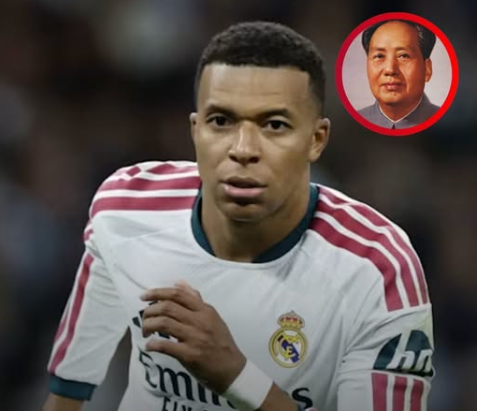
Kylian Mbappé, the 27‑year‑old French striker for Real Madrid, lost two major Chinese sponsorships after a video surfaced in which he appeared to mock former Communist Party leader Mao Zedong, prompting the brands to terminate their contracts immediately.
The clip, which circulated on social media platforms, shows Mbappé laughing and describing a meme that placed his face on the portrait of “some guy – I think he’s a Chinese dictator.” The remark was interpreted as a direct jab at Mao, whose legacy remains highly sensitive in mainland China.
In China, any perceived disrespect toward Mao, who died in 1976 and is regarded as the nation’s founding father, is deemed a serious breach of national sentiment and is socially prohibited.
Why did Dongpeng end its partnership?
Dongpeng issued a statement declaring a zero‑tolerance stance toward behaviour that offends Chinese national feelings. The company said, “Our company firmly opposes and has a zero‑tolerance policy towards any behaviour that offends national sentiments. With immediate effect we are terminating all cooperation with Kylian Mbappé.”
What was Mengniu’s response?
Mengniu, China’s largest dairy producer, echoed the same position, announcing, “With immediate effect our company is terminating all cooperation with Kylian Mbappé. Mengniu firmly opposes and has a zero‑tolerance policy towards any words or actions that hurt the feelings of the Chinese people.”
How did Chinese football media react?
Dongqiudi, one of the country’s leading online football outlets, described Mbappé’s comments as “offensive to China and the Chinese people” and said they “have hurt the feelings of Chinese football fans and the Chinese people.”
The incident underscores the delicate balance international athletes must maintain when engaging with audiences in markets where political symbols are tightly regulated. While Mbappé’s on‑field performances continue to attract global attention, his off‑field remarks have now resulted in a swift commercial backlash in one of the world’s largest consumer markets.
Mao Zedong remains a protected figure in Chinese public discourse, and brands operating there often adopt strict policies to avoid any perception of disrespect. The rapid termination of contracts by both Dongpeng and Mengniu reflects this broader corporate caution.
The fallout serves as a reminder that statements made by high‑profile athletes can have immediate financial repercussions, especially when they intersect with culturally sensitive topics in powerful markets.