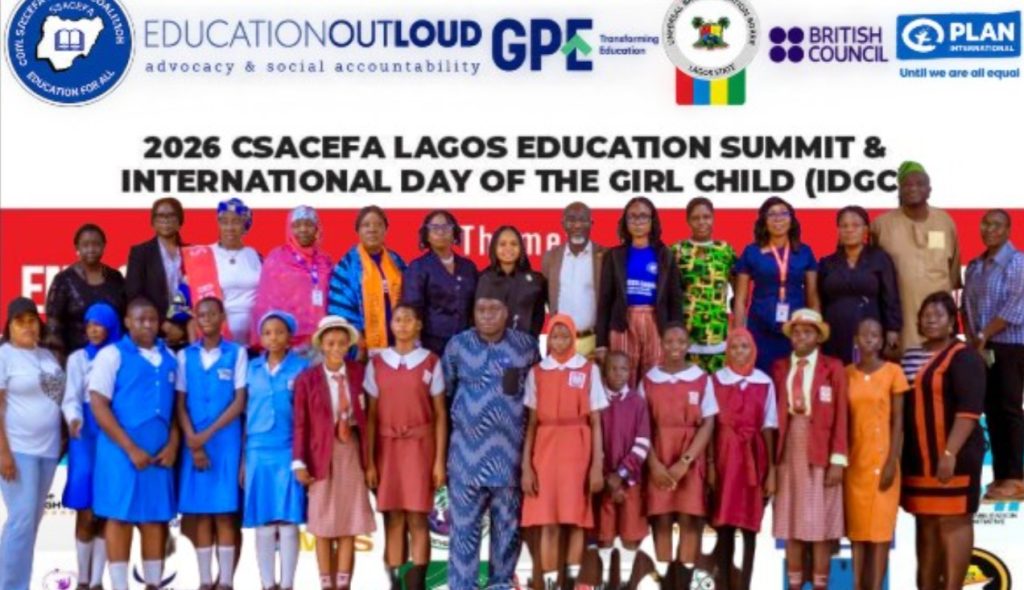
On 11 October 2026, the [Coalition of Civil Society Action for Education for All (CSACEFA)](https://en.wikipedia.org/wiki/Civil_society) Lagos State Chapter convened the Lagos Education Summit and International Day of the Girl Child at the State Universal Basic Education Board (SUBEB) Hall in Maryland, Lagos, demanding higher spending on girls’ education, tighter child‑protection measures and a united front to end child marriage.
Key facts from the summit:
- The event was themed “End Child Marriage and Invest in Girls’ Rights.”
- CSACEFA Lagos Coordinator Stella Olubunmi Francis highlighted the stigma faced by pregnant schoolgirls and urged the creation of pathways for them to stay in school.
- SUBEB Board Secretary Lamidi Akeem, speaking for Executive Chairman Dr Akeem Babatunde Shittu, reiterated the [Lagos State Government](https://lagosstate.gov.ng) commitment to the domesticated Child Rights Act and called on all agencies to fulfil their child‑related duties.
- Lawyer and FIDA Nigeria member Olubola Afolabi pressed for stronger legal accountability and better access to education as tools against child marriage.
- Margaret ChiChi Nkire, CSACEFA Lagos Provost and founder of LEADIN AFRICA, advocated for gender‑responsive education financing and the removal of hidden fees that undermine free schooling.
- Representatives from Plan International Nigeria, Save the Children, the British Council and the National Human Rights Commission pledged to improve coordination and funding.
**What did the summit aim to achieve?**
The gathering sought to shape rights‑based education policies, eliminate covert charges that erode free education, and provide targeted support for pregnant, married or parenting girls so they can remain in school without discrimination.
**Why is child marriage a priority?**
Olubola Afolabi asked, “Why does child marriage happen? What happens to the girls?” She urged stakeholders to confront cultural, economic and legal drivers of the practice, noting its detrimental impact on girls’ health, education and future prospects.
**How will financing be improved?**
Panelists called for gender‑responsive budgeting, sustainable funding streams and the removal of financial barriers that prevent vulnerable households from sending girls to school. Aishatu Usman Bukar of Plan International emphasized the need for adequate, long‑term investment.
**What message resonated with students?**
Esther Matthew, a student participant, said the summit broadened her view of possibilities beyond marriage, inspiring her to envision a future as an entrepreneur and to act on the “See Something, Say Something” campaign by reporting threats to children’s safety.
The summit also featured cultural dance and spoken‑word performances celebrating the girl child, and gathered representatives from Save the Children International Nigeria, the National Association of Proprietors of Private Schools, Child Protection Network Lagos, the National Youth Council of Nigeria, mothers’ groups and School‑Based Management Committees. Attendees called for stronger collaboration among government bodies, civil society, development partners, schools and communities to safeguard girls’ rights and ensure that poverty, pregnancy, early marriage and discrimination do not deny them education.