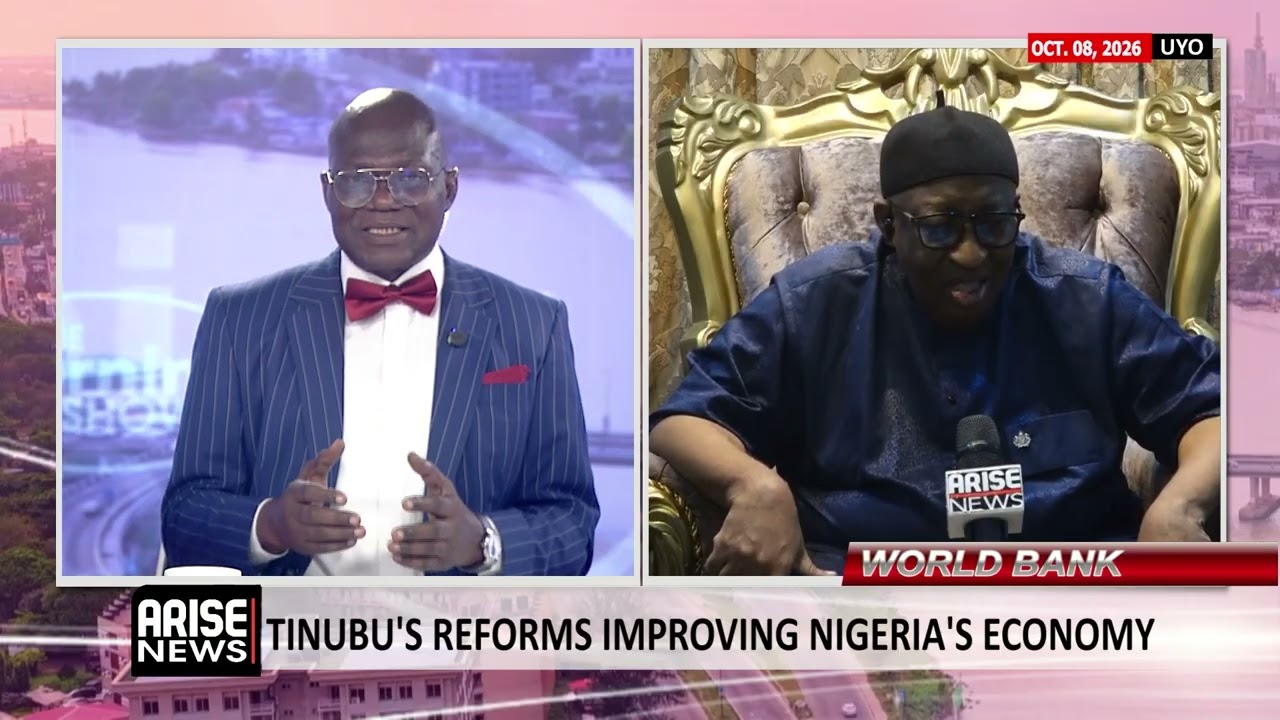
Professor Akpan Ekpo, a veteran Nigerian economist, told ARISE NEWS on Thursday that the World Bank’s projected 4.1 % GDP growth for Nigeria is far too modest to meaningfully cut poverty, generate jobs or reshape the economy, and that sustained double‑digit growth over 15‑20 years is required.
**Why is 4.1 % growth considered insufficient?**
Ekpo explained that growth below double‑digit cannot dent poverty levels. He quoted the World Bank’s own admission that the forecast “is weak, inadequate to create jobs and opportunities.” He added, “We should not celebrate 4.1 % growth; we need at least 10 % sustained growth for a decade or more.”
**What does Ekpo say about the structure of the economy?**
He criticised the neglect of the manufacturing sector, noting that over the past six decades it has contributed less than 12 % of GDP and accounts for only about 2 % of total exports, while manufactured imports make up roughly 48 % of all imports. Ekpo argued that a transformed economy should see manufacturing contribute at least 40 % of GDP.
**Which reforms does the World Bank recommend?**
According to Ekpo, the Bank’s report correctly highlights the need for reliable electricity, broadband internet, infrastructure and human‑capital development. However, he warned that “the 4.1 % growth cannot achieve those things.”
**How should the government address power and poverty?**
Ekpo urged deliberate government action on electricity supply and poverty reduction, stating that fixing power “is not rocket science” and would unlock double‑digit growth. He stressed that both fiscal and monetary policies must be coordinated, not merely symbolic.
**What about macro‑economic stability?**
He cautioned against labeling Nigeria’s macro‑economy as stable, pointing out that while the Central Bank of Nigeria ([CBN](https://cbn.gov.ng)) has restored some integrity and lowered the monetary policy rate, fiscal challenges—weak revenue, high governance costs and rising debt—remain unresolved.
**What role should the state play in development?**
Ekpo argued that fast‑growing economies such as China, Singapore, Malaysia and Indonesia succeeded by pairing a strong state sector with private enterprise, rather than relying on pure market‑driven or trickle‑down approaches. He called for a shift from a consumption‑driven to a production‑driven economy, emphasizing domestic manufacturing of non‑oil goods for export.
**What is the outlook for monetary policy?**
He acknowledged progress by the CBN in reducing the Monetary Policy Rate by 350 basis points, but noted that commercial lending rates remain around 30 %, discouraging investment. He suggested the CBN investigate why banks earn profits mainly from financial paper investments rather than financing medium‑ and long‑term projects.
**How should Nigeria treat Bretton Woods prescriptions?**
Ekpo warned that blindly adopting World Bank and International Monetary Fund ([IMF](https://www.imf.org/en/Countries/NGA)) recommendations could perpetuate underdevelopment. He cited the experience of Asian economies that selectively ignored such advice while focusing on manufacturing and export diversification.
In summary, Ekpo views the World Bank’s growth forecast as a warning signal rather than an achievement, urging policymakers to pursue intentional, production‑oriented reforms that can sustain double‑digit growth and genuinely transform Nigeria’s economy.