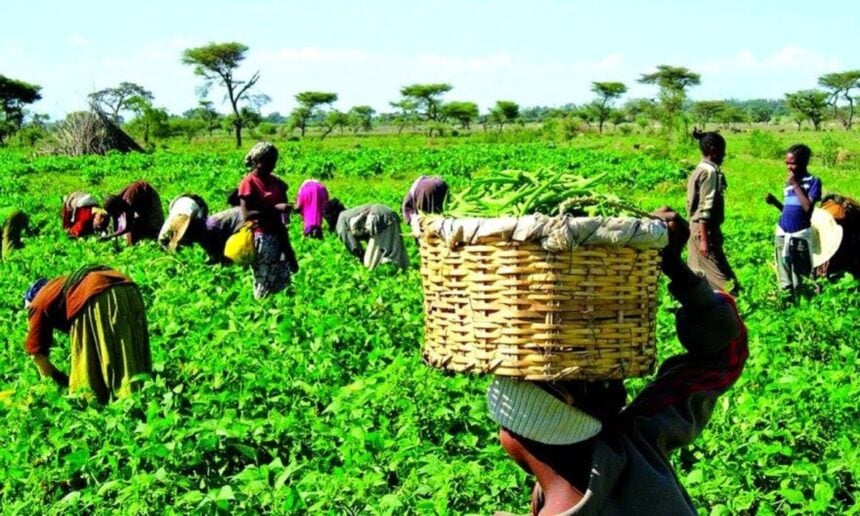
Researchers, policy makers and fertiliser industry representatives convened in Abuja for a two‑day Technical Workshop on Strategic Phosphorus Use in Nigeria, urging the adoption of soil‑specific fertiliser recommendations to lift agricultural output and safeguard food security. The gathering, held under the theme “Phosphorus and Food Security: Challenges in Food Production Systems in Nigeria,” assembled scientists, regulators, manufacturers and development partners to tackle persistent soil‑fertility and fertiliser‑use issues.
Key points emerging from the workshop include: phosphorus needs for maize and rice in northern Nigeria can vary from 0 to over 60 kg P₂O₅ ha⁻¹ within the same area; uniform fertiliser rates ignore this variability; excessive phosphorus raises production costs without boosting yields; and digital tools can deliver precise, site‑specific advice.
> “It is about understanding what different soils and crops need and ensuring > that farmers have access to the right products and best advice,” said Dr > Bello Muhammad Shehu, senior agronomist at the [Regional Hub for Fertilizer > and Soil Health for West Africa and the Sahel](https://www.iita.org). He > stressed that improving phosphorus management requires more than simply > increasing application rates.
What did the workshop recommend?
The participants called for better soil data, locally adapted nutrient recommendations and coordinated investment in digital advisory platforms. They highlighted the need to link scientific evidence with policy, industry and extension services to raise fertiliser‑use efficiency.
How can technology aid soil intelligence?
Professor Jibrin Mohammed, a visiting scientist with the [International Institute of Tropical Agriculture (IITA)](https://www.iita.org) and professor of Soil Science at Bayero University, Kano, explained that advances such as artificial intelligence now allow large‑scale, precise soil mapping. He noted, “The basis of food production and food security is the soil. You need a healthy soil for you to produce well and to feed the nation with nutritious food. And to do that, you need soil intelligence.”
Which policy frameworks support the effort?
Mohammed identified the African Fertiliser and Soil Health Action Plan and the ECOWAS Fertiliser Priority Actions as continental guides shaping Nigeria’s approach. At the national level, the [Federal Ministry of Agriculture and Food Security](https://www.fmaf.gov.ng) has launched the Nigerian Farmers’ Soil Health Scheme, an umbrella programme aimed at improving soil intelligence, delivering better recommendations to farmers and fostering stakeholder coordination.
The workshop built on a national phosphorus dialogue held in October 2025, which pinpointed constraints such as limited soil testing, generic fertiliser recommendations, concerns over product quality, weak extension services and poor stakeholder coordination. That dialogue also endorsed the creation of the Nigeria Fertilizer Phosphorus Network, now hosted by the Institute of Agricultural Research and Training (IAR&T;).
Overall, the consensus was clear: moving away from one‑size‑fits‑all fertiliser prescriptions toward data‑driven, soil‑specific guidance is essential for enhancing yields, reducing costs and achieving long‑term food security for Nigeria’s growing population.