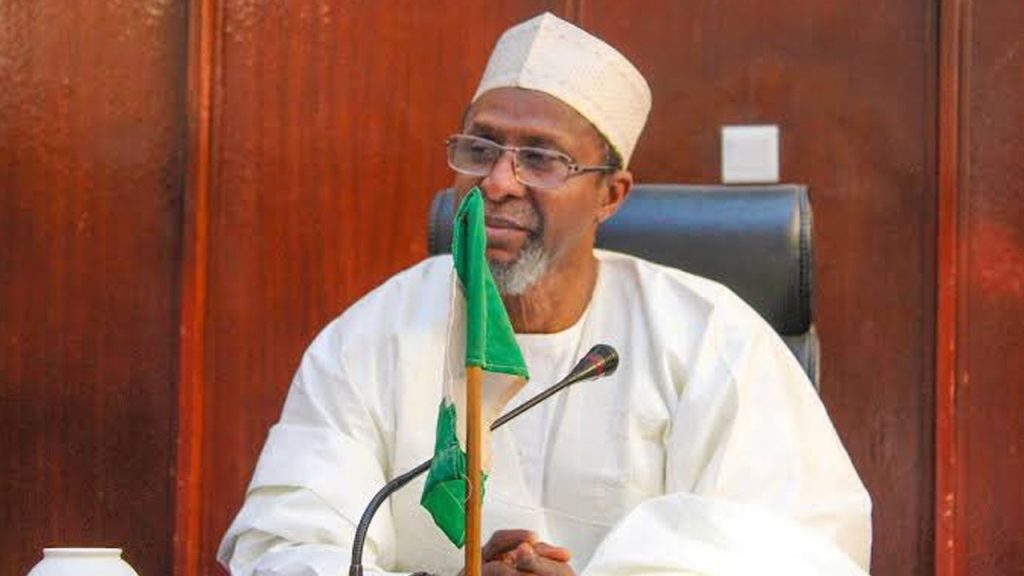
Official figures released by the Federal Ministry of Environment indicate that fewer than 36 percent of citizens across Nigeria possess access to improved sanitation facilities. Speaking in Abuja on Tuesday during a media briefing commemorating World Toilet Day, the Minister of Environment, Balarabe Abbas Lawal, underscored the escalating public health dangers tied to inadequate sanitation.
Represented by the Director of Pollution Control and Environmental Health, Mrs Omotunde Adeola, the minister noted that numerous public spaces, including motor parks, markets, schools, and local communities, still suffer from a severe deficit of functioning lavatories. He cautioned that this deficiency directly fuels open defecation, taints underground water and food supplies, and accelerates the transmission of waterborne ailments such as cholera and typhoid.
"Inadequate sanitation poses profound risks to public health, environmental safety, and human dignity," the minister stated, highlighting that women, girls, children, the elderly, and persons with disabilities bear the heaviest burden of the crisis. He stressed that no student should forfeit learning due to poor restroom availability, nor should any woman compromise her personal safety and dignity for lack of a secure toilet.
What is the global scope of the sanitation crisis?
Zooming out to a global scale, Lawal noted that roughly 4.5 billion individuals globally lack safely managed sanitation systems, while 892 million continue to engage in open defecation. These stark statistics highlight the urgent need to fast-track efforts toward attaining the United Nations Sustainable Development Goals, specifically those targeted at clean water, sanitation, gender equality, and sustainable communities by 2030.
What measures are being taken by authorities?
To combat these challenges, the Federal Government is collaborating with state administrations, relevant ministries, and international development partners to roll out comprehensive sanitation programs. Key initiatives include capacity-building workshops for Environmental Health Officers focusing on faecal sludge management and modern toilet engineering, alongside the Clean and Green Programme and the Community- Based Waste Management and Open Defecation Control Programme.
Additional strategies involve integrating sanitation into circular economy frameworks and forging alliances with private sector entities to deliver eco- friendly hygiene infrastructure. Furthermore, the ministry announced plans to host a National Dialogue on Faecal Sludge Management on November 23, 2026, bringing together delegates from seven states spanning the six geopolitical zones alongside the Federal Capital Territory.
Complementing these policy dialogues, a community outreach campaign is scheduled for November 19 at Kpadna Community, Utako, in the Federal Capital Territory. This initiative will engage traders, residents, and food vendors through health education, interactive forums, and live demonstrations by sanitation officers. Similar sensitization rallies, advocacy drives, and sanitary inspections of public establishments are slated to hold simultaneously across the 36 states and the FCT.
Concluding his address, Lawal urged state and local authorities to reinforce wastewater management structures, encouraged households to adopt rigorous handwashing and hygiene practices, and called on the private sector to invest in climate-resilient sanitation technologies. This year's commemoration is observed under the theme, “Sanitation and Gender Equality,” paired with the rallying cry, “Safe Toilets. Equal Futures.”