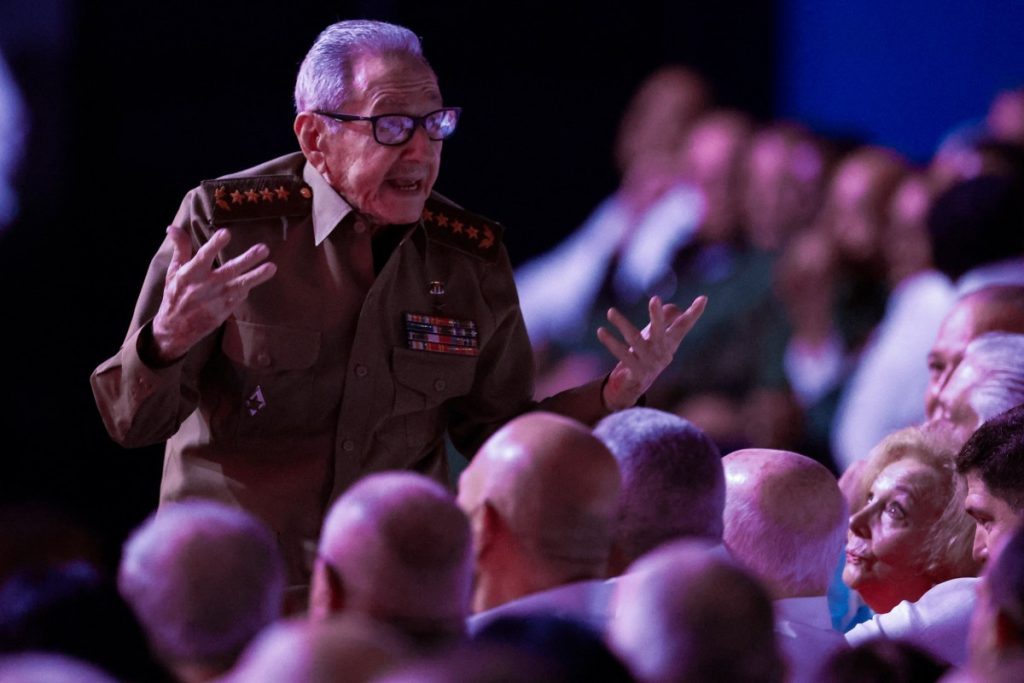
Florida Attorney General [James Uthmeier](https://floridagov.com/) on Monday issued a state murder arrest warrant for 95‑year‑old former Cuban leader [Raul Castro](https://en.wikipedia.org/wiki/Raul_Castro), alleging that he ordered the February 24, 1996 downing of two civilian aircraft operated by the Brothers to the Rescue group, an act that resulted in the deaths of four Floridians.
**What incident triggered the warrant?**
The warrant stems from the 1996 incident in which Cuban military forces shot down two light‑sport aircraft that were part of a humanitarian organization helping Cuban defectors reach the United States by sea. The crash killed four American citizens, all of whom were residents of Florida.
**How does the state action relate to federal proceedings?**
Earlier in May, a federal grand jury indicted Castro on similar murder charges, marking the first time a former head of state faced U.S. federal prosecution for the incident. Florida’s move signals a parallel state‑level pursuit, with officials stating that both federal and state avenues will be explored to secure accountability.
**What has been the reaction from Cuba and the United States?**
Cuba’s Foreign Minister [Bruno Rodriguez](https://www.cubaminrex.cu/) denounced the warrant on the social platform X, calling it “the latest futile maneuver by anti‑Cuban politicians in South Florida” and accusing it of reflecting “political rot and moral collapse.” In the United States, U.S. Attorney [Jason A. Reding Quinones](https://www.justice.gov/usao-fl) praised Florida’s action, saying, “We’re proud to stand with Florida in seeking justice for the four Americans murdered in the Brothers to the Rescue shootdown nearly 30 years ago.”
The development arrives amid heightened U.S. pressure on the Cuban government under the administration of former President Donald Trump, which has combined economic sanctions, diplomatic isolation, and legal actions to challenge Havana’s policies. Current Cuban President Miguel Diaz‑Canel dismissed the federal indictment as baseless, labeling it an attempt to legitimize potential military aggression against Cuba.
The warrant adds a new layer to a decades‑long dispute over the 1996 tragedy, highlighting the complex interplay between state and federal jurisdictions in prosecuting foreign officials for actions taken abroad.