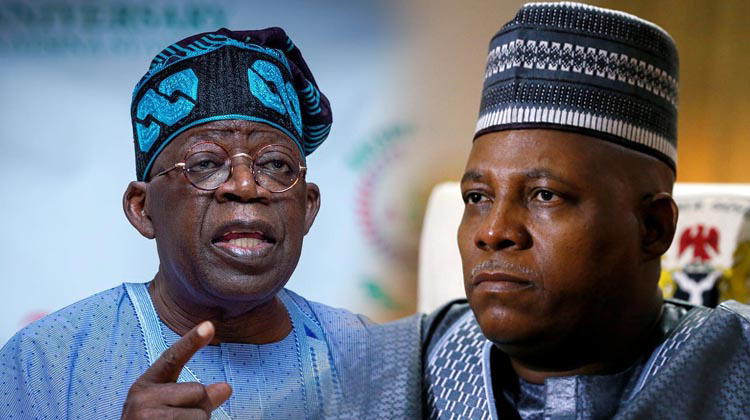
The federal government announced on Tuesday that petrol sold at designated [Nigerian National Petroleum Corporation](https://nnpcgroup.com) outlets will be priced at N1,350 per litre for a period of 30 days, with the rate to be reviewed monthly.
**What is the discount arrangement?**
The discount applies only to NNPC‑owned filling stations, where the company will forgo its usual retail profit margin and sell fuel at cost. The price of N1,350 will serve as a ceiling, after which the government will reassess the level each month.
**Why does the government say it is not a subsidy?**
Finance Minister [Taiwo Oyedele](https://www.finance.gov.ng) explained that the scheme is intended to cushion vulnerable households from global crude price volatility, not to re‑introduce a blanket subsidy. He stressed that priority will be given to public transport operators and that the arrangement is a temporary ceiling price rather than a permanent fiscal handout.
**How have opposition parties responded?**
Former vice‑president Alhaji Atiku Abubakar, speaking for the African Democratic Congress (ADC), dismissed the 30‑day discount as a short‑term political gimmick that does not address the underlying cost‑of‑living crisis. The Nigeria Democratic Congress (NDC) labelled the measure “tokenism” and a “Greek gift” from the Tinubu administration, accusing the government of deceit. ADC campaign officials called the initiative a desperate attempt to bribe voters ahead of the 2027 elections.
**What other measures accompany the discount?**
Minister Oyedele said the government is also planning forward sales of crude oil to domestic refiners at a yet‑to‑be‑determined price, aiming to stabilise pump prices regardless of global market swings. He announced the creation of a National Strategic Fuel Reserve that will release refined products during global disruptions or hoarding episodes, thereby protecting supply and limiting price volatility.
**What are the concerns about the naira and the broader economy?**
Oyedele warned that any move to reinstate a full fuel subsidy could push the price of petroleum motor spirit (PMS) to N2,000 per litre and drive the exchange rate toward N3,000 to the dollar, jeopardising the country’s credit rating and inflation‑reduction gains. He clarified that the naira has not been deliberately devalued; rather, its depreciation reflects depleted foreign‑exchange reserves, which currently stand at about $55 billion – the highest level in eighteen years.
**What is the government’s longer‑term fiscal outlook?**
The Presidency, through Special Adviser Bayo Onanuga, reiterated that the temporary discount does not signal a reversal of the fuel‑subsidy reform that aims to put Nigeria on a path to sustained prosperity. The administration is working on a broader fiscal package to bring inflation down to single‑digit levels and to ensure that any relief reaches the most vulnerable without endangering fiscal stability.
**What happens after the 30‑day period?**
Opposition leaders warned that Nigerians will face the same high prices once the discount expires, arguing that a one‑month relief cannot substitute for structural reforms. They called for permanent solutions such as capped production‑support schemes tied to locally refined fuel and broader economic policies that address insecurity, unemployment and the cost of living.
Overall, the government’s 30‑day petrol price ceiling is presented as a stop‑gap measure to alleviate immediate pressure on commuters while broader reforms and strategic reserves are pursued to stabilise the energy sector in the longer term.