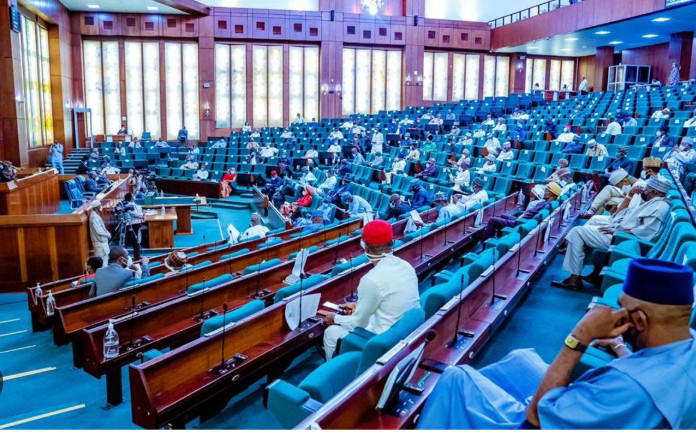
The House of Representatives has passed the [Electricity Act (Amendment) Bill, 2025](https://en.wikipedia.org/wiki/Electricity_Act_(Nigeria)) for a second reading, clearing the way for the establishment of a National Authority for Renewable Energy (NARE). Sponsored by Representative Afam Victor Ogene of Ogbaru Federal Constituency, Anambra State, the measure intends to bring together renewable‑energy oversight that is currently scattered across several agencies.
Key points of the legislation include:
- Transfer of renewable‑energy functions from the [Nigerian Electricity Regulatory Commission (NERC)](https://nerc.gov.ng), the [Rural Electrification Agency (REA)](https://rea.gov.ng) and the [Rural Electrification Fund (REF)](https://en.wikipedia.org/wiki/Rural_Electrification_Fund_(Nigeria)) to the new authority.
- Allocation of 40 % of the REF’s annual budget to fund NARE’s operations and renewable‑energy projects.
- Provision of fiscal, financial and regulatory incentives to attract investment, boost local manufacturing, research, innovation and capacity‑building in the sector.
- Mandate for NARE to issue licences, set standards, ensure fair tariffs and resolve disputes, thereby strengthening consumer protection and market transparency.
"This specialisation will improve coordination, reduce institutional overlaps and provide focused direction for the effective development of the renewable energy sector," Ogene said during the debate.
**What does the bill propose?**
The draft law consolidates regulatory duties under NARE, which will supervise the development of renewable sources such as solar, wind, hydro, geothermal, biomass and hydrogen. It also aims to promote mini‑grid and off‑grid electricity solutions, targeting rural, unserved, underserved and island communities.
**How will the new authority be funded?**
A core provision earmarks 40 % of the REF’s yearly disbursements for NARE, ensuring a steady flow of resources to support project implementation and operational costs.
**What are the next steps?**
After unanimous adoption for the second reading, the bill has been referred to the House Committee on Renewable Energy for detailed scrutiny. The committee will examine the transfer of personnel, assets and ongoing projects from existing agencies to NARE before the bill proceeds to further readings.
The legislation reflects a shift in policy focus from expanding the national grid alone to embracing decentralized, renewable solutions that can more rapidly deliver electricity to Nigeria’s underserved regions.