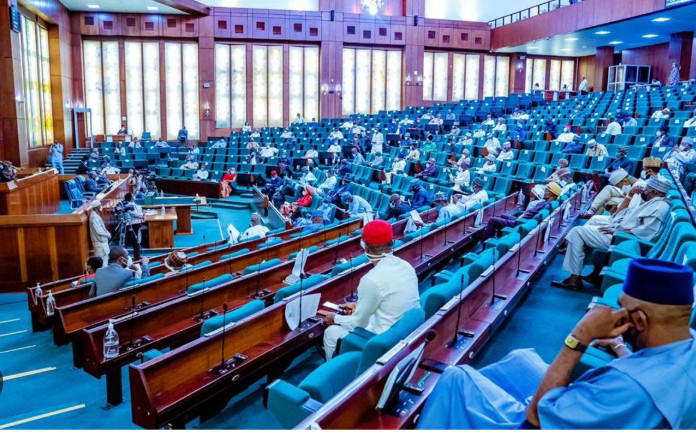
The **[House of Representatives](https://www.nass.gov.ng/)** announced on World Food Day, 20 October 2024, that it will push for robust food safety statutes and enforcement mechanisms to ensure all Nigerians have access to safe, nutritious and affordable food, addressing rising malnutrition, food insecurity and related health threats.
Key points highlighted at the briefing include:
- Existing policies have failed to curb malnutrition, stunting, wasting and anaemia across the country.
- The committee plans to introduce a bill to create the **Nutritionist Registration Council of Nigeria** to professionalise nutrition practice.
- A **[National Nutrition Bill](https://en.wikipedia.org/wiki/Nutrition)**, sponsored by the Presidency’s Office of the Vice‑President, is reportedly in an advanced stage before being sent to the National Assembly.
- Chairman **Chike Okafor** warned that unsafe food production and unchecked chemical use could exacerbate kidney and liver diseases, stating, "Malnutrition and food insecurity remain a constant threat to socio‑economic development in Nigeria, as much as they have become an existential threat."
What legislation is being proposed?
The House Committee on Nutrition and Food Security, represented by its clerk **Agenti Milicent**, urged the passage of enforceable laws that would protect local food systems, guarantee the proper use of nutrition funds and shield children from aggressive marketing of unhealthy foods. The proposed legislation also seeks to regulate the nutrition profession through the establishment of a registration council.
How is ginger production being impacted?
Food‑safety advocate **Dr. Shego** warned that contaminated agricultural inputs have triggered a severe ginger blight, decimating yields and inflating the price of a bag of ginger from roughly ₦25,000 to about ₦800,000. He attributed the crisis to the use of certain inputs supplied under government intervention programmes, calling for a thorough review of these schemes and a shift toward organic farming and natural seeds.
Who is involved in the investigation of agricultural funds?
The committee disclosed that it is probing alleged misappropriation of government agricultural intervention funds by agencies operating outside the **[Federal Ministry of Agriculture](https://www.fma.gov.ng/)**. The inquiry also covers concerns about the ginger blight outbreak. Investigators have engaged the **[Central Bank of Nigeria](https://www.cbn.gov.ng/)**, the **[National Agricultural Development Board](https://www.nadb.gov.ng/)** and other relevant bodies.
What collaborative actions are being urged?
Stakeholders, including investors, processors and distributors, were urged to collaborate on building a resilient food value chain. **Nwaoloko Ifeanyi**, founder of Benjamin Protocol Incorporated, emphasized that “safety first before harvest,” advocating for regenerative seeds and farmer‑controlled planting materials. **Lucas Samu** of Lufris Global Enterprise highlighted the importance of safe processing and packaging, while **Ella Omezi** pledged to supply organic seeds to support export‑ready raw materials.
The initiative, dubbed “Let’s Go Planting,” aims to stimulate household and commercial farming, attract investment into agriculture, and strengthen food processing and packaging standards. The event marked the 2026 World Food Day theme, “Innovate Today, Nourish Tomorrow.”