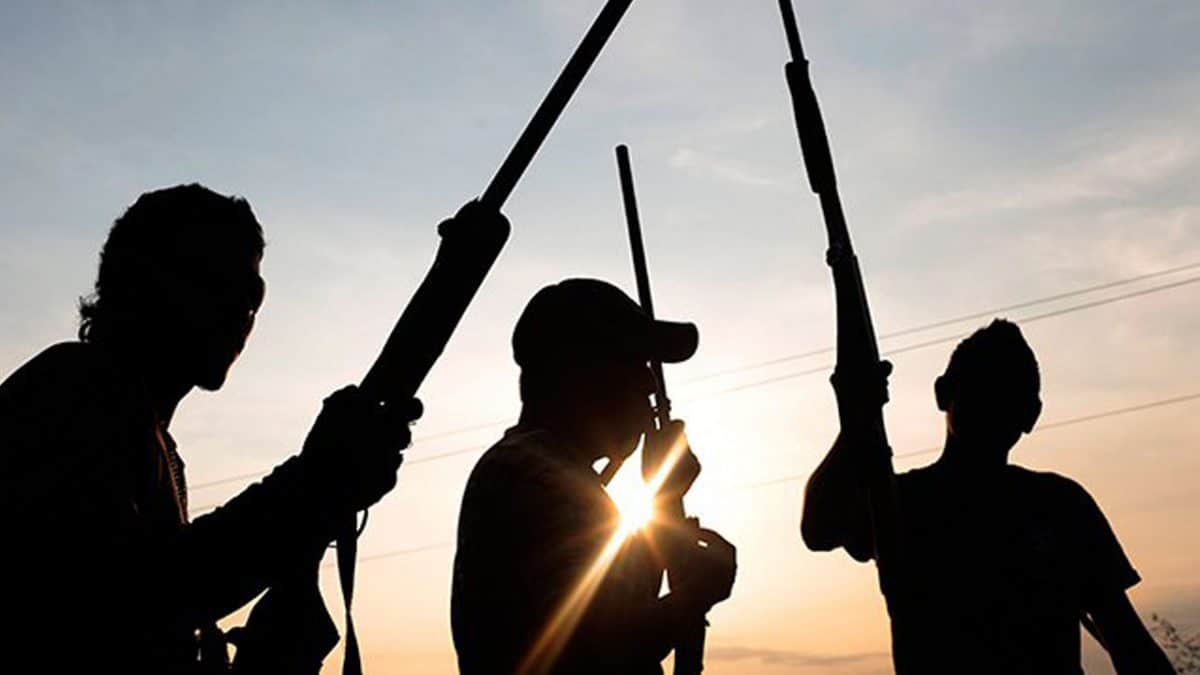
The Islamic State West Africa Province relies on a structured cash bounty system, offering financial rewards to insurgents based on the specific military hardware and weaponry they seize during raids on regional security installations. Investigations by the Institute for Security Studies indicate that a standardized pricing schedule, backed by the broader Islamic State network, assigns distinct monetary values to seized rifles, ammunition stocks, and armoured utility vehicles.
Historically, analysts noted that ISWAP favored targeted operations against fortified military camps to amass munitions and minimize dependency on arms traffickers, setting it apart from rival factions like Jama’tu Ahlis Sunna Lidda’awati wal-Jihad. While territorial consolidation and self-sufficiency remain primary drivers, fresh disclosures highlight a lucrative compensation framework that operates alongside ideological indoctrination.
What is the structure of the ISWAP payout system?
Insurgents who participate in coordinated assaults share two-thirds of the recovered spoils, traditionally referred to as ghanimah, while the insurgent leadership retains the remaining third for administrative overheads. According to former combatants, an assault yielding an AK-47 rifle commands a payout of $750, whereas capturing a rocket-propelled grenade launcher fetches $1,000. Ammunition boxes range between $500 and $1,000 depending on the specific round calibre, and utility pickup trucks equipped with heavy weapons can be valued at as much as $30,000.
These financial disbursements are distributed in local currency, representing substantial sums within the economically constrained Lake Chad Basin. Across Cameroon, Chad, Niger, and Nigeria, monthly statutory minimum earnings hover between $53 and $108, while broader economic output per capita remains low. In remote border communities plagued by protracted violence and environmental degradation, authentic household earnings often fall significantly below these regional averages.
How does this financial model shape insurgent tactics?
The institutionalization of monetary incentives dictates tactical choices, explaining why ISWAP continues to target fortified military barracks instead of engaging in opportunistic rural ambushes. Conversely, rival factions that lack strict internal discipline regarding weapons management often sustain themselves through civilian predation and displacement camp looting, a practice strictly prohibited within ISWAP ranks.
In addition to the ghanimah distribution, ISWAP has reportedly paid select fighters regular salaries amounting to approximately ₦75,000, marginally outstripping Nigeria's national minimum wage threshold of ₦70,000. Former members disclosed that these cash rewards play a critical role in maintaining unit cohesion and retaining younger recruits who might otherwise desert when ideological motivation wanes.
How do the funds reach insurgent hideouts?
Financial intelligence tracking reveals that external funds traverse an identifiable transnational network before reaching lake hideouts. Currency exchange platforms in Dubai facilitate transfers to major commercial hubs such as Kano in northwest Nigeria or N’Djamena in Chad, from where localized couriers transport physical cash to island enclaves.
International oversight bodies have increasingly targeted these transit channels. In June 2026, the United States Department of the Treasury penalised a Nigerian currency dealer alongside associated business entities for funnelling financial support to the terrorist network. Similar measures followed a 2021 crackdown by the United Arab Emirates authorities, which resulted in the conviction of several individuals facilitating illicit capital movements from Dubai to West African networks.
Experts argue that disrupting these logistics corridors requires heightened surveillance by financial intelligence agencies monitoring repetitive transactions along the UAE-to-Kano and UAE-to-N’Djamena pathways. Furthermore, strengthening base defences and dismantling support infrastructure remain vital to undermining the financial appeal of armed campaigns across the region.