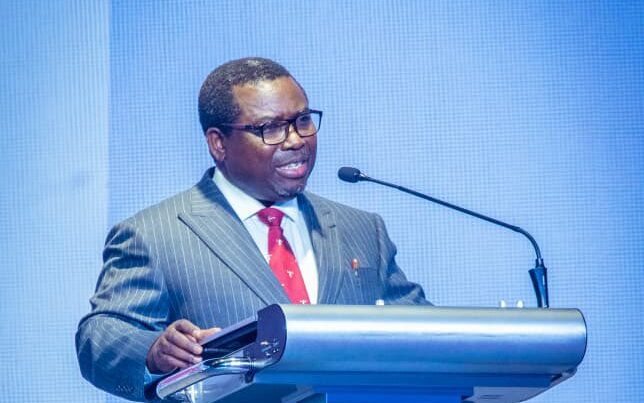
The [Independent National Electoral Commission (INEC)](https://www.inecnigeria.org/) announced a comprehensive strategy aimed at enhancing safety, accessibility and participation for persons with disabilities (PWDs) in the upcoming 2027 general elections.
The blueprint calls for the adoption of disability‑inclusive election security protocols, specialised training for security staff on disability rights, tighter coordination among security agencies and the creation of user‑friendly channels for reporting incidents involving disabled voters.
The priorities were disclosed by INEC Chairman [Joash Amupitan](https://en.wikipedia.org/wiki/Joash_Amupitan) during a forum on disability‑inclusive election security organised by [The All‑Rights Foundation (TAF Africa)](https://www.tafafrica.org/) on Friday.
Amupitan stressed that the credibility of an election extends beyond vote counting; it requires that every eligible citizen can cast a ballot freely, safely and without discrimination.
"An election cannot be deemed inclusive if persons with disabilities or other vulnerable groups encounter intimidation, insecurity or any barrier to exercising their rights," he asserted.
**What are the five priority actions?**
- Enact clear, disability‑inclusive security protocols that align with INEC’s 2026 Regulations and Guidelines.
- Deliver targeted training for police officers on disability rights and accessible communication, enabling them to respond appropriately to voters with varied impairments.
- Strengthen coordination among INEC, the police and other security bodies to ensure a unified response.
- Establish accessible reporting mechanisms and guarantee swift action on incidents involving disabled voters.
- Maintain ongoing engagement with organisations representing persons with disabilities.
Amupitan noted that these measures will be integrated through the [Inter‑Agency Consultative Committee on Election Security (ICCES)](https://www.inecnigeria.org/), ensuring that inclusion is embedded in planning, deployment and incident response.
He also revealed that INEC will convene a further security summit soon, inviting the Inspector‑General of Police, the National Security Adviser, the Nigeria Security and Civil Defence Corps and other paramilitary agencies.
**How will security personnel address diverse disability needs?**
According to Amupitan, staff must recognise specific requirements: hearing‑impaired voters may need visual cues, visually‑impaired voters may require verbal guidance, and those with limited mobility will need polling units that are physically accessible.
He emphasized that assistance must respect the independence and privacy of disabled voters.
"We must not undermine a voter’s independence or privacy; support should be respectful and proportionate," he said.
**What is the current registration landscape for disabled voters?**
The chairman disclosed that INEC currently records 232,000 registered voters with disabilities, representing just 0.23 % of the total voter register. These voters fall into ten recognised disability categories, a figure he described as far below expectation.
To boost registration, INEC is promoting online voter registration, a reform Amupitan pledged early in his tenure: "When I took over, one of my primary conditions was to have online registration."
**Which legal frameworks support inclusive elections?**
Amupitan cited the 1999 Constitution, the Electoral Act, the Discrimination Against Persons with Disabilities (Prohibition) Act and the United Nations Convention on the Rights of Persons with Disabilities as the legal basis for inclusive elections, while acknowledging implementation challenges.
He instructed the Director of Gender and Inclusivity to circulate copies of the 2026 Regulations and Guidelines, highlighting clauses 19, 21, 27 and 28 that guarantee priority access and assistance for disabled voters.
"The duty to protect voters extends well beyond election day. It covers registration, campaigns, rallies, polling stations and the post‑election period," he affirmed.
"Our responsibility is to ensure no citizen is barred from voting due to insecurity, discrimination or institutional neglect."
Amupitan also praised the contributions of TAF Africa and the European Union in advancing electoral participation for persons with disabilities and internally displaced persons.