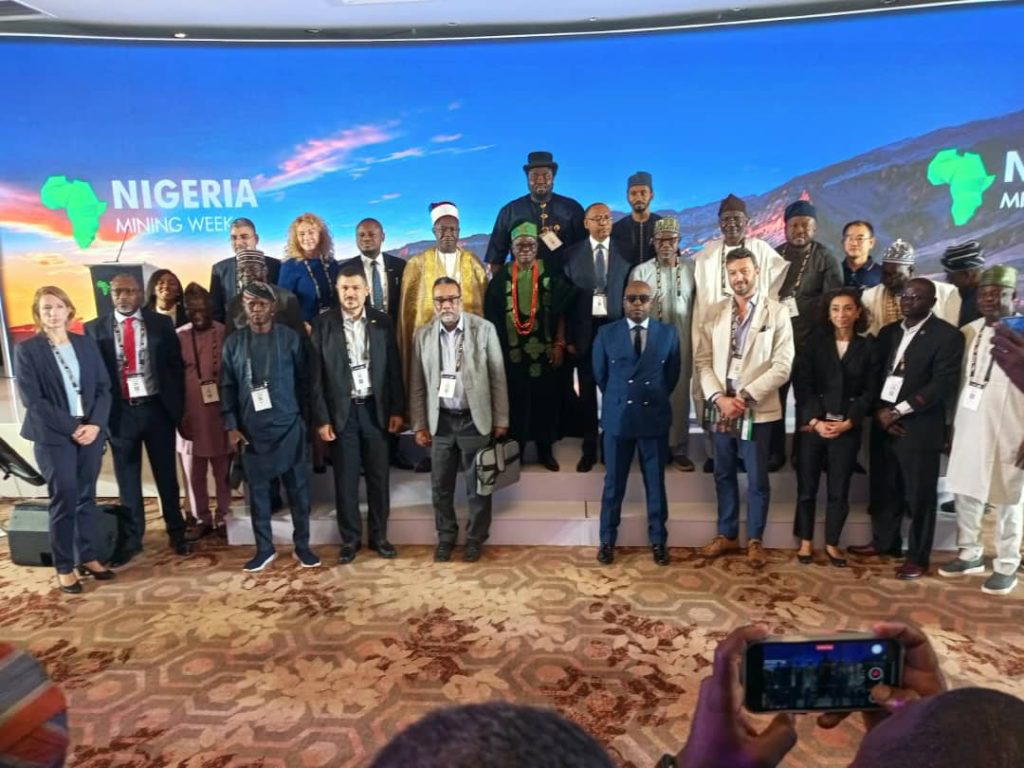
Investors and key players in Nigeria’s mining sector gathered in Abuja for the launch of the 11th Nigeria Mining Week, pressing the government to adopt clearer regulations, strengthen security along mining corridors and improve coordination among agencies to unlock the nation’s solid mineral wealth.
The opening session highlighted that insecurity, overlapping regulations, weak inter‑agency cooperation and insufficient infrastructure are the main obstacles hindering sector growth.
**What regulatory challenges were highlighted?**
[Miners Association of Nigeria](https://en.wikipedia.org/wiki/Miners%27_Association_of_Nigeria) president Oba Ayandele Ayanleke warned that insecurity on mining routes and jurisdictional disputes between federal and sub‑national authorities are undermining operations and eroding investor confidence. He stated, "Insecurity along mining corridors and jurisdictional disputes are eroding investors’ confidence," and urged the government to create a more predictable regulatory framework while fostering stronger partnerships between local and international stakeholders.
Ayanleke also mentioned that a government‑appointed investigative panel is examining a recent mining incident and asked industry participants to await its findings.
**How is the gold sector performing?**
[Segilola Resources Operating Limited](https://www.segilola.com) country manager Austin Menegbo said Nigeria should build on the success of its first large‑scale commercial gold mine to develop a competitive and sustainable mining industry. Menegbo disclosed that Segilola produced 91,910 ounces of gold in 2025, with Nigerians making up 99 % of its workforce. He argued that responsible investment, technical expertise, effective regulation and ongoing engagement with host communities can support globally competitive mining operations.
Menegbo identified regulatory uncertainty, illegal mining, insecurity, poor infrastructure and limited access to finance as urgent challenges that require government action. He called for streamlined approvals, predictable regulatory timelines and continuous dialogue among operators, investors, host communities and other stakeholders to improve the investment climate.
He also advocated formalising artisanal and small‑scale mining through safety training, better access to finance, technical support and cooperative structures, stressing that attracting investment must go hand‑in‑hand with environmental protection, worker safety and responsible community engagement.
**What role can international partners play?**
[Swedish Embassy in Nigeria](https://www.swedenabroad.se/en/embassies/nigeria- abuja/) Head of Mission Ambassador Anna Westerholm urged partnerships that prioritize local value addition, workplace safety, community welfare and transparency. She said Nigeria could leverage Sweden’s expertise in mining technology, automation, skills development and responsible mineral production to strengthen its industry.
Westerholm noted that the long‑term success of mining projects depends largely on their impact on host communities and the environment, adding that companies must earn public trust to operate sustainably. She highlighted the importance of mineral traceability, explaining that being able to verify the origin and production conditions of minerals would boost Nigeria’s competitiveness in global markets. Sweden, she said, is ready to deepen cooperation with Nigeria through technical assistance, trade and investment partnerships.
**What is the perspective of the consulting sector?**
[PwC Nigeria](https://www.pwc.com/ng/en.html) partner and mining industry leader Cyril Azobu emphasized that Nigeria must turn its abundant mineral resources and growing international interest into bankable projects and sustainable economic growth. He argued that this requires a predictable investment environment, credible projects and partnerships that connect local opportunities with international capital, technology and expertise.
Azobu called for a shift from exporting raw minerals to domestic processing and value addition, asserting that such a move would enable Nigeria to retain a larger share of the economic benefits from its mineral endowment. He reaffirmed PwC Nigeria’s commitment to supporting the sector through technical expertise, regulatory guidance and stakeholder engagement.
The event is being held under the theme “Unlocking Investment and Growth through Partnerships,” reflecting the consensus that collaborative effort is essential for the sector’s future.