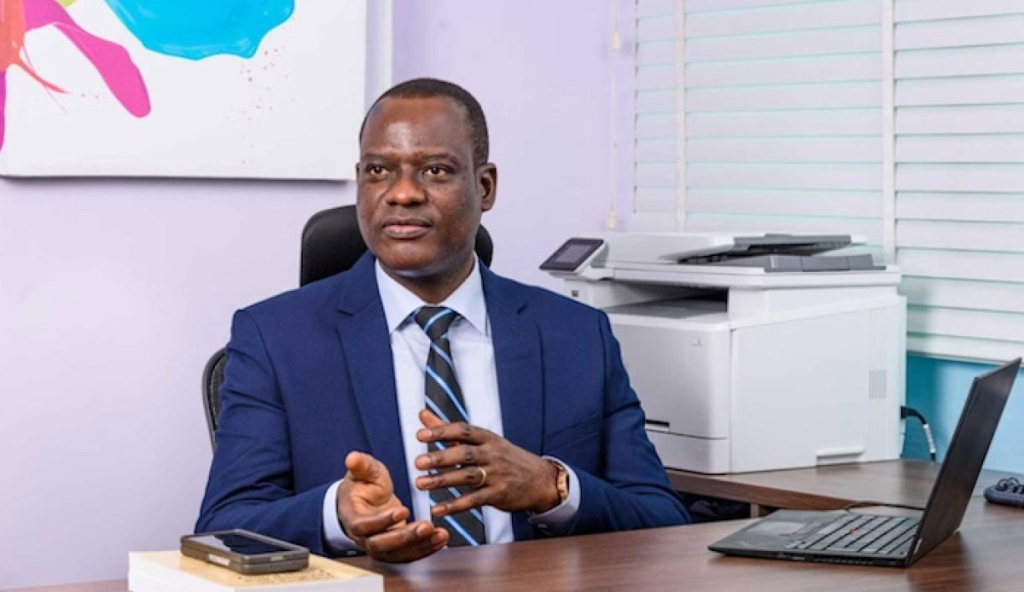
At the 2026 IMF/World Bank Annual Meetings in Bangkok, Finance Minister and Coordinating Minister of the Economy Taiwo Oyedele told reporters that investors are factoring in a second term for President [Bola Tinubu](https://en.wikipedia.org/wiki/Bola_Tinubu) and are counting on the continuation of the economic reforms launched since 2023. He warned that any policy reversal would likely spark capital outflows, increase pressure on the naira and undermine confidence in the market.
Key points from the briefing include:
- Investors are uneasy about political pressure that could undo reforms, asking whether the government is being swayed by the upcoming election.
- Oyedele stressed that the reform programme is driven by the need for a sustainable economy, not by electoral considerations.
- He ruled out a return to fuel subsidies or multiple exchange rates, describing the recent NNPC Retail discount as a commercial decision, not a subsidy.
- The minister projected a 7% growth target, higher than IMF and World Bank forecasts, and highlighted food, energy and logistics costs as major constraints.
- He announced that Nigeria has pitched 65 projects worth $78.5 billion to investors across energy, transport, industry, mining, agriculture, health and urban services.
**What did the minister say about political pressure?**
Oyedele explained that investors asked, “Are you under pressure because of elections?” He reiterated that the government’s reform agenda is anchored in long‑term economic stability rather than short‑term political gains.
**How does the government view fuel subsidies?**
He clarified that the discount offered by NNPC Retail is a private commercial move, not a reinstatement of state‑funded subsidies, and affirmed that there will be no return to subsidised fuel pricing.
**What growth ambition does Nigeria have?**
While respecting the projections of the [International Monetary Fund](https://www.imf.org/) and the [World Bank](https://www.worldbank.org/), Oyedele said the country aims for a 7% annual growth rate to create jobs, raise incomes and reduce poverty. He called for reforms that lower food, energy and logistics costs to curb inflation and stimulate investment.
**What is the inflation target?**
The minister said the goal is to bring inflation down to low single‑digit levels, which would allow lower interest rates and improve credit access for businesses.
**What is the expected impact of the reforms on ordinary Nigerians?**
Oyedele emphasized that stability and growth must translate into tangible benefits for citizens, such as job creation and expanded business opportunities, and that policy consistency is essential for maintaining investor confidence.
The finance minister’s remarks were made alongside Central Bank Governor Olayemi Cardoso of the [Central Bank of Nigeria](https://www.cbn.gov.ng/) during a joint press briefing at the Bangkok summit.