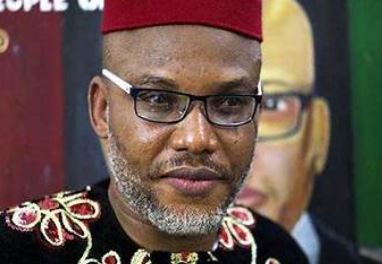
The Indigenous People of Biafra (IPOB) has leveled serious allegations against the United Kingdom, accusing it of playing a role in the alleged persecution of its detained leader, Mazi Nnamdi Kanu. The group specifically pointed to Kanu's abduction in Kenya and his subsequent extraordinary rendition to Nigeria as evidence of British complicity. IPOB also accused Britain of maintaining diplomatic silence over what it described as persistent violations of Kanu's fundamental rights, despite his British citizenship. The allegations were made in a statement issued by IPOB's Media and Publicity Secretary, Comrade Emma Powerful, following recent interventions by Bishop Godfrey Onah on historical injustices associated with Nigeria's colonial experience and the treatment of the South-East.
The pro-Biafra group argued that Britain's historical involvement in Nigeria's political and economic affairs had contributed to what it described as structural injustices against Biafra and its people. It alleged that Britain's failure to intervene over Kanu's rendition, its response to calls for his release, and what it described as the disregard of previous appellate court decisions reflected a continuation of colonial-era policies that prioritised strategic interests over justice. IPOB further accused the British Broadcasting Corporation (BBC) and other Western media organisations of promoting an anti-Kanu narrative, claiming that online searches for Kanu's name predominantly returned negative reports, which IPOB said had contributed to a distorted international perception of his agitation and the circumstances surrounding his prosecution.
On another front, IPOB alleged that Kanu's transfer to a prison in Sokoto was politically motivated, claiming it was an attempt by the All Progressives Congress-led Federal Government to use his detention as a political bargaining tool to secure support in the North ahead of future elections. The group asserted that the alleged political calculation had backfired and cautioned against using Northern Nigerians as instruments in divisive political manoeuvring.
Regarding Kanu's trial, IPOB faulted the characterisation of its leader as someone who hates the North, insisting that his agitation was directed against what it called a corrupt neo-colonial political structure, rather than any ethnic or religious group. The group specifically challenged a remark attributed to Justice Omotosho that Kanu hated the North with a passion, describing it as a distortion of his broadcasts and political message. According to IPOB, Kanu's struggle is against a system it alleges exploits the resources and sacrifices of ordinary Nigerians for the benefit of the political elite.
The group maintained that Bishop Onah's intervention reflected growing recognition of the historical grievances of Biafrans and the need to address the issues underlying the agitation. IPOB insisted that what it described as media manipulation and judicial and political manoeuvring would not derail its campaign for the peaceful emancipation of Biaga. In its closing appeal, IPOB called on the British government to break its silence and take a more decisive position on Kanu's case, arguing that its alleged inaction, despite his British citizenship, raised questions about its commitment to protecting the rights of its citizens abroad.