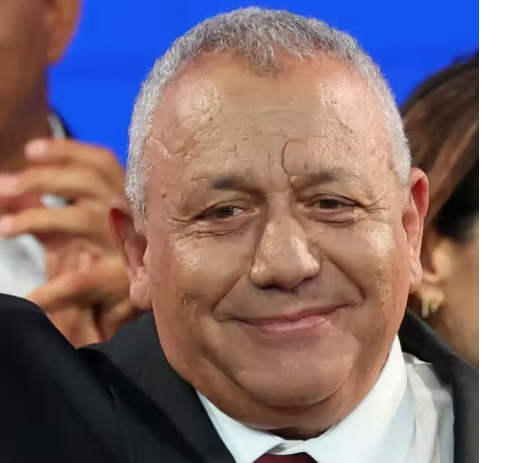
Following an election that failed to yield an outright parliamentary majority for either major political bloc, Israeli President Isaac Herzog has selected opposition leader and former military chief Gadi Eisenkot to form a new administration. Herzog's office confirmed the development on a Saturday night, noting that the mandate would be formally handed over during a ceremony at the presidential residence in Jerusalem.
"This is the time to establish a national emergency government. I will do anything possible to prove us worthy," Gadi Eisenkot stated via a post on X following the announcement.
This decision places the Yashar party leader in a prime position to succeed Prime Minister Benjamin Netanyahu, the country's longest-serving leader, whose religious-nationalist alliance lost its parliamentary grip in the recent October 27 election. Netanyahu's camp managed to secure 54 seats within the 120-member legislature, whereas Eisenkot's opposition coalition attained 48 seats. Both factions fell below the 61 seats necessary to independently establish a governing majority.
What endorsements did Eisenkot receive during consultations?
In the course of consultations held by President Herzog, Eisenkot secured crucial backing from two Arab-majority political lists, which could play a decisive role in the ongoing coalition-building phase. Nevertheless, questions persist regarding whether Eisenkot's bloc will formalise an alliance with these Arab-led factions, particularly in the wake of prolonged conflict in Gaza.
Conversely, Netanyahu has strongly resisted any partnership involving Arab parties, branding them as supporters of terrorism while advocating instead for a national unity government. Meanwhile, Eisenkot has expressed openness to collaborating with Arab factions provided they acknowledge Hamas as a terrorist organisation that must be dismantled.
What are Eisenkot's key policy stances?
Beyond coalition politics, Eisenkot has promised to crack down on extremist Israeli settlers within the occupied West Bank who have been linked to assaults on Palestinians, terming the violence as "Jewish terror." While willing to engage Arab parties, he remains opposed to the establishment of a Palestinian state and has reiterated his commitment to dismantling Hamas's military capabilities and governance in Gaza.
Eisenkot brings extensive military experience to the political arena, having served as Israel's Chief of General Staff between 2015 and 2019, alongside commanding troops during the 2006 conflict with Hezbollah, where he formulated the controversial military strategy advocating disproportionate force against infrastructure.
What happens next in the government formation process?
Based on Israel's constitutional guidelines, Eisenkot holds a window of 28 days to gather the backing of at least 61 lawmakers to successfully establish a government. Should he struggle to meet this target, President Herzog holds the discretion to extend the deadline by an additional 14 days. An inability by any designated candidate to assemble a viable administration could ultimately force the nation back to the polls, echoing a turbulent era of repeated political impasses between 2019 and 2022.