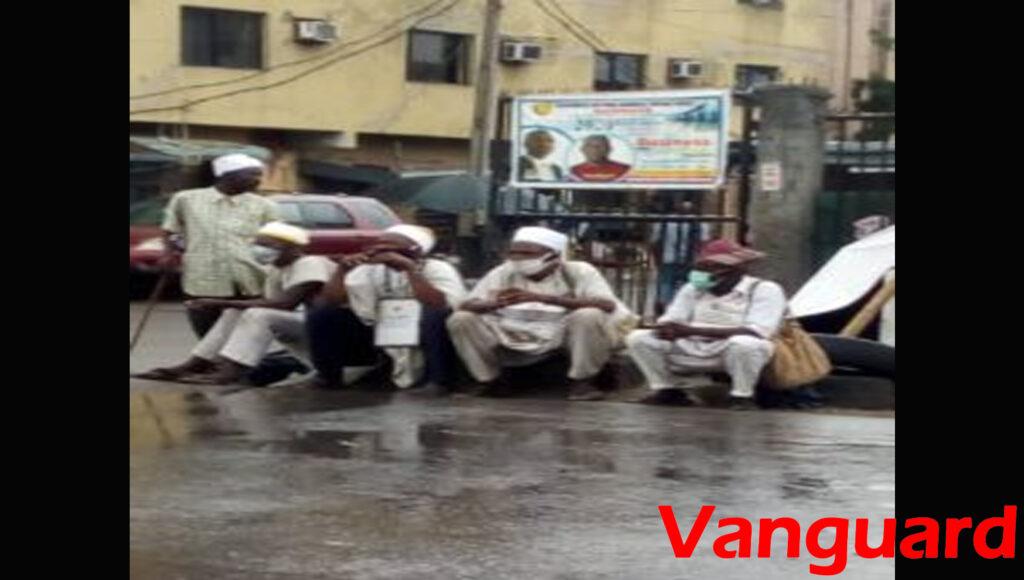
In June and July 2026, Lagos police and enforcement teams seized more than 900 people who were begging on city streets, signalling a hardening stance by the state government against street solicitation and its associated safety concerns. The arrests were part of a broader push to pass a new anti‑begging bill that would give authorities stronger powers to punish repeat offenders and provide rehabilitation services for vulnerable individuals.
**Key figures**
- 515 beggars were detained in June across districts such as Oshodi, Agege, CMS, Lagos Island, Ikorodu, Ikeja, Mushin, Alimosho and Falomo.
- A further 396 arrests were recorded in July.
- The proposed legislation, discussed on 16 September, would impose fines up to ₦200,000 and imprisonment of up to three months for first‑time offenders, with harsher penalties for repeat violations.
- Gerald Okoh, a motorist from Oshodi, complained that “what we see now is not just begging. It is coercion,” citing incidents where beggars surround vehicles and threaten drivers.
- The Ministry of Youth and Social Development reported that 1,315 vulnerable persons were rescued during the review period, with 998 later reunited with families.
What prompted the crackdown?
The sight of mothers clutching toddlers, elderly men chanting prayers for spare change, and children darting between moving cars is a daily reality on Lagos’ congested arteries—from Oshodi and Agege to the Lekki‑Epe corridor. While many Lagosians once viewed begging as a humanitarian issue, the government now frames it as a threat to public order, environmental safety and security.
Which agencies are leading the enforcement?
The operations were carried out by the [Lagos State Environmental Sanitation Corps (LAGESC)](https://lagosstate.gov.ng), popularly known as KAI, together with other state enforcement bodies. Their mandate includes enforcing environmental regulations that already prohibit street begging and urging the public to donate through registered charities rather than direct handouts on roadways.
What does the proposed bill entail?
At a public hearing, the [Lagos State House of Assembly](https://www.lagosstatehouseofassembly.gov.ng) examined the Street Begging and Street Urchins (Prohibition, Prevention and Rehabilitation) Bill, 2026. The draft seeks to ban begging, loitering or sleeping in public for the purpose of solicitation, and to penalise anyone who aids or encourages the practice. First‑time offenders could be warned and referred to rehabilitation centres; repeat offenders face escalating fines and possible imprisonment of up to two years. Parents or guardians who exploit children for begging could also be prosecuted.
How are children protected under the proposal?
The [Nigeria Bar Association](https://nigerianbar.org.ng) supported the bill but cautioned that children caught begging should be treated as vulnerable persons needing care, not as criminals. NBA Lagos Branch Chairman Uchenna Akingbade urged that the law focus on exploitation and harmful conduct, while safeguarding children with disabilities, mental health challenges or those experiencing homelessness.
Who are the people behind the statistics?
- **Suleiman**, 42, originally from Kano State, lost a leg in a motorcycle accident and can no longer farm. He now earns as little as ₦3,000 on some days by begging.
- **Fati**, 28, turned to street solicitation after her husband abandoned her while their child was ill; she previously sold sachet water but could not afford medical care.
- **Chidi**, 19, migrated from Ebonyi State seeking work as a conductor; when employment vanished, he joined friends begging along traffic routes.
All three expressed a desire for alternative livelihoods.
What rehabilitation measures accompany the crackdown?
The state government stresses that the legislation is not merely punitive. It provides for rehabilitation and welfare centres offering shelter, medical care, counselling, literacy classes and vocational training in tailoring, horticulture, barbering and phone repairs. According to the Ministry of Youth and Social Development, 1,295 individuals were accommodated at a Rehabilitation Training Centre, and 459 beggars were prosecuted through a Mobile Court, receiving community‑service sentences or fines.
Are there concerns about enforcement powers?
Human‑rights groups have flagged provisions that allow officers to make warrantless arrests and seize property linked to alleged offences. The bill does forbid torture, degrading treatment and unlawful detention, and requires profiling before suspects are handed over to police. Deputy Speaker Mojisola Meranda said public submissions would be reviewed before the bill proceeds to a third reading and, if passed, will be sent to the governor for assent.
What is the broader implication for Lagos?
While the crackdown may temporarily clear congested intersections, the underlying drivers—poverty, disability, homelessness, migration and unemployment—remain. The challenge for Lagos is to balance safer, cleaner streets with humane solutions that do not leave the most vulnerable without any means of survival.