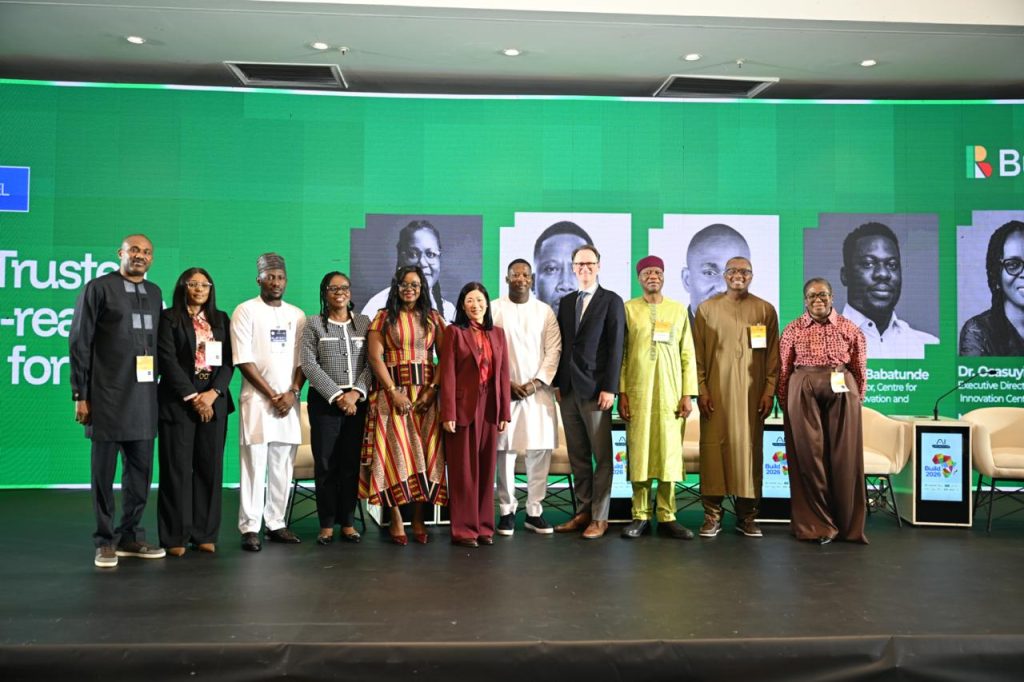
Nigeria is projected to forfeit roughly $850 million (about ₦1.13 trillion) every year because its digital services rely on cloud platforms owned by a small group of overseas firms, according to a study funded by the global tech‑philanthropy [Luminate](https://luminate.org). The finding was disclosed on Wednesday in Abuja during the keynote address at the Build 2026 Conference, organised by the [Nigeria Artificial Intelligence (AI) Collective](https://naiic.org).
**What did the research reveal?**
- The study puts the annual cost of foreign cloud dependency at $850 million for Nigeria.
- Melanie Hui, CEO of Luminate, warned that merely locating data centres within national borders does not guarantee digital ownership.
- Hui quoted, “A country does not own its digital future when a data centre merely sits within its borders.”
- She highlighted that control, affordability, power sources, data processing, and the flow of economic value are the real determinants of sovereignty.
- The report also linked Africa’s historic digital inequities to the routing of undersea fibre‑optic cables, describing infrastructure as a “record of power relationships.”
**Why is AI not a job‑killer, according to experts?**
At the same conference, several technologists countered alarmist narratives about artificial intelligence eliminating work. They cited remarks from the [International Monetary Fund](https://www.imf.org) (IMF) Managing Director Kristalina Georgieva, who called AI a “slow‑moving tsunami” that could affect 40 % of global jobs, and from [World Bank](https://www.worldbank.org) President Ajay Banga, who stressed that AI should boost productivity and create employment.
Data Science Nigeria’s chief executive, Dr Olubayi Adekanmbi, argued that the net effect of AI will be positive because the technology will spawn entirely new occupations. “AI can help in my diagnosis, but the final decision will still come from doctors,” he explained, urging workers to acquire AI skills to stay relevant.
**How can Nigeria prepare its workforce?**
Dr Osasuyi Dirisu, Executive Director of the Policy Innovation Centre and host of the Nigeria AI Collective Secretariat, said digital‑skill development is essential for the country’s youthful population. She described the Collective as a “community of practice” aiming to build an ethical and inclusive AI future for Nigeria.
**What about AI‑driven misinformation ahead of elections?**
The summit also addressed concerns that AI could be used to spread false information before the 2027 general elections. The Centre for Journalism Innovation and Development (CJID), a partner of the Collective, is establishing election‑monitoring labs and media‑training programmes. Adekanmbi added that AI tools like Grok can instantly verify claims, and suggested a telephone‑based verification service for Nigerians without internet access.
Overall, the Build 2026 Conference underscored that while Nigeria’s reliance on foreign cloud services incurs a hefty financial drain, a home‑grown AI ecosystem—backed by robust regulation, digital education, and ethical standards—could transform the perceived threat into a catalyst for job creation and inclusive growth.