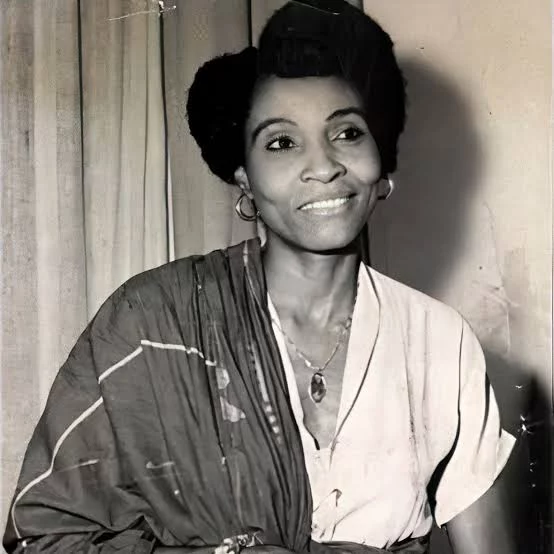
Margaret Ekpo, a Nigerian nationalist and women’s rights champion, organised Aba’s market women in the 1940s, secured seats on the Urban District Council and represented the NCNC at constitutional conferences, paving the way for female political participation in pre‑independence Nigeria.
She was born in 1914, completed Standard Six in 1934 and, after her father’s death, worked as a pupil‑teacher to support herself. In 1944 she travelled with her husband, Dr John Udo Ekpo, to Ireland where she earned a diploma in domestic science from the Rathmines School of Domestic Economy in Dublin. Upon returning to Aba, her husband joined the staff of Aba General Hospital while she opened a domestic science and sewing training centre.
"She was the only woman present at those gatherings," historians note, referring to the anti‑colonial meetings where she heard speeches by Nnamdi Azikiwe and Herbert Macaulay. These encounters, combined with her observation of discriminatory pay and limited duties for Nigerian medical staff, spurred her entry into politics.
How did Ekpo mobilise women in Aba?
After World War II, salt became scarce across Nigeria. Ekpo bought the entire salt stock in Aba Market and made membership in the newly formed Aba Township Women Association (ATWA) a condition for purchase. This clever tactic rapidly united market women into a cohesive political bloc that later partnered with the Aba Community League and the Aba Market Women’s Association to challenge colonial policies and push for female representation on the Aba Urban District Council.
What political positions did she hold?
In 1957 she was appointed to the Aba Urban District Council Caretaker Committee, becoming the first woman to sit on the council. As a leading member of the National Council of Nigerians and Cameroons (NCNC), she served as the sole female delegate from the Eastern Region at the London constitutional conference in 1953 and at the Lagos conference in 1954. In January 1959 she, together with Janet Mokelu, broke another barrier by becoming a Special Member of the Eastern House of Chiefs, an institution traditionally reserved for men.
Despite her achievements, the NCNC barred her from contesting the Eastern House of Assembly elections in 1957 because the party hierarchy refused to endorse female candidates. Undeterred, she assumed leadership of the NCNC women’s wing in 1960, the year Nigeria celebrated independence.
Ekpo’s legacy endures as a testament to how strategic grassroots mobilisation and relentless advocacy can reshape political landscapes, ensuring that women’s voices are no longer marginalised.