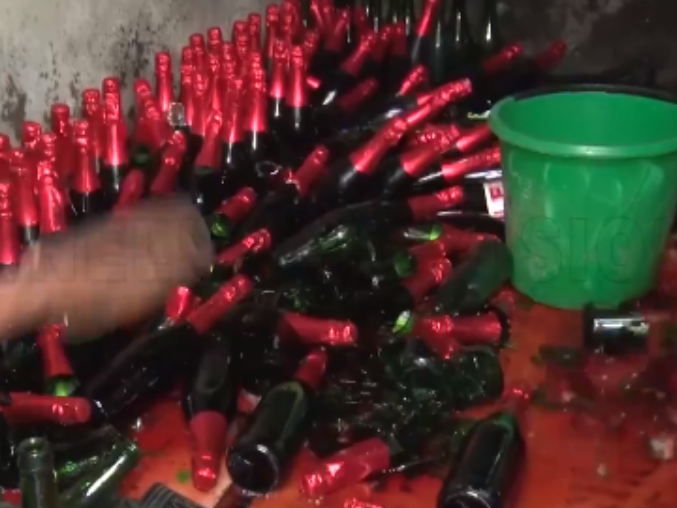
NAFDAC’s recent operations in Lagos and Aba uncovered illegal production and repackaging of alcoholic and energy drinks, seized counterfeit packaging worth more than ₦200 million, and destroyed unsafe products valued at ₦22.73 billion between January and August 2026, raising serious public‑health concerns.
**Key facts**
- In Lagos, officers from the [National Agency for Food and Drug Administration and Control](https://www.nafdac.gov.ng) raided a two‑storey building at Zamfara Plaza, Badagry Expressway, Ojo, arresting Chibuzor Okafor and William John and confiscating drums, filters, packaging materials and a heating device used for illicit drink production.
- In Aba, agents seized large stocks of labels, corks and outer packs bearing the names of premium brands such as Jameson, Glenfiddich, Four Cousins, Lord’s Dry Gin, Imperial Blue, Chelsea, Squadron and Seaman’s Aromatic Schnapps, with an estimated value exceeding ₦200 million.
- NAFDAC recorded 5,542 enforcement activities, 213 raids, 821 product seizure entries and 22 destruction exercises from January to August 2026, eliminating roughly ₦22.73 billion worth of unsafe medicines, foods, cosmetics and beverages.
- Health experts warn that counterfeit alcoholic drinks may contain methanol or other toxic substances, while fake medicines can lead to treatment failure, organ damage or death.
- Director‑General Prof. Mojisola Adeyeye highlighted the rise of online sales of unregistered products and announced monitoring of platforms such as Instagram, Facebook, Jiji, Jumia and Konga.
What did the Lagos raid uncover?
The operation at Zamfara Plaza targeted a suspected facility where alcoholic and energy drinks were allegedly being produced or repackaged without authorization. Two suspects were taken into custody, and investigators recovered equipment that suggested large‑scale illicit activity. Assistant Director of Investigation and Enforcement Directorate Kunle Ojo described the find as “mind‑boggling” and emphasized the agency’s duty to protect Nigerians.
What was found in Aba?
Authorities focused on Old Court Road Market, a known hub for counterfeit activities, and uncovered thousands of counterfeit labels, corks and packaging materials that could be used to masquerade fake spirits, wines and even cooking oil as genuine products. Traders resisted the raid, threatening officers and attempting to flee with the seized items.
How extensive are NAFDAC’s enforcement actions?
Data released by the agency’s Directorate of Investigation and Enforcement show a sharp increase in monthly enforcement activities, peaking at 1,089 actions in July 2026. Cosmetics accounted for the highest number of seizure entries (401), followed by drinks (215), drugs (112), food (69) and chemicals (22).
What health risks do counterfeit products pose?
Counterfeit beverages may be diluted, adulterated or produced with unsafe ingredients. Methanol contamination can cause visual impairment, blindness or death, while other toxins may lead to kidney or liver injury. Fake medicines, on the other hand, can result in treatment failure for conditions such as malaria, hypertension and diabetes, exposing patients to prolonged illness and higher medical costs.
What do experts say?
Dr. Austin Aipoh, President of the Health Care Providers Association of Nigeria, warned that substandard medicines erode patient confidence, increase healthcare expenditure and can cause severe complications. Public‑health specialist Dr. Casmier Ifeanyi stressed that the circulation of unsafe products threatens lives and undermines trust in the health system, calling for stronger post‑market surveillance and public education.
How is NAFDAC tackling online sales?
Prof. Mojisola Adeyeye disclosed that the agency has deployed corps members and interns to monitor product listings on social media and e‑commerce sites. Suspected unregistered eye drops and other health products have been seized, and offenders faced fines ranging from ₦200,000 to ₦5 million. The agency also promotes tools such as Scan2Verify and the Green Book to help consumers verify product registration.
What should consumers do?
Experts advise Nigerians to purchase medicines and health‑related products from licensed pharmacies or reputable retailers, verify registration numbers through official channels, and report suspicious items to authorities. Caution is urged against products promising miraculous cures or sold at unusually low prices, especially online.
The fight against counterfeit goods in Nigeria requires more than periodic raids; it demands continuous surveillance, robust regulatory enforcement, public awareness and cooperation across the entire supply chain to ensure that products reaching consumers are safe and genuine.