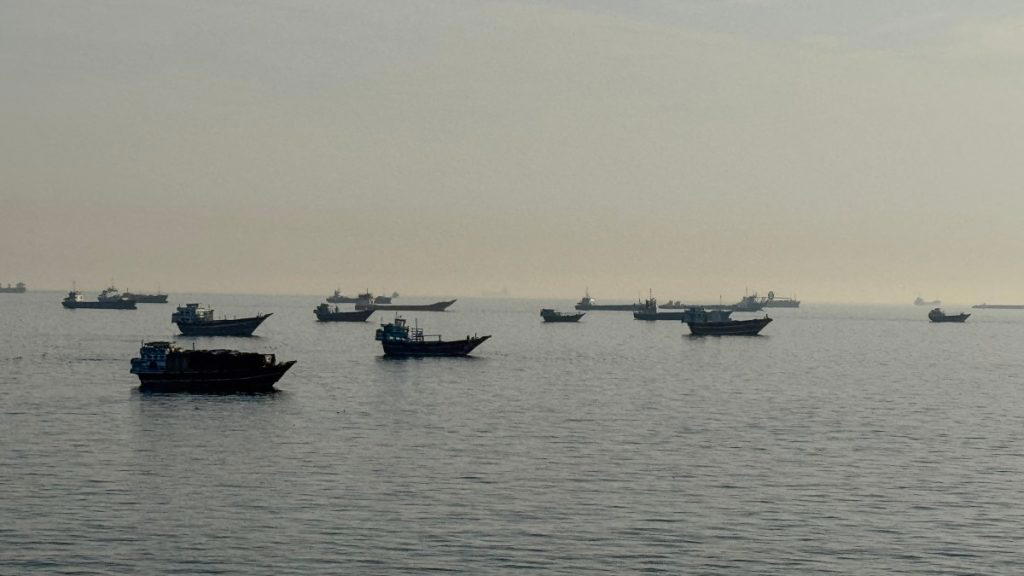
Nigeria and Ghana have pledged to reinforce maritime collaboration and tighten fisheries governance across the Gulf of Guinea, targeting illegal, unreported and unregulated (IUU) fishing, vessel authorisation and monitoring, control and surveillance (MCS) of fishing activities. The agreement was reached after a meeting in Accra between Nigeria’s Minister of Marine and Blue Economy, [Dr. Adegboyega Oyetola](https://marine.gov.ng), and Ghana’s Minister for Fisheries and Aquaculture Development, [Hon. Emelia Arthur](https://www.fisheries.gov.gh).
**What was discussed at the Accra meeting?**
- Both ministers highlighted the strategic need for coordinated maritime oversight to protect shared marine resources.
- Oyetola, who also chairs the [Fisheries Committee for the West Central (FCWC)](https://en.wikipedia.org/wiki/Gulf_of_Guinea_Fisheries_Commission), underscored the importance of effective fisheries regulation for regional security.
- The parties reviewed the work of the FCWC Secretariat and the [Regional Monitoring, Control and Surveillance Centre (RMCSC)](https://en.wikipedia.org/wiki/Maritime_surveillance) in Tema, Ghana, to boost cross‑border enforcement during Nigeria’s chairmanship of the committee.
**Why is IUU fishing a concern?**
Oyetola described IUU fishing as a shared challenge that endangers marine ecosystems, food security, government revenue and the livelihoods of coastal communities. He called for stronger operational coordination between the two nations to address the problem.
**How will vessel authorisation be improved?**
In a statement by Dr. Bolaji Akinola, Special Adviser to the minister, it was noted that Nigeria is piloting a Regional Record of Authorised Fishing Vessels. This platform will allow both countries to verify vessel authorisations and exchange relevant data through the FCWC framework. Technical teams from Nigeria and Ghana are expected to collaborate on identifying discrepancies in vessel records and establishing joint procedures for resolution, thereby enhancing transparency, compliance and sub‑regional fisheries monitoring.
**What commitment did the ministers make?**
“Our shared interest is to protect fisheries resources, expand sustainable production and strengthen the livelihoods of our people. Nigeria remains committed to working with Ghana towards these objectives,” Oyetola said.
The meeting signals a renewed focus on maritime security and sustainable fisheries management in the Gulf of Guinea, with both governments aiming to curb illegal fishing and improve regulatory oversight.