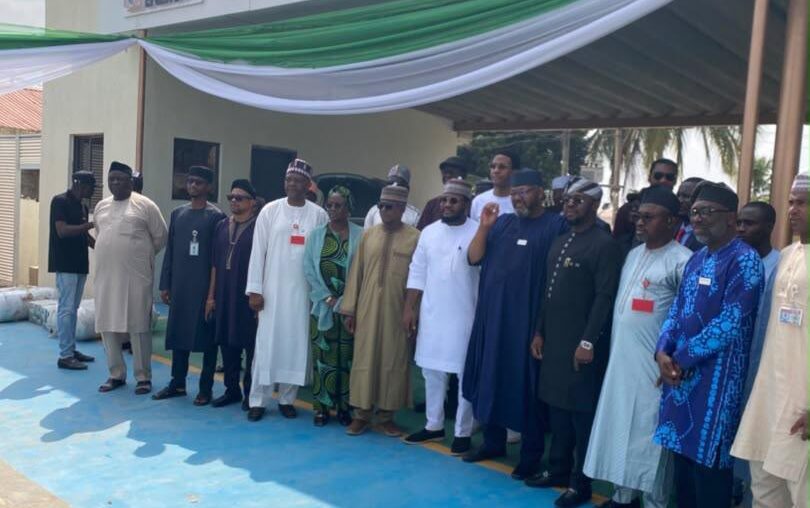
Nigeria has achieved a milestone of approximately 160 operational Compressed Natural Gas refuelling stations nationwide, accompanied by 170 additional facilities currently at various stages of construction and licensing. This infrastructure push forms part of a broader federal government strategy to widen public access to more affordable alternative fuel sources following the removal of petrol subsidies.
The Executive Chairman of the Presidential Compressed Natural Gas Initiative PCNGI, Ismaeel Ahmed, revealed these figures in Abuja during the commissioning of a new CNG Integrated Refuelling Unit station situated along New Karu Road in Karu. According to Mr Ahmed, the nationwide rollout has successfully attracted roughly $2.6 billion in private-sector investment in under two years, signaling robust market confidence beyond initial proof-of-concept phases.
How is the regulatory process managed?
Mr Ahmed explained that pending facilities are undergoing review and awaiting various approvals from the Nigerian Midstream and Downstream Petroleum Regulatory Authority. He added that President Bola Tinubu has mandated additional infrastructure deployments, including 1,500 units scheduled for February and a further 500 units slated for August, which will progressively come online between this year and early next year.
This aggressive expansion aims to serve a populous nation with over 220 million residents and an estimated 12 million registered motor vehicles. Drawing historical comparisons, Mr Ahmed noted that while conventional petrol infrastructure took roughly six decades to establish around 24,000 retail outlets, adoption rates for alternative fuels like CNG and electric vehicles are progressing at a much faster pace.
What impact has CNG had on transport fares?
Officials report that deploying CNG-powered buses has successfully lowered commuter travel costs by 30 to 40 percent across active routes. Beneficiary locations include major urban centers like Abuja, Lagos, and Kano, alongside interstate corridors connecting Kano and Katsina.
Passengers who previously paid between N3,000 and N4,000 on specific journeys now spend approximately N1,500 using converted transport services. The initiative intends to scale these economic reliefs down to local government areas, prioritizing commercial transport hubs with high daily passenger volumes.
How is the State House leading by example?
Speaking at the event, the Permanent Secretary of the State House, Temitope Fashedemi, emphasized that the new facility underscores the government's commitment to delivering cheaper energy alternatives. He explained that authorities rehabilitated an abandoned fuel depot within presidential grounds and partnered with Rolling Energy Limited to transform it into a functional CNG refuelling point without utilizing public funds.
The newly commissioned station combines a dispenser and compressor into a single integrated system featuring double-nozzle capabilities, enabling it to service up to 150 vehicles daily. Its attached vehicle conversion center is also projected to retrofit about 12 automobiles per day as the administration continues pushing for sustainable national energy diversification.