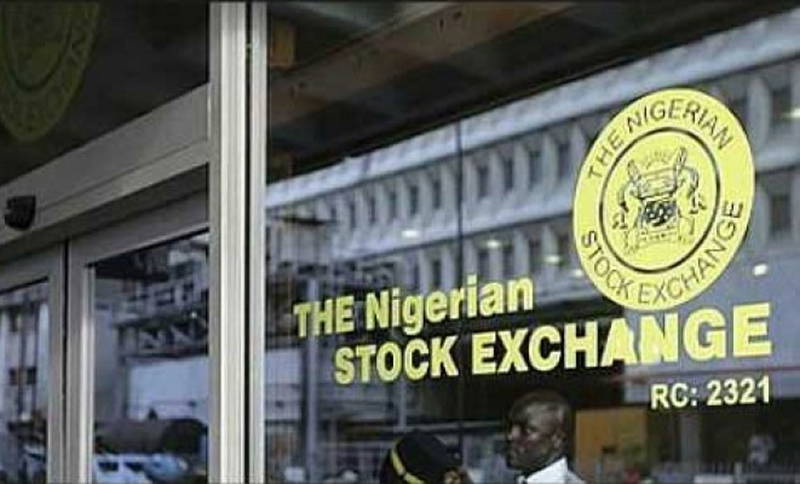
Last week, the share values of 55 companies listed on the [Nigerian Exchange Limited](https://www.ngxgroup.com) dropped as investors engaged in profit‑taking, leaving the overall market sentiment negative. The decline came despite isolated buying in a few stocks, which was insufficient to offset losses in major listings.
Key figures from the week include a reduction of NGX market capitalisation by roughly N206 billion, closing at N160.519 trillion versus N160.725 trillion the week before. The NGX All‑Share Index also slipped, ending at 247,222.27 points compared with 247,539.73 points in the prior session.
Trading activity recorded 2.024 billion shares worth N110.773 billion across 173,113 deals, up from 1.659 billion shares valued at N98.088 billion in 184,632 deals the week earlier. The [Financial Services Industry](https://en.wikipedia.org/wiki/Financial_services) dominated the volume chart, handling 1.111 billion shares worth N53.908 billion in 81,787 transactions, accounting for 54.89% of total share volume and 48.66% of total value.
The [Consumer Goods Industry](https://en.wikipedia.org/wiki/Consumer_goods) followed with 394.039 million shares valued at N9.811 billion across 17,912 deals, while the [Agriculture Industry](https://en.wikipedia.org/wiki/Agriculture) posted 147.170 million shares worth N2.821 billion in 7,462 transactions, ranking third in turnover.
Analysts noted that the market pull‑back occurred against a backdrop of sharply rising international oil prices, driven by heightened geopolitical tensions in the Middle East. "The decline also came against the backdrop of rising international oil prices," analysts said, adding that while higher crude could boost export earnings and government revenue, it may also lift domestic fuel costs, inflation and business expenses, factors that investors are closely monitoring.
Overall, the week highlighted a correction phase for the Nigerian equity market as participants reassess portfolio allocations after the strong gains recorded earlier in the year.