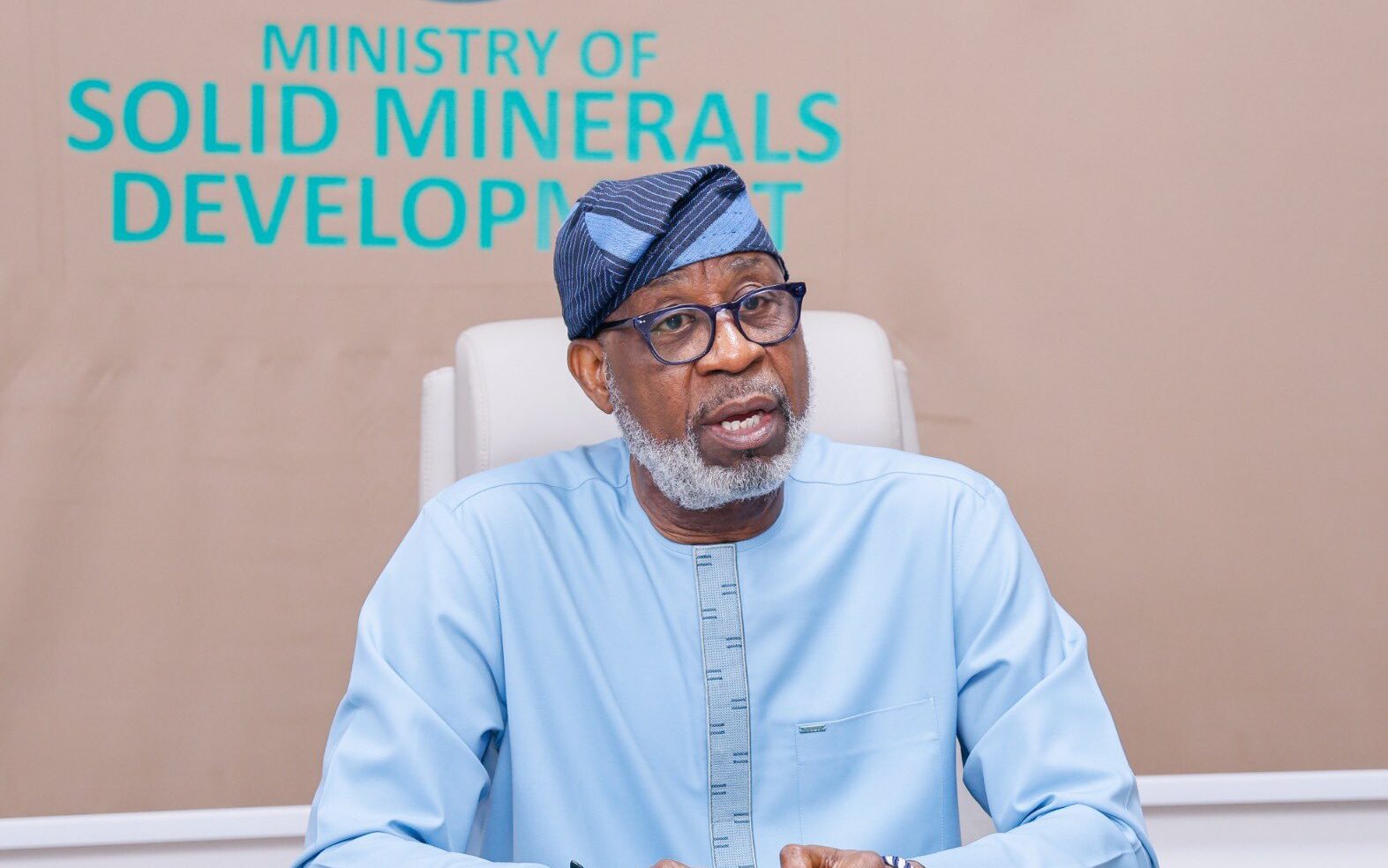
Nigeria’s solid minerals sector generated more than N101 billion in revenue between January and September, marking a major leap from the N6 billion recorded in 2023. The Minister of Solid Minerals Development, Dele Alake, announced the figures, attributing the continuous financial expansion to structural policy reforms introduced by President Bola Tinubu’s administration.
Speaking in Abuja during the public presentation of the ruling party's 2027–2031 manifesto, Mr Alake detailed that earnings from the mining industry climbed to N38 billion in 2024 and reached N70 billion in 2025 before surpassing the N101 billion milestone within the first three quarters of 2026. Data compiled through the Central Bank of Nigeria confirmed the upward trajectory of sectoral earnings throughout the period.
“When I resumed there in 2023, the total revenue that the sector generated was N6 billion. With the introduction of creative policies and reforms, within one year, in 2024, it rose to N38 billion. By 2025, it rose to N70 billion,” the minister stated.
What factors drove the revenue growth?
Mr Alake maintained that the steady increase reflects the tangible outcomes of government interventions aimed at overhauling the mining landscape. He defended major economic shifts, including the discontinuation of the petrol subsidy and the unification of foreign exchange rates, arguing that the president prioritised long-term national interest over short-term political gains ahead of the upcoming general elections.
He asserted that no civilian government since the country gained independence in 1960 has pursued structural overhauls of a comparable magnitude. According to him, the newly unveiled manifesto is designed to consolidate these achievements and broaden their impact across national security, healthcare, agriculture, manufacturing, and industrialisation.
Economic potential and ongoing challenges
Historically, Nigeria’s solid minerals sector—which holds substantial deposits of lithium, gold, iron ore, limestone, barite, coal, and lead-zinc—has contributed minimally to overall economic output. Successive administrations have positioned mining as a crucial alternative revenue earner to reduce the national economy's heavy reliance on crude oil exports.
Despite the recent revenue surge, the sector continues to grapple with structural hurdles, such as rampant illegal mining, lax regulatory oversight, security vulnerabilities in extraction communities, insufficient processing capacity, and a scarcity of comprehensive geological data. To address these gaps, the federal government has intensified drives to promote domestic mineral processing and value addition rather than shipping out raw resources.
Broader governmental perspective
Echoing similar sentiments at the event, the Minister of Information and National Orientation, Mohammed Idris, urged citizens to back the administration's economic blueprint, pointing to improving indicators across various domains. He highlighted better security conditions along major transport arteries, a growing student loan beneficiary base, moderating inflation figures, and positive gross domestic product trends.
Furthermore, the Minister of Budget and Economic Planning, Atiku Bagudu, noted that the administration remains resolute in steering the country toward advanced economic development comparable to emerging global economies, driven by a leadership committed to executing difficult policy decisions.