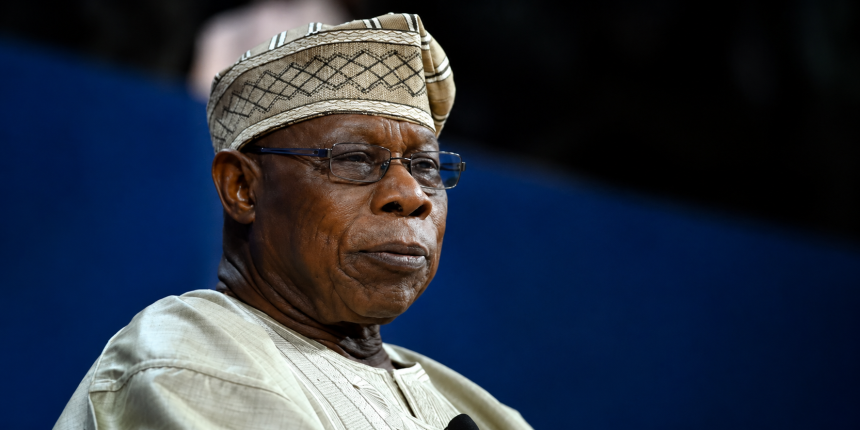
Former Nigerian leader Chief Olusegun Obasanjo has cautioned that reckless national borrowing threatens to mortgage the future of upcoming generations, dismissing remarks supporting public debt as completely misplaced. Delivering his keynote address at the Ajibosin Platform public forum held in Abeokuta, Ogun State, the former president faulted the current administration's fiscal strategy and warned against the long-term dangers of accumulating heavy financial liabilities.
The public event, which focused on leveraging artificial intelligence to address grassroots challenges and drive national growth, provided a platform for the elder statesman to critique the economic direction of the country under President Bola Tinubu.
How did the debt controversy begin?
The debate stems from remarks made by President Tinubu in April at the State House in Abuja during a reception for Plateau State leaders and chieftains of the ruling All Progressives Congress (APC). Defending his administration's borrowing policy, the President had stated that taking loans was necessary for national development, remarking that borrowing is akin to having leprosy and requires hard work to repay.
Responding directly to that statement, Obasanjo argued that debt is far more destructive than leprosy, emphasizing that while a disease may afflict an individual, sustained national debt ruins entire generations.
“For anybody to say debt is no leprosy, is absolute nonsense. Debt is worse than leprosy. Because leprosy destroys only one person. Debt destroys generations,” Obasanjo declared.
What did Obasanjo say about Nigeria's economic decline?
Reflecting on the steady devaluation of the national currency, the former leader noted that his agricultural enterprise was established 47 years ago when the macroeconomic indicators were remarkably different.
He recalled a period when the exchange rate stood at one naira to $1.85, questioning the systemic failures and policy missteps that have driven the exchange rate to current levels above 1,500 naira per dollar.
Obasanjo further raised concerns regarding the competence and vision of the nation's political class, questioning whether current leaders possess the requisite knowledge and capacity to implement policies that genuinely improve the living standards of citizens.
Why did Obasanjo criticize the IMF and World Bank?
Transitioning to international financial institutions, the former president criticized Nigeria's reliance on prescriptions from the World Bank and the International Monetary Fund (IMF), arguing that these bodies were established before Nigeria gained independence and do not account for local realities.
He recounted instances where international organizations discouraged domestic agricultural subsidies, contrasting it with the heavy financial support farmers receive in developed economies.
Obasanjo also cautioned against unquestioningly adopting economic policies formulated by foreign-trained technocrats who lack local administrative experience, warning that implementing academic theories without contextual adaptation continues to undermine national progress.