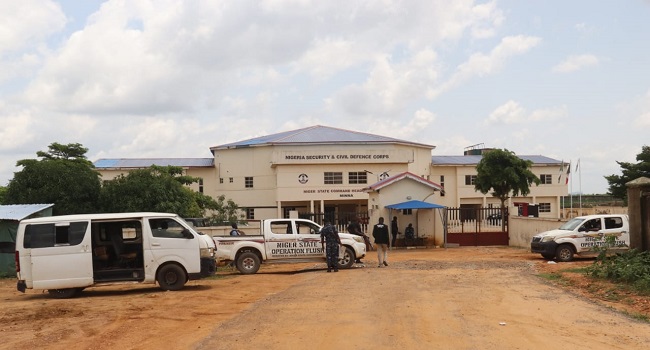
An independent investigation panel probing the deaths of 33 detainees at a Nigeria Security and Civil Defence Corps (NSCDC) facility in Minna, Niger State, has revealed that senior officers authorized operations without proper clearance, ignored suffocation warnings, and failed to act despite desperate pleas for help. The 10-member investigative committee, led by Jonathan Kure, submitted its final findings to Minister of Interior Olubunmi Tunji-Ojo on October 27, shedding light on the tragic events that occurred on September 16 and 17.
The panel's comprehensive report highlighted severe operational failures, including the unlawful confinement of minors alongside adults, severe overcrowding, and attempts to manipulate evidence after the fatalities. Consequently, the committee recommended the immediate dismissal of six NSCDC officers, alongside criminal prosecution for five of them, including the suspended Niger State commandant, Suberu Siyaka. These conclusions serve as administrative and investigative recommendations rather than final criminal convictions.
How did the command authorize the fatal operation?
The investigation revealed that Mr. Siyaka deployed operatives against suspected illegal miners in and around Minna on September 15 and 16 without securing an approved operational order or formal clearance from the NSCDC National Headquarters. Furthermore, he bypassed zonal supervisory chains and neglected to engage the specialized Mining Marshal Unit stationed locally.
This unauthorized sweep led to the apprehension and detention of 75 individuals. Although the command's holding cells were officially rated for a maximum capacity of 40 people across two rooms, investigators discovered that roughly 50 male detainees, including 17 children, were crammed into a single cell. Mr. Siyaka departed the command at about 6:00 p.m. on September 16 and was notified of the mass casualties the following morning. The panel criticized him for subsequently issuing a public statement that falsely blamed the deaths on a disease outbreak, viewing the claim as an active cover-up.
Why were warnings from officers and medical personnel ignored?
The probe implicated Sunday Oluwadare, a chief superintendent of corps heading the command's Investigation Unit, for facilitating illegal detentions and disregarding urgent warnings. Medical personnel had cautioned that severe overcrowding would inevitably trigger suffocation, while legal officers pointed out that the mining offenses were bailable and questioned the legality of detaining minors.
On the evening of September 16, guards alerted Mr. Oluwadare about unbearable heat conditions inside the holding room. Although he inspected the cell by flashing his mobile phone light through the perforated door, he walked away without ordering a decongestion of the facility or taking any corrective measures. The panel recommended his dismissal and subsequent criminal trial.
Did guards refuse to open the cells during distress calls?
The report detailed distinct failures by Usman Ndamaka, a superintendent of corps supervising cell guards, and Hassan Mohammed, an assistant superintendent of corps who managed the night shift. Mr. Ndamaka instructed the night guard not to unlock the doors under any circumstances without armed backup, fearing a jailbreak.
Mr. Mohammed assumed duty at 8:00 p.m. and repeatedly ignored desperate screams, banging on walls, and pleas for air coming from the cell. Fellow armor-guard personnel urged him to intervene, but he stood by his superior's directive. Witnesses noted that the frantic noises eventually ceased around 2:30 a.m. When the cells were finally opened at approximately 7:00 a.m. on September 17, 33 detainees were found dead.
What steps are next for the indicted officials?
The panel has urged the Civil Defence, Correctional, Fire and Immigration Services Board to convene an extraordinary session within 30 days to review the recommended dismissals. It also directed that the comprehensive case file be transmitted to the Attorney-General of the Federation for formal arraignment on charges encompassing murder, torture, inhumane treatment, and criminal negligence. The Ministry of Interior confirmed receipt of the dossier, though formal judicial proceedings are yet to commence.