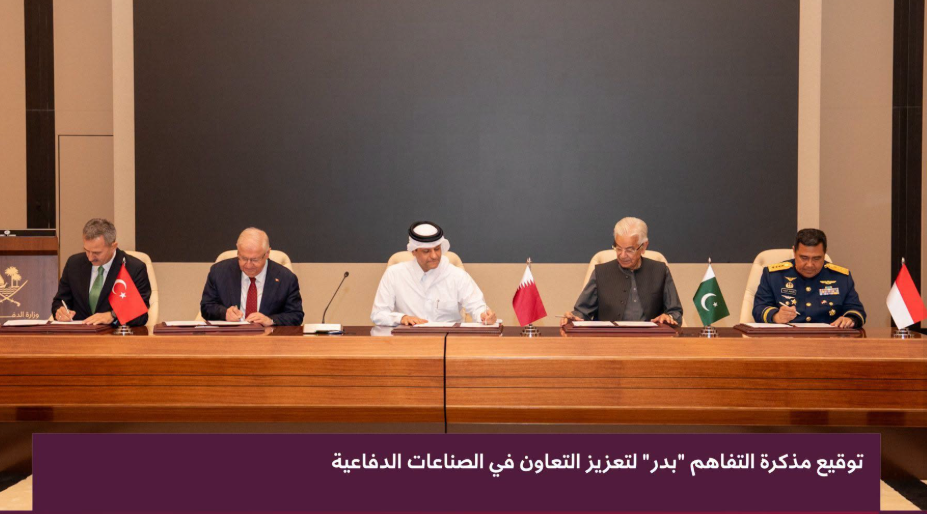
Qatar, Turkey, Indonesia and Pakistan signed the Badr Memorandum of Understanding on Wednesday in Doha, committing to cooperate on the design, production and testing of military hardware and defence systems. The pact seeks to pool resources, share technical expertise and create a joint market for defence products.
Key points of the agreement include: the memorandum was signed on 23 October 2026 in Qatar’s capital; it covers joint manufacturing, research and development, as well as technical training; the four governments will each contribute distinct capabilities – Turkey’s mature defence sector, Pakistan’s and Indonesia’s manufacturing capacity and domestic markets, and Qatar’s investment potential; the Qatari Defence Ministry said the deal will “enhance defence capabilities among the four countries.”
What does the Badr MoU cover?
The agreement outlines collaboration in three main areas: co‑development of weapons and defence platforms, joint production lines to increase self‑sufficiency, and shared training programmes for engineers and technicians. It also encourages joint research projects aimed at modernising defence technologies.
Why did the four nations sign the pact?
Each country brings a complementary strength to the table. [Turkey](https://en.wikipedia.org/wiki/Turkey) has rapidly expanded its domestic defence industry and can provide advanced technological know‑how. [Pakistan](https://en.wikipedia.org/wiki/Pakistan) and [Indonesia](https://en.wikipedia.org/wiki/Indonesia) contribute sizeable manufacturing bases, skilled workforces and large internal markets that can absorb jointly produced equipment. Qatar, through its sovereign wealth funds, offers the financial backing needed to scale up production and fund research.
How does the agreement fit into regional security dynamics?
The memorandum was concluded as the conflict involving the United States and Israel against Iran continues to reshape security calculations across the Middle East. Gulf states have expressed heightened anxiety over missile and drone threats, while the ongoing hostilities between Saudi Arabia and the Yemeni Houthi movement have opened a new front in the wider regional war. By strengthening their own defence industries, the signatories aim to reduce reliance on external powers and protect critical infrastructure.
What are the expected outcomes?
The Qatari Defence Ministry indicated that the partnership will “promote collaboration in technical defence training, as well as in research and development areas,” ultimately leading to the creation of solutions and industries that match the evolution of modern defences. Analysts predict that the joint venture could generate new export opportunities and foster a more resilient defence supply chain for the participating nations.
The Badr MoU therefore represents a strategic move by Qatar, Turkey, Indonesia and Pakistan to deepen industrial ties, diversify defence capabilities and respond collectively to the shifting security environment in the Middle East and beyond.