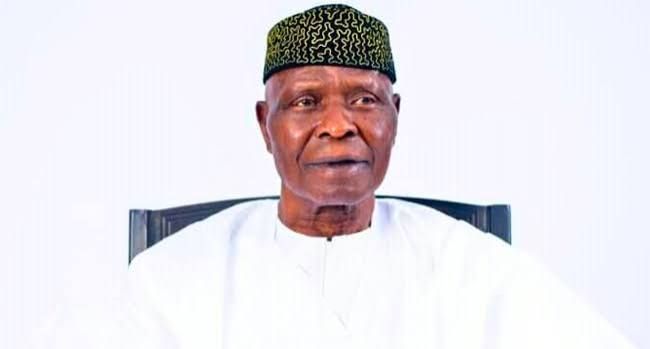
Marking one year since the departure of former Kwara State governor and elder statesman Chief Cornelius Olatunji Adebayo, associates and political observers continue to honor a life defined by unyielding integrity, intellectual rigor, and profound commitment to democratic ideals. Born on February 24, 1941, in Igbaja, Kwara State, Adebayo built a remarkable career spanning academia, legislative service, and executive governance before playing a pivotal role in Nigeria's pro-democracy struggles.
What were the defining roles of Chief C.O. Adebayo in Nigerian public life?
Chief Adebayo, affectionately known as C.O., wore many hats with distinction throughout his lifetime. He served as a university lecturer at the University of Ife, head of the English Department at the Kwara State College of Technology, and Commissioner for Education in the old Kwara State. His political trajectory saw him elected as a senator during the Second Republic and later serving as governor of Kwara State. Furthermore, he held ministerial portfolios as Minister of Communications and Minister of Transportation at different times.
Beyond formal governance, Adebayo was a towering pillar within the National Democratic Coalition (NADECO), the Afenifere socio-cultural organization, the Middle Belt Forum, and the Movement for National Reformation. His steadfast opposition to military authoritarianism culminated in his detention in Calabar prison by the regime of late General Sani Abacha in 1994, following his refusal to compromise his principles or accept a ministerial appointment from the military government.
How did his journalistic and political alliances shape his legacy?
Reflecting on a relationship that spanned over three decades, former Nigerian Ambassador to Thailand Oma Djebah recalled his initial encounter with Adebayo in the early 1990s at his Ilorin GRA residence while working as a journalist for Classique magazine. That initial interview blossomed into an enduring mentorship, with Adebayo serving as a vital source of political insight and a progressive compass during the tumultuous years of military rule under General Ibrahim Babangida and General Sani Abacha.
Adebayo remained a vocal advocate for true federalism and the devolution of powers from the federal government to federating units. In a 2016 interview, he emphasized the necessity of structural reforms to accommodate Nigeria's diverse ethnic nationalities and curb the perceived marginalization of minority groups.
As family, friends, and the nation commemorate the anniversary of his passing, the enduring values of transparency, courage, and selfless service championed by Chief C.O. Adebayo continue to serve as a beacon for contemporary political actors navigating Nigeria's democratic journey.