
In Jos, Plateau State, elderly widows are spending their final years crushing stones at a local dump to survive. Earning about N1,000 per 25-kilogram sack, the women say widowhood, insecurity, and lack of social protection forced them into the physically demanding trade. Despite age-related health challenges, they continue to labour daily to feed themselves and support their families.
Jos, the capital of Plateau State, is sometimes described as the ‘Jewel of the Plateau’. The city is renowned for its breathtaking landscapes, rocky outcrops, and cool climate. But behind the scenic hills and rocky landscapes that make Jos a tourist attraction lies another image: elderly women bent over stones, hammers in hand, battling age and hardship with unwavering resolve.
For them, stone crushing is not merely a job. It is survival.
Along Ring Road in Jos North Local Government Area, 70-year-old Kikiumoro Izam spends her days crushing stones at a local quarry. Covered in layers of stone dust that pale her skin, she works steadily under the sun, wielding a hammer in a job largely dominated by men due to its physically demanding nature.
For Izam, stone crushing is not a choice born of preference but of necessity. A widow for over three decades, she was left to single-handedly raise her children after her husband’s death. With no financial support and limited opportunities, she resolved to fend for her family through honest labour.
“People steal and get beaten,” she says firmly. “Is it not better to suffer and earn a legitimate living than to steal? It is better to do hard labour.”
Izam has been in the stone-crushing business for nearly 30 years. Before the outbreak of the 2001 Jos crisis, she sustained her family by hawking yams and other food items. However, insecurity forced many women to abandon street trading.
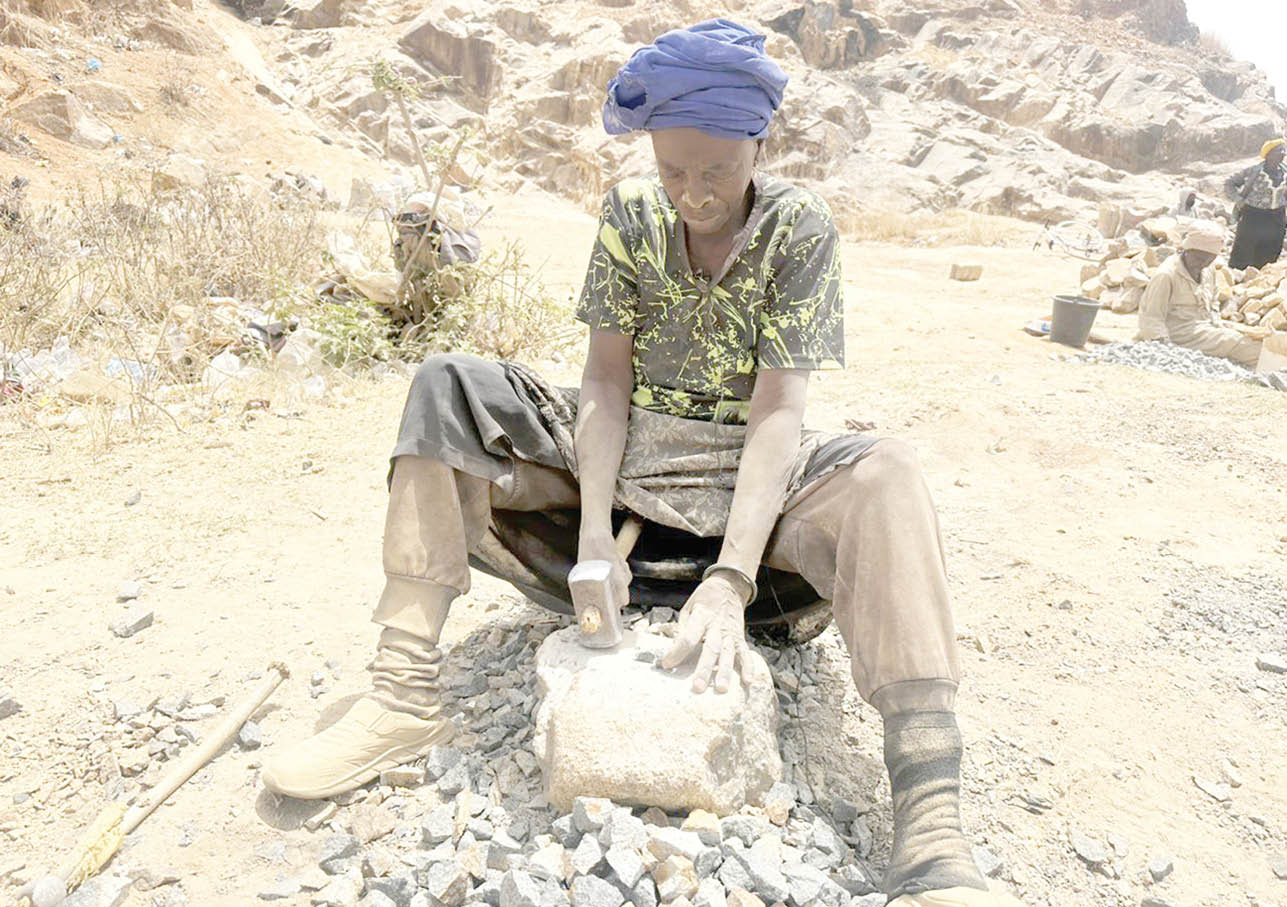
“We were many in the hawking business, but after the crisis, fear stopped us from moving around. I couldn’t afford to stay idle. I had to look for something else; that was when I started crushing stones,” she recalls.
The work is gruelling, yet it has enabled her to meet basic responsibilities. From selling crushed stones, she is able to buy food, clothing, and occasionally support her grandchildren’s education.
“This job gives me food because I can sell the stones and buy what we need,” she says with quiet pride. “It provides the little the family can survive on.”
Although she managed to raise her children through primary school, financial constraints prevented her from sending them to higher institutions. Today, many of them are married, while some have passed on, a reality that keeps her tied to the quarry despite her age.
However, Izam is not alone. At the same Ring Road quarry site, 72-year-old Asabe Musa and 73-year-old Titi Garba, both widows, have also spent decades crushing stones to earn a living.
Asabe, from the Yantraila community, has been in the business for over 20 years. Like Izam, she once hawked food items before age and insecurity made the trade unsustainable.
“I worked hard every day, but as I grew older, my legs were no longer strong enough to move around,” she explains. “My husband had died, and my older children also passed away. I still have two children, but they are not strong enough to support me.”
She now crushes between one and two 25-kilogram sacks of stones daily. On difficult days, she brings her grandson to assist her.
“Whatever I earn, I use it to buy food and clothes. If you don’t work, there is nothing that will help you,” she says.
For Titi Garba, the transition to stone crushing followed a similar path. Before the Jos crisis, she relied on street trading to survive. When violence disrupted economic activities, she sought safer alternatives.
“It became too risky to move around selling goods,” she says. “So I had to find something else. That was how I started crushing stones.”
For more than 30 years, she has depended on the quarry. Though the income is modest and inconsistent, it sustains her.
“Sometimes, I give my grandchildren a little money for school. It may not be much, but I am proud I can still contribute to their lives.”
The women typically spend eight to nine hours daily at the quarry. At their age, the physical toll is immense. By the time they return home, exhaustion overwhelms them. Yet the next morning, they are back at work.
To cope with the labour-intensive demands, they sometimes pay younger men to break down large rocks into smaller pieces before they begin crushing. A 25-kilogram sack of stones sells for about N1,000, a meagre return for hours of backbreaking effort.
“We battle with back and chest pain because of the nature of the job,” says Izam, who serves as the informal leader of the quarry workers. A stone can fall on you while digging. Sharp edges can injure your legs or eyes. Our hands are always sore from holding the hammer. The risks are constant, from physical injuries to long-term health complications caused by dust inhalation and repetitive strain.
Despite these challenges, the women remain grateful for the opportunity to earn a living. They rely heavily on faith and resilience to sustain them.
“We thank God for giving us strength,” Izam says.
While these women embody determination and dignity in labour, their stories also reflect the vulnerabilities faced by elderly widows in Nigeria, particularly those without pensions, social protection, or stable family support.
They are calling on governments at all levels to improve living conditions and provide better economic opportunities, especially for ageing citizens who continue to work under harsh conditions simply to survive.
Comments (0)
You must be logged in to comment.
Be the first to comment on this article!