
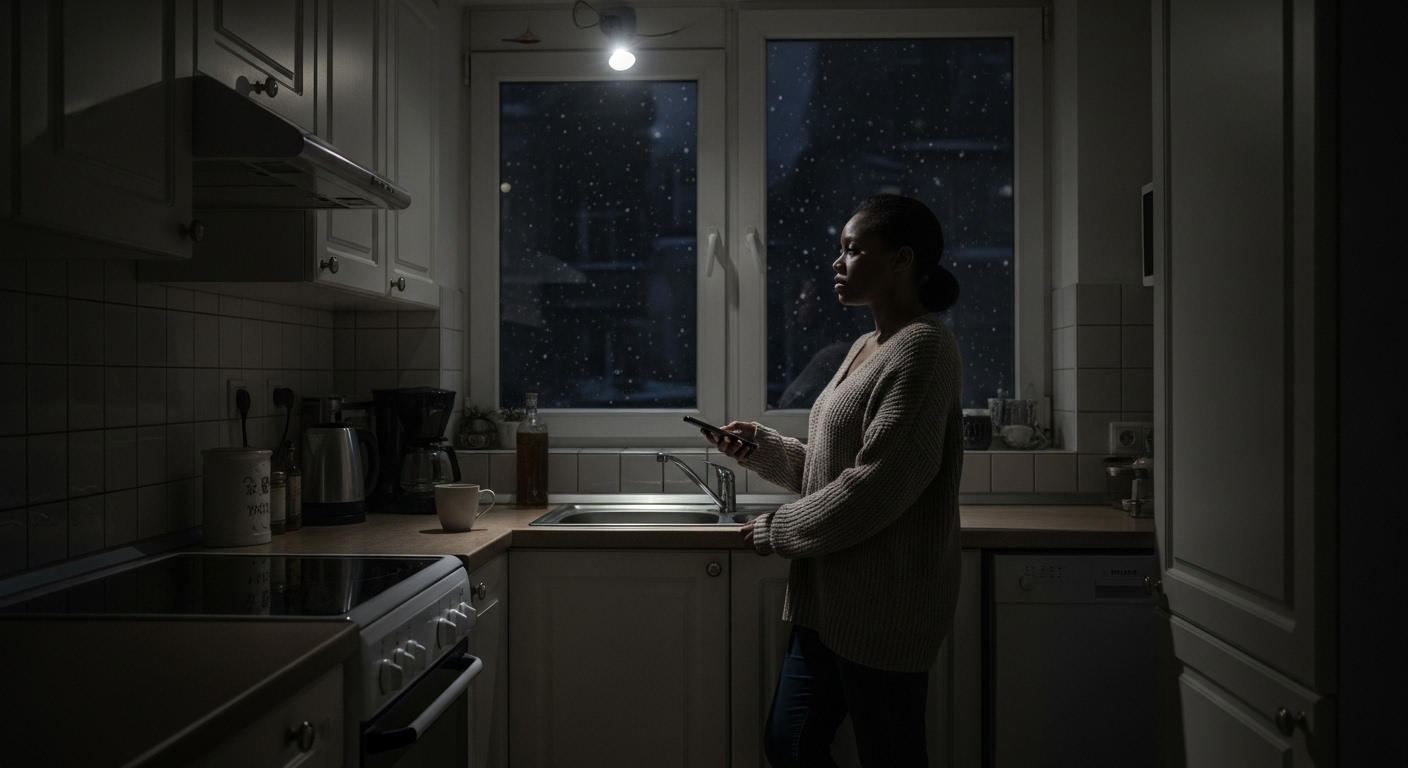
In December 2024, I gained insight into what it means to grieve from afar. I stood in my kitchen, enveloped in a quiet that felt both proud and hopeful after celebrating a significant milestone in my life. Then, I received a call via WhatsApp. A voice from Nigeria conveyed the heartbreaking news that my father had passed away.
I was blindsided by the reality of hearing, from such a distance, that someone I cherished was no longer here. Gripping my phone tightly, I struggled to absorb the news while my thoughts raced ahead to all the things I would miss out on. At that moment, the holiday season, which had felt promising, starkly highlighted my separation from home. I was unable to travel, to sit beside my family, or partake in the rites that can make loss feel tangible. Instead, I found myself grieving in Edmonton, far removed from Nigeria.
This particular kind of sorrow didn’t arrive with traditional holiday dishes or comforting hugs. It manifested as a profound sadness, contrasting sharply with the celebrations happening around me.
For many immigrants and newcomers, December often amplifies the feelings of where we are not. This is a conversation we seldom engage in. The Christmas season carries a unique weight. Conversations about heading home abound; plans for family reunions, advance bookings of flights, and cherished traditions returned to light up the season. Yet, for those of us far from home, rather than engaging in festive gatherings, we often find ourselves enveloped in grief. For me, in 2024, the sorrow was not just about mourning a loved one but also about mourning the essence of home itself.
When newcomers settle in a new country, the focus tends to be on adapting: securing jobs, establishing stability, and supporting family back home. Rarely do we reflect on those we leave behind over the years. Time slips by unnoticed. Five years may turn into ten. Then, one day you wake up to the sad revelation that someone you loved, someone you believed would always be there, is gone just like that.
In those instances, you may find yourself questioning everything about your life choices – your reasons for leaving, the new life you are trying to build. This leaves you to ponder whether one kind of advancement must inevitably come with the trade-off of another. You contemplate if one suffering is merely exchanged for another, given that loss does not wait for permits to approve or for bank balances to grow. It does not hold back because travel is too costly or because time off feels like a missed opportunity. When someone you care about passes away back home, the grief crosses any ocean, regardless of your physical presence.
A grief therapist once expressed, “There is a distinct pain in knowing exactly where you wish to be and realizing you cannot make it.” That statement resonates profoundly.
During the holiday season, that ache intensifies. Christmas music fills shopping malls. Festive lights shimmer everywhere. Conversations casually arise, like, "Are you going home this year?” You nod politely and provide a truncated version of your reality saying, "Not this time,” neglecting the whole tale of high travel costs, immigration limitations, and the obligations keeping you tied to your current location.
Therefore, you carry your grief silently.
For many newcomers, grief is processed in small pieces. It can emerge as a favorite dish made on Christmas Eve, whose significance may go unnoticed by others. It resides in a faint prayer whispered in a familiar language that feels safer in moments of despair. It exists in sporadic phone chats with family when time zones align. Yet, nothing replaces the experience of being there in person.
Grieving from a distance can often feel isolating, not due to a lack of company, but because so few comprehend the multifaceted nature of that grief. There is the sadness of loss, naturally; yet there is also the burden of not being there, combined with gratitude for the opportunities you’ve had and entwined with the pain of separation. It is a constant balancing act between survival and mourning.
And yet, life persists. You go to work, answer emails, attend events when possible, and learn to bear your grief alongside responsibilities—not out of ease, but simply because there is no alternative.
If you find yourself mourning from afar, believe that your grief is significant. It does not diminish simply because you’re not physically present. Love does not fade with distance, nor does loss.
Mourning from a distance is not indicative of a failure to belong; rather, it stands as evidence that love traverses distances stubbornly, across borders, time zones, and years.
Comments (0)
You must be logged in to comment.
Be the first to comment on this article!