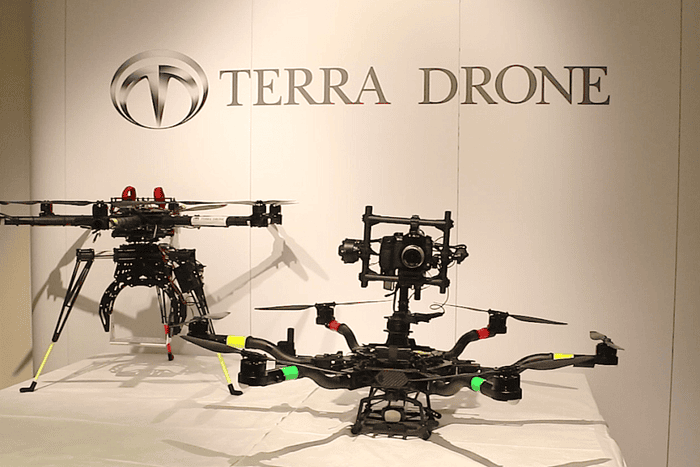
Terra Industries, a Nigerian defence‑tech firm, raised an additional $22 million in a seed‑extension round in February 2026, bringing its cumulative funding to $34 million. The round was spearheaded by [Lux Capital](https://en.wikipedia.org/wiki/Lux_Capital) and included participation from the Silicon Valley firm [8VC](https://en.wikipedia.org/wiki/8VC), signalling growing investor interest in Nigeria’s security‑technology sector.
Key facts:
- The financing was led by Lux Capital, with 8VC and other investors contributing.
- Terra’s board welcomed Alex Moore, a defence partner at 8VC, a year earlier.
- Founders Nathan Nwachuku and Maxwell Maduka launched the company in 2024.
- The round follows a broader trend of foreign capital moving beyond fintech into defence and critical‑infrastructure tech.
**What does Terra Industries specialise in?**
Terra builds autonomous drones and security systems aimed at protecting vital infrastructure such as energy grids and mining operations. Its technology combines aerial surveillance with AI‑driven threat detection to offer real‑time monitoring for assets deemed critical to national interests.
**How does this funding compare with past fintech investments?**
Historically, Nigeria’s tech boom attracted most overseas money into payment platforms. For instance, in February 2022, [Flutterwave](https://en.wikipedia.org/wiki/Flutterwave) secured a $250 million Series D round, pushing its valuation above $3 billion. Paystack, another fintech, was acquired by Stripe in 2020 after an early‑stage investment. Those deals highlighted the dominance of fintech in foreign‑capital flows, whereas Terra’s round illustrates diversification into defence and infrastructure.
**Why is the shift significant for Nigeria’s economy?**
The move signals recognition that technology, infrastructure, and national security are increasingly intertwined. Investors are now seeing opportunities to support companies that safeguard essential services, which could enhance resilience and attract further capital to non‑fintech sectors.
**What are the broader funding trends in Nigerian startups?**
According to Partech’s 2025 Africa Tech Venture Capital report, Nigerian startups attracted $412 million across 83 deals in the previous year—a 21 % drop in total capital and a 19 % decline in deal count from 2024. While equity financing has tightened, the African Private Capital Association notes that African‑sourced venture commitments rose to 45 % in 2025, up from an average of 23 % in earlier years.
**What challenges remain for local investors?**
Despite rising regional capital, many Nigerian founders still rely heavily on foreign funds to scale. This dependence can limit domestic control over strategic decisions, especially in sectors like defence where national interests are paramount.
Terra’s latest round, backed by both African and international investors—including a participation from Resilience17, led by Flutterwave’s GB Agboola—exemplifies the collaborative financing model emerging in the country. However, the presence of foreign investors on the board does not automatically translate into decisive control, and the exact terms of influence remain undisclosed.
**What could the future hold?**
If Nigeria continues to attract overseas capital for defence and infrastructure tech, it may accelerate innovation and job creation in these fields. Yet, a balanced ecosystem that also nurtures strong local investors will be essential to avoid over‑reliance on external funding and to ensure sustainable, inclusive growth across all technology sectors.