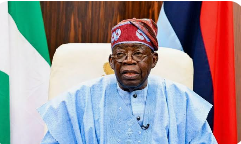
President Bola Tinubu sent a formal letter to the National Assembly on 21 October 2026, requesting that the Senate approve a supplementary external borrowing plan worth $20,517,755,901 and €1,045,083,643, as well as the creation and expansion of a federal Promissory Note Programme valued at N269.44 billion, to finance infrastructure and development projects nationwide.
Key details from the letter include: the borrowing covers the 2026‑2027 fiscal period; the total external facilities amount to $20.52 billion and €1.045 billion; the promissory‑note liability totals N269,446,402,822.56; the projects span power, transport, agriculture, health, education, water supply and security; and the Senate President, Senator Godswill Akpabio, read the letter in plenary and referred it to the Senate Committee on Local and Foreign Debts for further scrutiny.
What does the supplementary borrowing plan cover?
The plan is described as a “Supplementary External Borrowing Plan” that cuts across all sectors of the economy, with a particular emphasis on critical infrastructure such as power generation, road and rail networks, and healthcare facilities. The President stressed that the projects were selected after rigorous technical and economic assessments and are expected to generate jobs, promote skills acquisition, foster entrepreneurship, reduce poverty and improve food security for Nigerian children.
Why is a promissory‑note programme needed?
The President’s letter, also signed by the Secretary to the Government of the Federation, Senator George Akume, explains that the Promissory Note Programme will provide a structured, transparent and fiscally responsible framework for settling verified contractual and project‑related liabilities that amount to over N269 billion. The programme is intended to avoid immediate cash‑flow pressure on the treasury while spreading repayments over a manageable period, in line with prudent debt‑management principles.
Which bodies will implement the proposals?
The President asked the National Assembly to empower the Minister of Finance and the Coordinating Minister of the Economy, in collaboration with the Debt Management Office and other relevant agencies, to operationalise both the external borrowing and the promissory‑note scheme. The Senate Committee on Local and Foreign Debts, possibly working with the Senate Committee on Appropriations, is expected to report back to the plenary within a week.
What are the expected outcomes?
If approved, the external facilities will fund infrastructure projects across all 36 states and the Federal Capital Territory, addressing the nation’s sizable infrastructure deficit. The promissory‑note arrangement will settle outstanding verified liabilities, halt the accrual of interest and penalties, and restore confidence among creditors.
The President concluded that swift legislative approval is essential to ensure timely disbursement of funds, effective project execution, and the fulfilment of the government’s obligations to the Nigerian people.
How will the Senate proceed?
Senator Akpabio, after reading the letter, referred it to the Senate Committee on Local and Foreign Debts for detailed examination. The committee is expected to liaise with the Committee on Appropriations and other relevant panels before presenting its findings to the full Senate for a vote.
The letter did not disclose a project‑by‑project breakdown, specific financing terms, or the allocation of funds to individual sectors, leaving those details to be examined during the committee’s review.