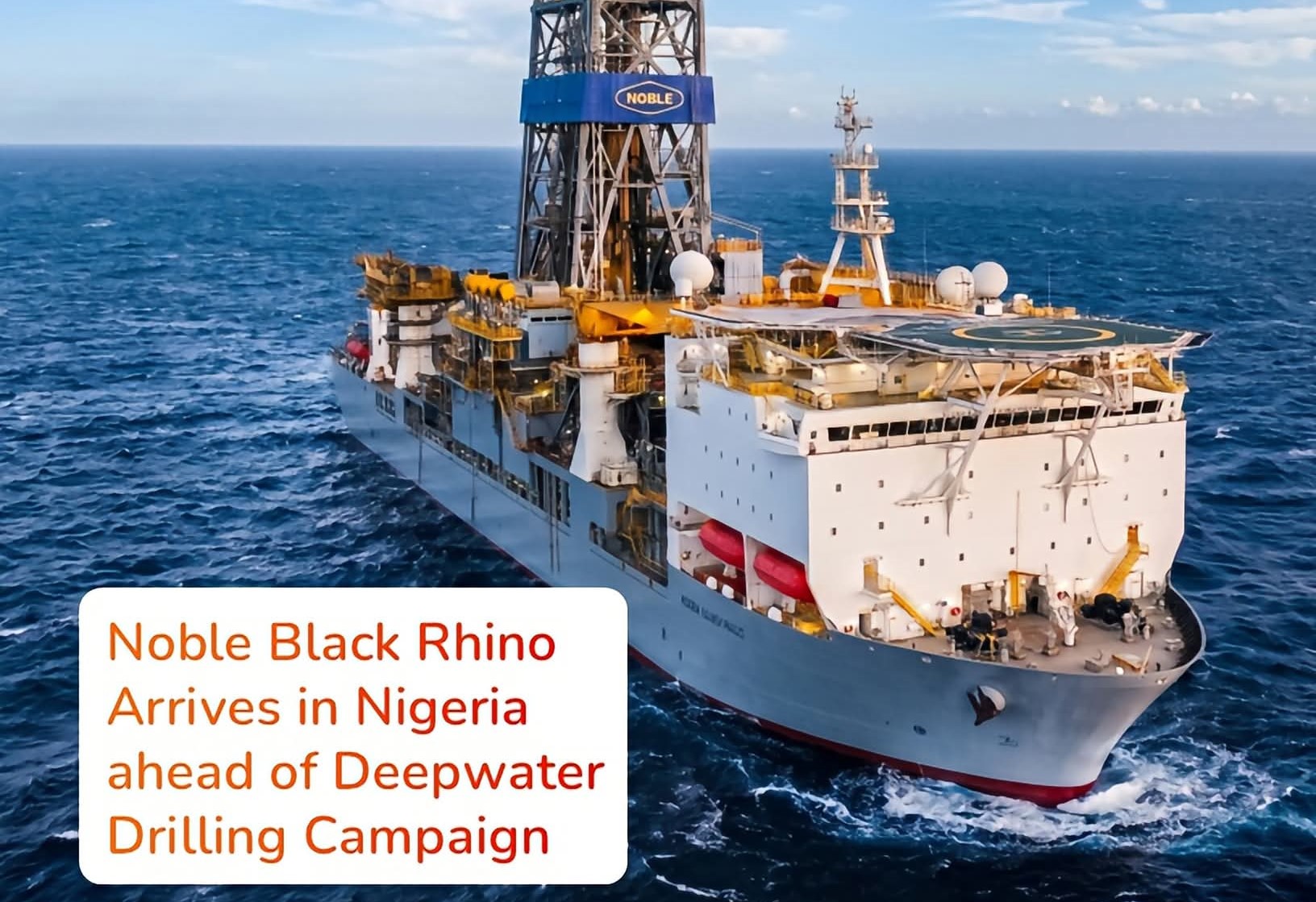
French energy conglomerate TotalEnergies has mobilised an ultra-deepwater drillship to the Akpo petroleum asset off the Nigerian coastline, kicking off preparations for a fresh drilling initiative designed to boost offshore hydrocarbon exploration.
Following a 738-nautical-mile transit from Côte d'Ivoire, the vessel, known as the Noble Black Rhino, crossed into Nigerian maritime territory and anchored at the Akpo field to initiate operational readiness ahead of its scheduled well spudding.
What are the specific operational timelines and partners involved in the project?
According to corporate disclosures, the drillship arrived at the field at dawn, with the drilling of the initial well designated as AFE-1X lined up to begin on 13 November. The Akpo asset, situated within Petroleum Mining Lease 2 (PML 2)—formerly Oil Mining Lease 130 (OML 130)—lies roughly 150 kilometres offshore and commenced commercial hydrocarbon output in March 2009. The facility is managed by TotalEnergies Upstream Nigeria Limited, which holds a 24 per cent participating interest.
Additional stakeholders in the production-sharing agreement include China’s CNOOC with a 45 per cent stake, South Atlantic Petroleum Limited holding 15 per cent, and Prime 130 with 16 per cent. Meanwhile, the Nigerian National Petroleum Company Limited functions as the concessionaire, overseeing the governance framework of the joint venture.
How does the Petroleum Industry Act impact host communities?
The ongoing deepwater expansion has reignited discussions regarding statutory obligations toward coastal populations under the Petroleum Industry Act (PIA). Enacted in August 2021, the legislation mandates petroleum operators to institute Host Communities Development Trusts and channel three per cent of their preceding year's operating expenditures into these funds. Although TotalEnergies has established five distinct trusts—namely Obagi, Olo, BOPANE, NOPL, and Port Harcourt—publicly accessible regulatory portals like the HostComply platform have not explicitly delineated separate trusts or beneficiary listings assigned to the Akpo and Egina deepwater operations.
During regulatory stakeholder sessions, the Nigerian Upstream Petroleum Regulatory Commission (NUPRC) previously designated coastal communities within Rivers and Bayelsa states as the littoral groups mapped to these deepwater fields. Nevertheless, independent checks across public databases remain inconclusive regarding whether dedicated trusts have been incorporated for these specific offshore populations or how financial allocations are disbursed to them.
What environmental concerns surround the new drilling campaign?
The arrival of the rig also brings renewed scrutiny regarding ecological accountability and greenhouse gas management. Recent investigative findings and data sourced from the Nigerian Oil Spill Detection and Response Agency’s Gas Flare Tracker indicated fluctuations in flare volumes around the OML 130 cluster, pointing to a need for transparent emissions reporting. While regulatory bodies such as NUPRC and the National Oil Spill Detection and Response Agency maintain oversight over exploration activities, environmental advocates continue to press for rigorous mitigation measures to protect marine ecosystems from potential operational hazards.