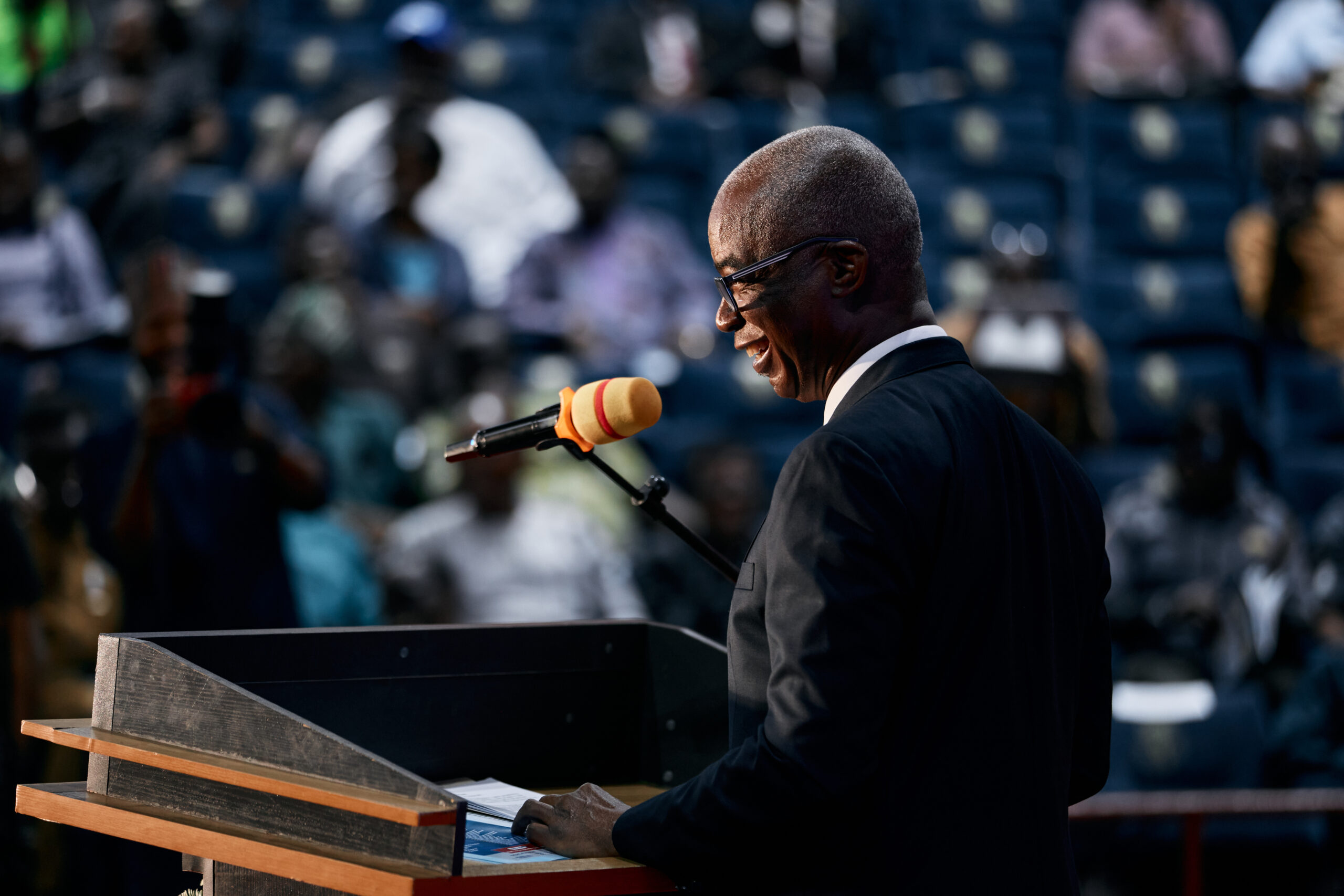
Dr Tunji Olowolafe, founder of the Tunji Olowolafe Foundation, addressed the 65th anniversary celebration of Obafemi Awolowo University in Ile‑Ife, calling for broader research participation, scientific testing of long‑standing beliefs, and the commercialisation of academic discoveries through three distinct strategies.
He highlighted that only about one million of the two million candidates who sat for the 2025 UTME were admitted, underscoring the need for flexible, digital learning models. He cited the Foundation’s Gbemisola Olowolafe Memorial Community Secondary School in Are‑Ekiti, opened in September 2025 with 100 pupils and now serving over 170 students, featuring an ICT centre that teaches artificial intelligence, coding, graphic design and Mandarin via live instruction from Beijing through a Starlink link. He also referenced the Foundation’s Project Digi‑Teach, which is up‑skilling staff at Ekiti State University for digital proficiency.
What are the three strategies?
- Open research earlier and more flexibly – Olowolafe urged OAU to turn its Staff Schools into continental benchmarks, embedding science, technology and artificial intelligence throughout curricula. He questioned the necessity of a four‑year degree as the sole pathway to postgraduate research, advocating for recognition of prior learning and demonstrated expertise without compromising standards.
- Test societal beliefs rigorously – He warned against dismissing indigenous knowledge outright or accepting it uncritically. Citing Chinese scientist Tu Youyou, whose investigation of a centuries‑old herbal remedy led to the Nobel‑winning antimalarial artemisinin, Olowolafe urged similar scientific scrutiny of Nigeria’s own traditions and even sensitive historical narratives such as the Civil War. “She neither rejected tradition nor accepted it. She tested it,” he remarked.
- Translate research into economic value – The speaker advocated for university promotion criteria that reward patents, marketable products and solutions to industrial challenges alongside conventional journal articles. He pointed to OAU alumni who founded fintech firms like Flutterwave and Moniepoint as evidence of the university’s strong tech pedigree, and called on the global alumni network to increase financial, institutional and mentorship support tenfold.
To operationalise these ideas, the Foundation pledged to install a solar power system for OAU’s Postgraduate College, create a virtual learning and oral‑defence facility, and modernise the College Boardroom. It will also fund pilot studies on a case‑by‑case basis and sponsor grant‑writing and donor‑compliance training in partnership with OAU’s Central Office of Research and Advancement.
“Our ambition must go beyond providing infrastructure to building institutions that can generate knowledge and attract global research funding. By strengthening the capacity of our universities, we can expand opportunities for our people and position Nigeria to compete more effectively in the global knowledge economy,” Olowolafe concluded.
Sponsored content.