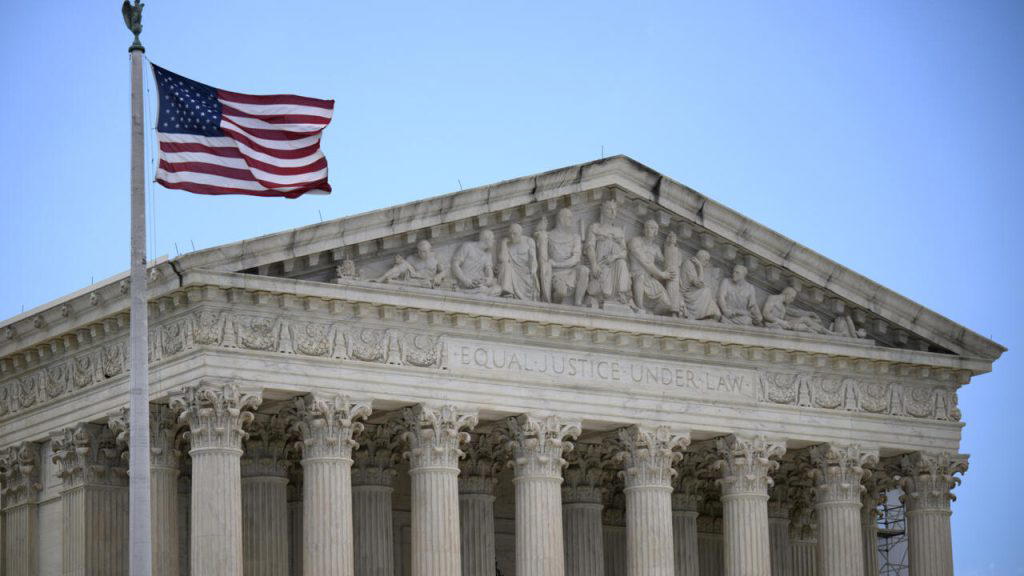
The [US Supreme Court](https://www.supremecourt.gov/) has agreed to consider the Trump administration’s appeal to restore a ruling that denied asylum to Izuchukwu Ozurumba, a Nigerian national deported on the basis that his work cooking for a separatist camp constituted “material support” for terrorism. The case will be heard during the Court’s current term that began on October 5, 2024 and runs through late June 2025.
**Key facts**
- Ozurumba says he was forced to prepare meals for roughly six months at a separatist group’s camp in southern Nigeria starting in 2022.
- He fled to Venezuela and entered the United States illegally via the Mexico border in the summer of 2023.
- A 2024 immigration judge denied his asylum claim, invoking a provision of [US immigration law](https://www.uscis.gov/) that bars anyone who gives “material support” to a terrorist organization from receiving protection; the decision was upheld on appeal.
- He was deported to Nigeria in April 2025, but a federal appeals court later reversed the earlier rulings and sent the matter back to the immigration court for reconsideration.
- The appeals court noted, “Cooking meals using food and supplies purchased by the organization may have ‘sustained’ the organization in the broadest possible sense… but provided nothing that the organization could use or readily divert to plan or carry out its terrorist activities,” adding that Ozurumba was “simply a captive laborer whose work had nothing to do with those activities.”
**What is at issue?**
The central question is how the nine justices—six conservatives and three liberals—interpret the definition of “material support,” a term defined in U.S. statutes and clarified in legal precedent. The [Trump administration](https://www.whitehouse.gov/) argues that the appellate decision should be overturned, allowing the original denial of asylum to stand.
**Potential implications**
Beyond Ozurumba’s personal case, the Supreme Court’s ruling could set a precedent affecting countless asylum seekers who may have been compelled to perform non‑combatant tasks for groups later designated as terrorist organizations. The outcome will shape how “material support” is applied in future immigration and refugee determinations.
**Next steps**
The Court is expected to issue its decision before the end of the current term, providing guidance on the intersection of forced labor, humanitarian duties, and U.S. asylum law.