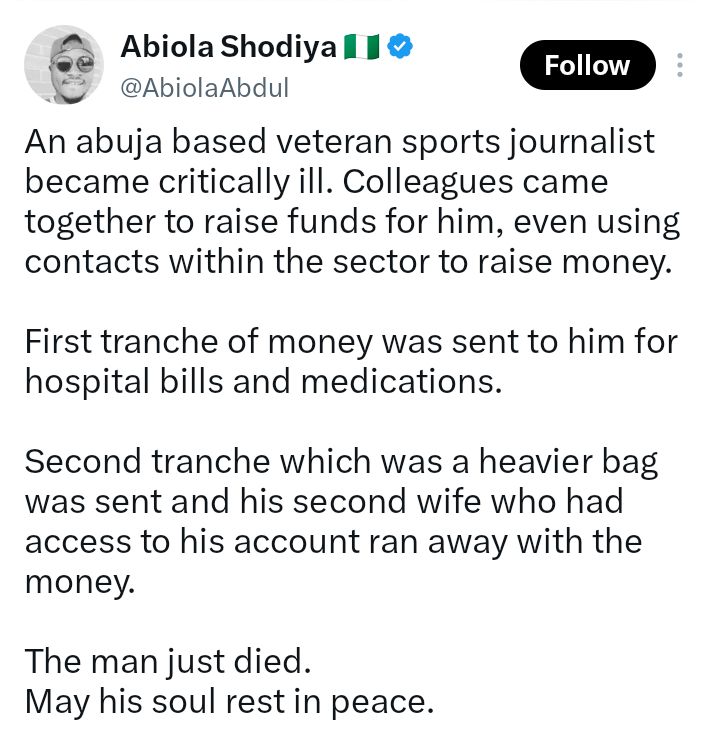
Veteran sports journalist Adeolu Johnson died in Abuja on October 28, 2026, after his second wife reportedly fled with two installments of money that colleagues had collected to cover his hospital expenses. The incident was disclosed on X by football talent scout Abiola Shodiya, who said the funds were intended for Johnson’s treatment but were misappropriated.
What led to the fundraising effort?
Johnson, a well‑known figure in Nigeria’s sports media, became critically ill earlier in the month. Fellow journalists and industry contacts rallied to support him, pooling resources through personal networks and professional connections. The first tranche of cash was transferred to Johnson to settle immediate hospital bills and purchase medication.
How was the money mishandled?
According to Shodiya’s post, a second, larger sum was later sent to Johnson’s account. His second wife, who had access to the account, allegedly took the money and disappeared, leaving Johnson without the financial aid needed for his ongoing care.
What was the final outcome?
Johnson passed away shortly after the alleged theft, prompting mournful remarks from colleagues. Shodiya concluded his message with a brief prayer: “May his soul rest in peace.”
Key details at a glance
- Date of death: October 28, 2026
- Location: Abuja, Nigeria (capital city)
- Primary individuals: Adeolu Johnson (deceased journalist), Abiola Shodiya (sports scout who reported the story), Johnson’s second wife (accused of absconding with funds)
- Fundraising amounts: Two separate tranches; the second described as a “heavier bag” of money
- Source of report: A post on X (formerly Twitter) by Abiola Shodiya
The episode underscores the vulnerability of informal fundraising mechanisms in the Nigerian media sector, where personal networks often step in to assist colleagues facing health crises. It also raises concerns about financial safeguards when funds are transferred to personal accounts without oversight.
Background on sports journalism in Nigeria
Sports journalism has long been a vital conduit for reporting football, athletics, and other sporting events across the country. Practitioners like Johnson have contributed to the growth of local coverage, offering analysis and commentary that resonate with fans nationwide. The loss of such an experienced voice is felt deeply within the community.
What can be done to prevent similar incidents?
Experts suggest establishing transparent, institution‑backed fundraising platforms that can track contributions and disbursements, reducing the risk of misappropriation. Additionally, clear guidelines for handling donated funds could protect both donors and beneficiaries.
The tragedy of Adeolu Johnson’s death serves as a somber reminder of the need for stronger financial controls and support structures for journalists confronting serious health challenges.