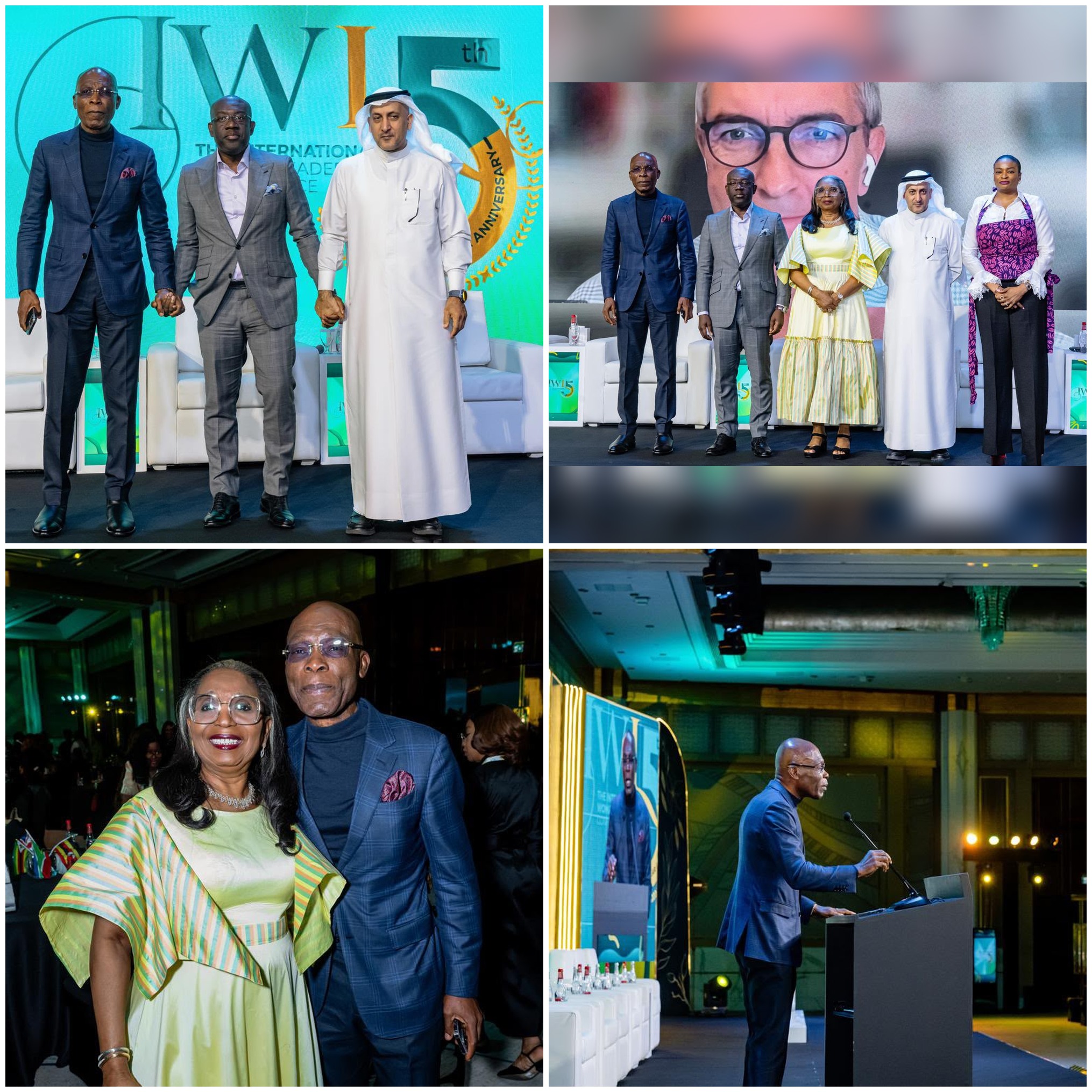
Leo Stan Ekeh Leo Stan Ekeh, the chairman of Zinox Group and a prominent figure in the African technology landscape, recently revealed that his initial foray into building a tech enterprise in Nigeria felt like engaging in corporate suicide due to the sector's virtual non-existence at the time.
Addressing an audience of over 600 female industry executives at The International Women Leadership Conference in Dubai, an event convened by the Ibukun Awosika Leadership Foundation, Ekeh delivered the keynote address centered on the topic of overcoming apprehension in business.
What were the early struggles faced by the tech pioneer?
Returning to Nigeria after completing his studies abroad, Ekeh observed that most of his contemporaries gravitated toward traditional fields like banking and the petroleum industry, viewing information technology primarily as an external domain. Reflecting on his academic background, he noted that he pursued risk management and business law rather than computer science in Europe, following advice that Africa might have minimal demand for computers over the subsequent decades. Ultimately, he redirected his tuition funds into his entrepreneurial passion for technology, forgoing his final law examinations at London Guildhall University.
Recalling the launch of his pioneering venture, Task Systems Ltd, more than 35 years ago at the Sheraton Hotel in Ikeja, Ekeh noted that he addressed an audience largely unfamiliar with personal computers. He maintained at the time that true national independence relies heavily on technological self-reliance. He credited the Nigerian media for championing this vision, noting that the support aided in computerizing over 97 percent of media organizations locally and across neighboring countries.
How did Zinox shape the African tech identity?
Driven by the ambition to secure a distinct global IT footprint for the continent, Ekeh established Zinox Technologies, positioning it among the earliest computer manufacturing firms in Africa to achieve international certifications from Microsoft and Intel. He remarked that the initiative proved Africa possessed the capability to manufacture products matching global standards.
Despite these milestones, the journey involved severe personal hardships, including living on a single daily meal for more than three years while residing in a compact office space. Furthermore, Ekeh pointed out that navigating the Nigerian business environment exposed him to complex challenges, institutional hurdles, and corporate resistance.
What efforts are being made to empower women in technology?
Transitioning to the broader theme of leadership, Ekeh emphasized his organization's commitment to gender inclusion. Through the TecHerdemy program managed by TD Africa Distributions Ltd, over 1,000 women have received specialized training in cybersecurity, artificial intelligence, software engineering, and data science, with many transitioning into executive roles within the ecosystem. He noted that several female chief executives currently direct various business units within the Zinox conglomerate.