
Dr. Olisa Agbakoba, a Senior Advocate of Nigeria, urged the complete privatization of the Nigerian National Petroleum Company (NNPC) during a recent discussion with ARISE NEWS. He highlighted the need to eliminate structural inconsistencies within Nigeria's oil governance by reclaiming control over oil revenues that are currently lost due to legal and operational discrepancies.
In his remarks, Agbakoba pointed out that despite NNPC being transformed into a limited liability company under the Petroleum Industry Act, it still operates with the authority and characteristics of a statutory corporation. This dual status has resulted in a legal and fiscal imbalance that hampers transparency and federal revenue.
"Privatization of NNPC is essential. While it is registered under the Corporate Affairs Commission, it simultaneously remains a federal entity owned by the Nigerian government, represented by the Minister of Finance, with the President serving as the Minister of Petroleum Resources. This creates a fundamental contradiction," Agbakoba stated.
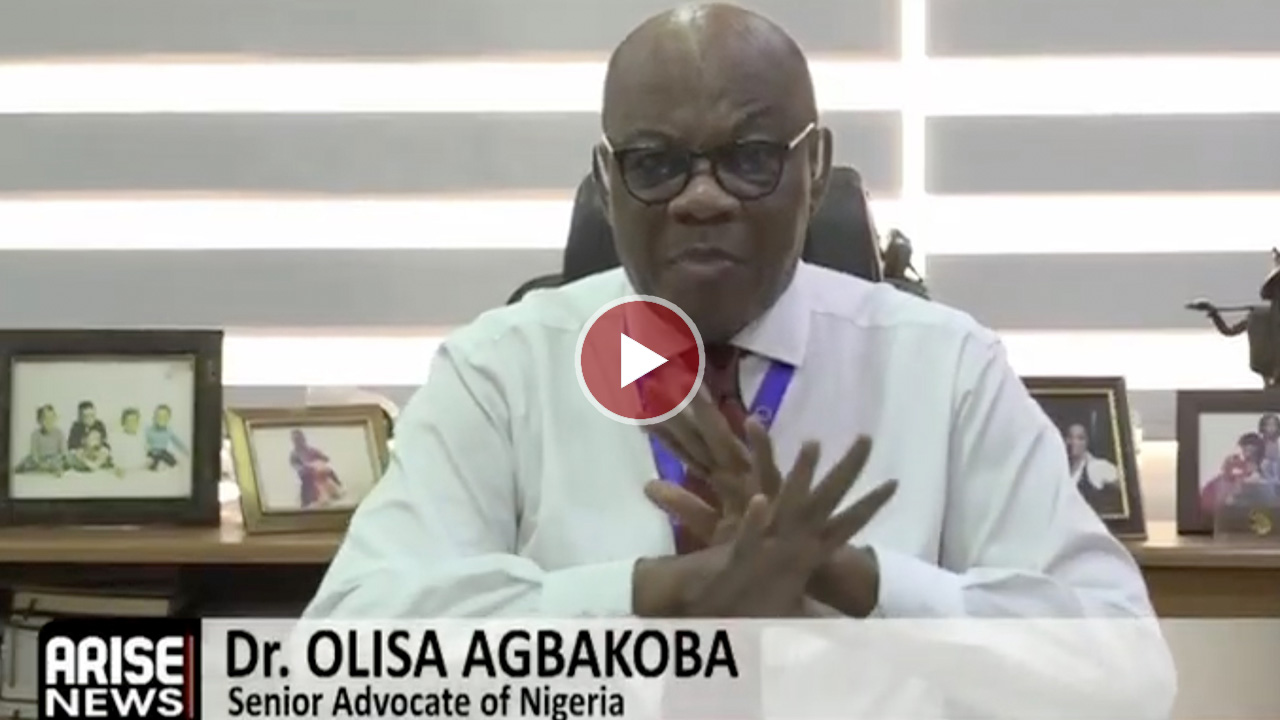
He further discussed the core fiscal flaws within the Petroleum Industry Act, citing a significant issue concerning the revenue distribution from oil. He explained that although Section 162 mandates that revenue due to the federation should be deposited into the federal account, NNPC had previously deducted up to 70% of this revenue as a statutory corporation. While the President’s recent Executive Order 9 aims to address this, Agbakoba expressed skepticism about the Executive Order’s ability to supersede parliamentary acts.
Agbakoba suggested that the Attorney General should head to court to request the removal of provisions in the PIA that currently allow such deductions, indicating that such moves could save an estimated 45 trillion naira.
He emphasized that reforms should not only rely on executive actions but also demand judicial clarification of the Petroleum Industry Act. He noted that the government's recent actions to reduce NNPC's statutory powers and transfer these responsibilities to the upstream and downstream regulatory bodies are positive steps. Agbakoba believes NNPC should be listed on the stock exchange to operate like any other private oil company in Nigeria, thereby eliminating conflicts of interest.
Addressing broader fiscal challenges, he framed this crisis as pivotal for national sovereignty and survival. According to him, the Executive Order should address the exploitation by international oil companies (IOCs) that diminish Nigeria's oil revenue.
He advocated for changing the financing methods of public sector projects, shifting from heavy reliance on borrowing, which has now reached around 200 trillion naira, to developing innovative income strategies. Agbakoba had previously outlined potential new income sources that could significantly boost Nigeria's revenue.
Despite these proposals, he acknowledged that merely increasing revenue will not suffice to tackle Nigeria's developmental issues. There is a pressing need for stronger anti-corruption measures across various agencies tasked with managing governmental income. Agbakoba pointed out that citizens do not feel the impact of any claimed economic improvements, emphasizing the disconnect between statistical reports and everyday experiences of the populace.
He concluded with a call for political players to prioritize significant economic and governance reforms, urging them to shift focus towards pressing national issues ahead of the 2027 elections, rather than merely engaging in partisan politics focused on party defections.
Comments (0)
You must be logged in to comment.
Be the first to comment on this article!