
The recent selection of five out of six executive directors for the Nigerian Revenue Service (NRS) has been called into question due to alleged violations of the law established in Part IV Section 17 (1) of the Nigerian Revenue Service (Establishment) Act 2025, signed by President Bola Ahmed Tinubu as reported by Daily Trust.
This law is part of a suite of four tax reform regulations that have received heavy criticism amid claims of modifications and inappropriate insertions.
According to Section 17 (1) of Part IV of the Nigerian Revenue Service Act 2025 (as certified by the National Assembly), "The President shall appoint six Executive Directors for the Service, each representing a geopolitical zone on a rotational basis among the states in the zone in alphabetical order provided that the Executive chairman and the Executive Director shall not come from the same state."
However, an investigation by Daily Trust has revealed that the individuals recently appointed as executive directors do not meet the criteria outlined in the NRS Act.
The appointed directors are: Muhammad A. Lawal from Niger State (representing North Central); Amina Ado Kurawa from Kano State (North West); Shettima Tamadi from Borno State (North East); Obinna Ihedioha from Imo State (South East); Iniabasi Akpan from Akwa Ibom State (South South); and Bolaji Akintola from Lagos State (South West).
While the Act states that appointments must be made in alphabetical order of the states, it was determined that only Iniabasi Akpan from Akwa Ibom complies with the prescribed conditions, while the others' appointments contravene the law.
Specifically, the North Central position should have been filled by someone from Benue, North West from Jigawa, North East from Adamawa, South West from Ekiti, and South East from Abia, as mandated by the alphabetical order requirement.
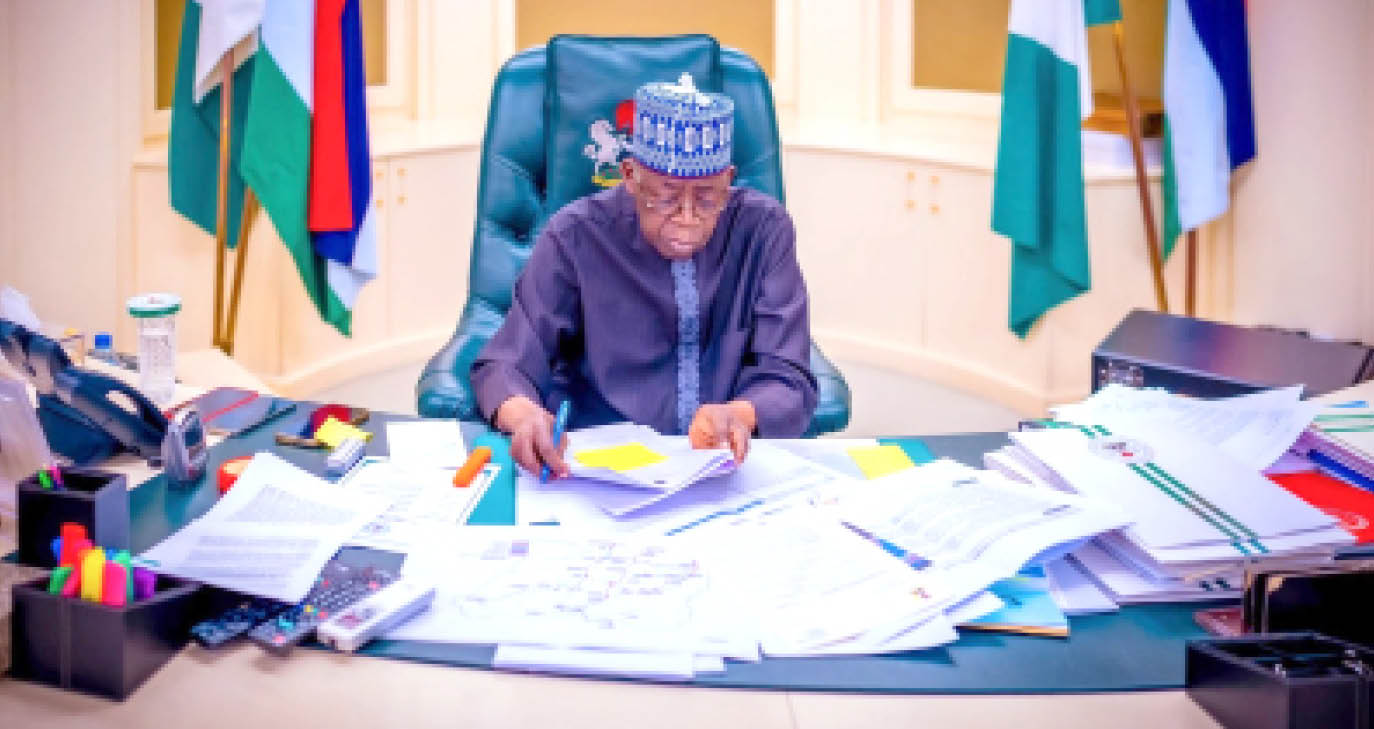
Attempts to obtain a comment from the presidency regarding this situation were unsuccessful, as contact attempts to Mr. Bayo Onanuga, the Special Adviser to the President on Information and Strategy, yielded no reply. Similarly, Dr. Daniel Bwala, the Special Adviser on Policy Communications, could not be reached for a statement. At the time of publication, text messages sent to both advisers had not been answered.
Bala Ibrahim, the Director of Information for the APC, mentioned that inquiries regarding this matter should be redirected to the executive arm of the government. He stated, "Appointments are executed by the government, not by the party. Yes, while it is an APC government, it is ultimately the executive that makes these appointments."
Moreover, efforts to engage with lawmakers on this issue were equally unproductive, with Akin Rotimi, the spokesperson of the House of Representatives, unresponsive to calls and messages.
The directors include:
Muhammad A. Lawal (North-Central)
Executive Director of Finance & Corporate Services, Lawal boasts a rich background in tax administration with extensive leadership experiences in state and federal tax institutions.
Bolaji Akintola (South-West)
Serving as the Executive Director for Medium & Emerging Taxpayers, Akintola has over 30 years' expertise in revenue management and finance, with previous significant roles at the Federal Inland Revenue Service.
Amina Ado Kurawa (North-West)
In her role as Executive Director for Government & Large Taxpayers, Kurawa brings over three decades of experience across various sectors, notably public service and oil and gas.
Shettima Tamadi (North-East)
Currently the Executive Director for Policy & Compliance, Tamadi has accumulated more than 20 years of experience in both banking and tax administration.
Obinna Ihedioha (South-East)
He is the Executive Director in charge of People, Stakeholders & Communication, with a solid track record in strategy and governance.
Iniabasi Akpan (South-South)
As Executive Director of Technology, Akpan possesses vast knowledge in fintech and ICT systems, previously managing operations across Nigeria for OPay.
The appointments have been criticized by civil society organizations, including the African Centre for Innovative Research and Development. The CEO, Mohamed Bello, stated that not adhering to the law can compromise the credibility of the revenue agency and advised that full compliance with the Act is crucial for establishing the commission rightly.
Dr. Sa’idu Ahmad Dukawa, a public administration expert, echoed similar sentiments, emphasizing that any challenges should lead to lawful amendments rather than violations. He warned that ignoring legal frameworks undermines trust in governance, as citizens might question the integrity of other official processes, including elections.
Another organization, the Resource Centre for Human Rights and Civic Education (CHRICED), highlighted concerns about political favoritism arising from the disregard for the alphabetical order in the appointments, further calling for a public explanation from the Presidency regarding the alleged breaches.
This matter has also drawn notice as the tax reforms have faced scrutiny, following claims that inconsistencies exist between the laws passed by the National Assembly and those made available to the public, as raised by members of the House, including Abdulsammad Dasuki and Senator Ali Ndume, who criticized the current tax laws for being flawed and prone to legal challenges.
Comments (0)
You must be logged in to comment.
Be the first to comment on this article!