
Minister of Budget and Economic Planning, Senator Abubakar Bagudu, asserted on Wednesday that the nation's economic reforms are moving in the correct direction, leading to an unexpected strengthening of political consensus across Nigeria.
Bagudu made these remarks during a meeting with officials from the Agence Française de Développement (AFD) Microeconomic Risk Analysis Due Diligence Mission, headed by its Country Director, Mr. Jacky Amprou.
He explained that the implemented reforms have cultivated a unified purpose between the executive and legislative arms of government, as well as among the federal, state, and local government levels.
Under President Tinubu's leadership, Bagudu emphasised, Nigeria's federal structure has been reinforced, with enhanced coordination among its constituent parts facilitated by the effective operation of the National Economic Council (NEC), an entity constitutionally tasked with guiding the country's economic trajectory.
"The reforms have fostered better cooperation between the executive and legislative branches of government. The National Assembly has demonstrated strong support for the president's ambitious economic initiatives," the minister noted.
"Equally significant is the harmonious relationship among the federal, state, and local governments."
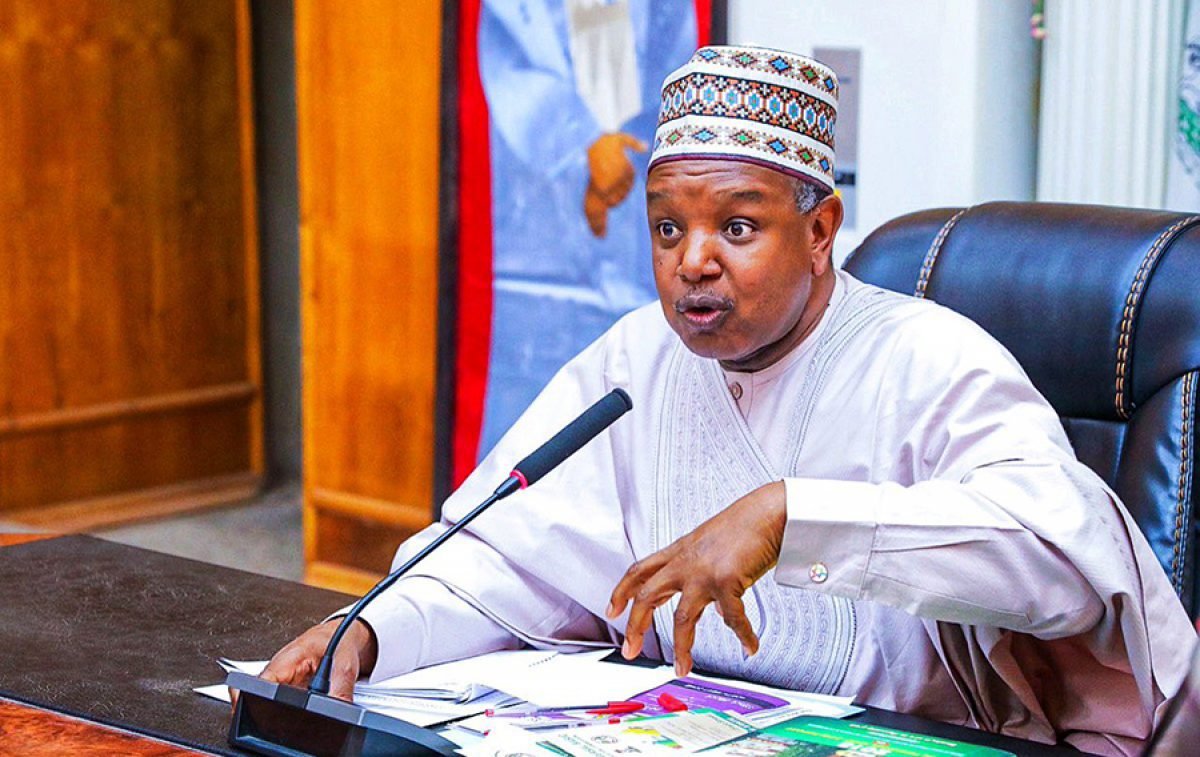
He further stated that the macroeconomic reforms introduced over the past two and a half years are beginning to yield concrete outcomes, including greater macroeconomic stability, a noticeable rise in investor confidence, and a surprising, yet positive, enhancement of political cohesion throughout the federation.
Bagudu highlighted that despite regional political instability and the challenging timing of these reforms, Nigeria remains dedicated to pursuing bold economic strategies.
He observed that the growing political agreement surrounding the reforms has contributed to exchange rate stabilisation, sustained investor trust, and a reduction in the typical pre-election uncertainty often associated with emerging markets.
Reaffirming the president's economic agenda, the minister underscored Nigeria's ambition to achieve a one-trillion-dollar economy within the next five years, propelled by growth that is both inclusive and decentralised.
Central to this vision, he explained, is the Renewed Hope Ward Development Plan, a community-focused initiative designed to identify Nigeria’s economic potential at the ward level, capture local priorities, and elevate them to the national agenda, thereby promoting a more equitable distribution of economic growth and federal resources.
Bagudu elaborated that this framework involves mapping each ward's economic assets, such as agricultural potential, skills, resources, and industrial capabilities, stressing that development planning will originate from the ward level, inform state-level plans, and ultimately shape the national development strategy.
He indicated that priority would be given to agriculture, local manufacturing, and value chain development to stimulate job creation, ensure food security, and increase household incomes.
The minister reaffirmed the government's firm commitment to fostering private- sector-driven growth, with reforms specifically aimed at making Nigeria more appealing to both domestic and international investors, notwithstanding challenges related to revenue generation, high interest rates, and global economic pressures.
He acknowledged the short-term hardships and discomforts associated with the reforms but asserted their necessity, criticality, and irreversibility for Nigeria's long-term stability and sustainable economic progress.
Earlier, Mr. Amprou mentioned that AFD's focus is not on a single project but on a thorough evaluation of Nigeria's macroeconomic and structural reforms.
He added that the agency is updating its country risk and economic assessment, a mandatory process that will guide future engagement and funding decisions.
Amprou acknowledged that significant reforms have been implemented since 2022, leading to considerable shifts in Nigeria's economic landscape.
He stated that the mission's objective is to gain a deeper understanding of the government's strategies for consolidating reforms, ensuring sustained economic growth, and accelerating national development.
Dr. Deborah Odoh, Permanent Secretary of the Federal Ministry of Budget and Economic Planning, welcomed the AFD delegation and other development partners, highlighting the importance of aligning their efforts with Nigeria's 2026–2030 National Development Plan.
Odoh reiterated Nigeria's position as an attractive environment for economic expansion. She expressed gratitude for ongoing international cooperation, while emphasising that all development assistance must align with national priorities.
Both sides concurred that future AFD initiatives in Nigeria must strictly adhere to the government's development objectives. Discussions also encompassed the preparation of a new AFD–Nigeria Country Partnership Agreement, as the current five-year framework concludes in 2025, ensuring alignment with Nigeria's forthcoming 2026–2030 National Development Plan.
Comments (0)
You must be logged in to comment.
Be the first to comment on this article!