
Miah Md. Mainul Kabir, Bangladesh's High Commissioner to Nigeria, has made a push for improved economic cooperation, stressing the need to address the low levels of bilateral trade.
During the commemoration of Bangladesh's 55th Independence and National Day in Abuja, he expressed that the trade volume between Nigeria and Bangladesh is significantly less than its potential, even with decades of friendly relations.
Kabir noted that while there has been a gradual increase in commercial exchanges, these do not adequately reflect the extensive opportunities that exist for both nations.
"Bilateral trade between our countries has seen steady growth yet it continues to fall short of its real potential," he remarked, highlighting Bangladesh's expertise in textiles, pharmaceuticals, ceramics, processed foods, and information and communication technology services.
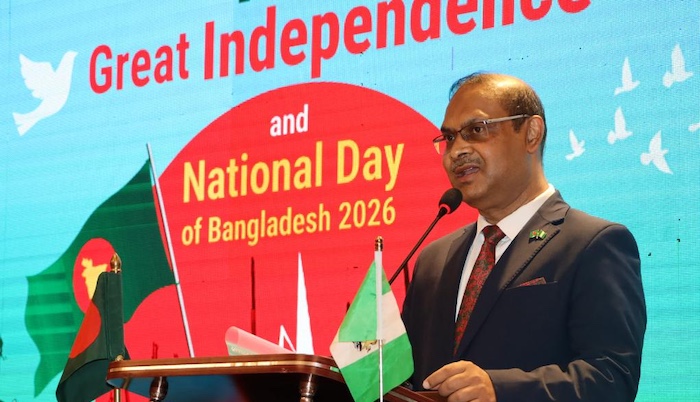
Moreover, Kabir pointed out the large Nigerian market, energy resources, and agricultural capacity as essential sectors for enhanced collaboration.
He identified agriculture, particularly contract farming, as a prime area for partnership, emphasizing that Bangladesh’s know-how in high-yield, climate- resilient farming practices could effectively complement Nigeria's vast arable land and agro-processing capabilities.
According to the envoy, Bangladesh is intensifying its outreach to African nations, with Nigeria being a pivotal player in these efforts.
He further mentioned the strong historical bonds the two countries share, youthful demographics, and similar goals in terms of democratic governance, along with cooperative endeavors within international bodies like the United Nations and the Commonwealth.
Kabir highlighted education, skills development, digital innovation, and defense cooperation as additional fields for potential collaboration, underscoring the importance of fostering people-to-people connections to fortify their bilateral relations.
In response, Bukar Hamman from Nigeria's Ministry of Foreign Affairs reiterated Nigeria's dedication to enhancing relations with Bangladesh, emphasizing mutual principles in multilateral cooperation, peacebuilding, and inclusive growth.
Hamman noted that collaborative efforts have expanded in recent times across diverse sectors including trade, agriculture, education, and defense, and he encouraged increased private sector participation.
He pronounced that Nigeria sees substantial opportunities for partnership in domains such as textiles, pharmaceuticals, information and communication technology, and renewable energy.
He expressed optimism that stronger cooperation would mutually benefit both nations and contribute to broader South-South collaboration as well as global development.
Comments (0)
You must be logged in to comment.
Be the first to comment on this article!