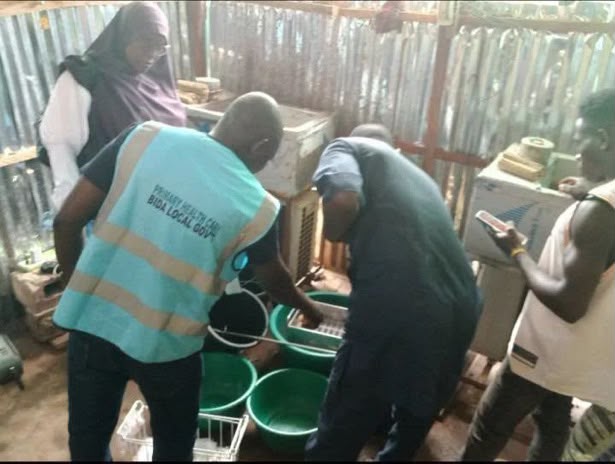
The [Bida Local Government Council](https://en.wikipedia.org/wiki/Bida) announced on Thursday that it has ordered the shutdown of multiple ice‑cream production units in Niger State after an inspection revealed serious hygiene lapses and non‑compliance with food‑safety regulations. The affected factories were found to have flies in the ice‑cream mixtures, products without proper labelling, and no valid operating licences or registration with the [National Agency for Food and Drug Administration and Control (NAFDAC)](https://www.nafdac.gov.ng/).
**What violations were uncovered?**
The inspection team reported that the ice‑cream batches contained visible insects, and that the manufacturers had failed to display ingredient lists, expiry dates or nutritional information. Laboratory analysis further indicated that the samples lacked measurable nutritional value and contained substances considered harmful to human health.
**What immediate actions did the council take?**
The council said it had immediately halted production at the identified facilities and warned that any business that continues to breach food‑safety standards will face “appropriate sanctions,” including possible fines or revocation of operating permits. A spokesperson added, “We will not tolerate practices that endanger the health of our residents, and violators will be dealt with firmly.”
**How can the public assist?**
Residents were urged to report any suspicious food‑production activities to the local authorities. The council emphasized that community vigilance is essential to ensure that all food items sold within the area meet the required safety standards.
Background context shows that Niger State has previously grappled with food‑safety challenges, prompting the state government to strengthen oversight mechanisms. The involvement of NAFDAC, the federal regulator responsible for safeguarding food and drug quality across Nigeria, underscores the seriousness of the breach. By enforcing strict compliance, the council aims to protect consumers and restore confidence in locally produced food items.
The shutdown serves as a reminder that food producers must adhere to licensing requirements, maintain clean production environments, and provide clear labelling to meet both state and federal standards. Ongoing monitoring will continue to ensure that any reopened facilities comply fully with the stipulated regulations.