
On Monday, Mr. Olayemi Cardoso, Governor of the Central Bank of Nigeria (CBN), communicated that the reforms implemented since he took office have successfully established economic stability in the nation.
Senator Abubakar Bagudu, the Minister of Budget and Economic Planning, praised President Bola Tinubu for his reforms that have propelled economic transformation and improved fiscal health for states and local governments.
The Minister acknowledged the President's efforts in enhancing federalism, stating that the choices made have contributed to a more united federation.
Dr. Doris Uzoka-Anite, Minister of State for Finance, emphasized the necessity for Nigeria to attain a 10 percent annual growth rate over the next decade in order to realize its ambition for a $1 trillion economy.
These comments were made during the opening of the 2nd National Economic Council (NEC) Conference in Abuja, themed "Delivering Inclusive Growth and Sustainable Development: The Renewed Hope National Development Plan."
Governor Cardoso remarked that the economy had not demonstrated the strength it currently shows for an extended period.
During the conference, the central bank governor highlighted that a balance of payments surplus of $3.42 billion was reported in the third quarter of 2025, indicating notable progress, and that inflation has decreased to 15.15 percent.
He stated that the banking sector is robust and that foreign reserves have increased to $49 billion as of February 5, 2026.
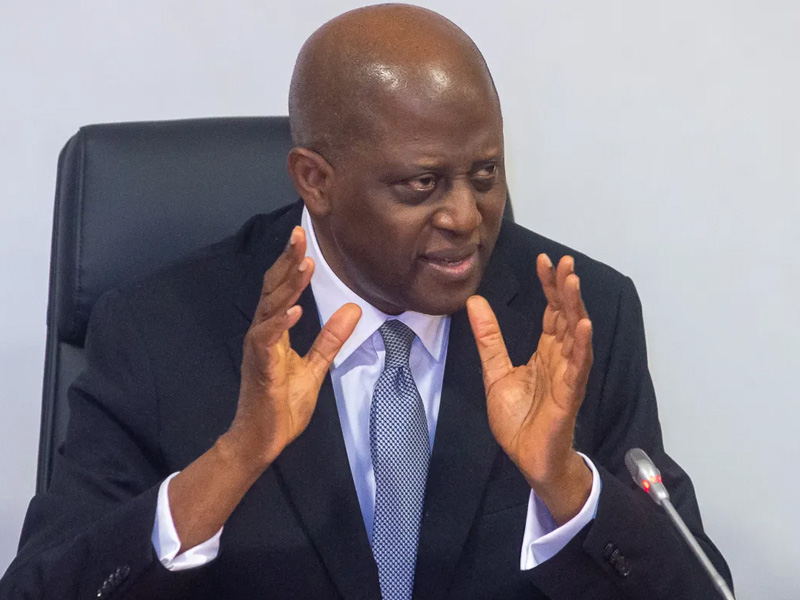
Cardoso elaborated, "This is an important statistic. When we assumed office, net reserves were at approximately $3 billion. By year-end, these reserves had risen to approximately $30 billion, and as of February 5, 2026, they are at $49 billion."
He went on to explain that the CBN now plays a role as net buyers in the foreign exchange market, helping to establish more stability within it.
"The gap between official and parallel market rates has narrowed to below 2 percent. You can now utilize your naira card for various transactions abroad, thus eliminating the need for foreign exchange when traveling," he stated.
He shared that the naira now retains a more favorable stance, with individuals no longer hesitant to hold it, contrasting with previous trends in West African nations.
Additionally, Cardoso mentioned the market has become more predictable, allowing businesses to plan better.
He reiterated that the CBN will take all necessary actions to uphold the naira's value while ongoing bank sector recapitalization aligns with the goal of achieving a $1 trillion economy.
The CBN Governor cautioned, however, that risks associated with the upcoming election cycle could pose challenges, especially concerning liquidity overflows during this period.
He stated, "We need to remain cautious as we are not yet out of adversity. The electoral season typically leads to increased cash injections into the market, and we must closely monitor this. Global trade tensions also present potential threats."
Cardoso confirmed that the CBN's 2026–2030 roadmap aims at leveraging macroeconomic stability for increased productivity.
He underscored that macroeconomic stability is crucial for investment and growth across agriculture, manufacturing, and service sectors.
Cardoso emphasized the correlation of stability with growth, stating, "One positive outcome of our efforts is the restoration of stability."
He added that the roadmap focuses on price stability through transitioning to inflation targeting, enhancing external reserves, and safeguarding the naira's value.
Reflecting on the economic difficulties faced when he took office in 2023, he noted the challenges posed by significant fiscal dominance and the notable deterioration of the foreign exchange market.
Cardoso highlighted that prior interventions by the CBN had reached an unprecedented ₦10.93 trillion, which, although necessary at the time, created long-term challenges including liquidity management and market distortions.
He explained the fundamentals of their strategy, which hinged on three main pillars: a decisive monetary policy adjustment, the establishment of a market- based foreign exchange system, and enhanced fiscal coordination.
He remarked on the importance of a resilient banking system in achieving the nation’s economic objectives, noting improvements in investor confidence and banking stability.
The Minister, Bagudu, congratulated the president on the visible success of his reforms, which have reportedly been recognized on a global scale.
Bagudu acknowledged that recent assessments from international bodies have positioned Nigeria among the top ten contributors to global economic growth. He echoed the sentiments of confidence among the states represented at the NEC, affirming broad support for the administration's vision.
Despite these achievements, he noted the ongoing challenges of poverty alleviation and the objective of reaching a trillion-dollar economy by 2030, emphasizing the need for collective efforts across all levels of government.
Uzoka-Anite reinforced this message, indicating that while growth is evident, sustained double-digit growth is essential to realize the ambitious economic target.
Comments (0)
You must be logged in to comment.
Be the first to comment on this article!