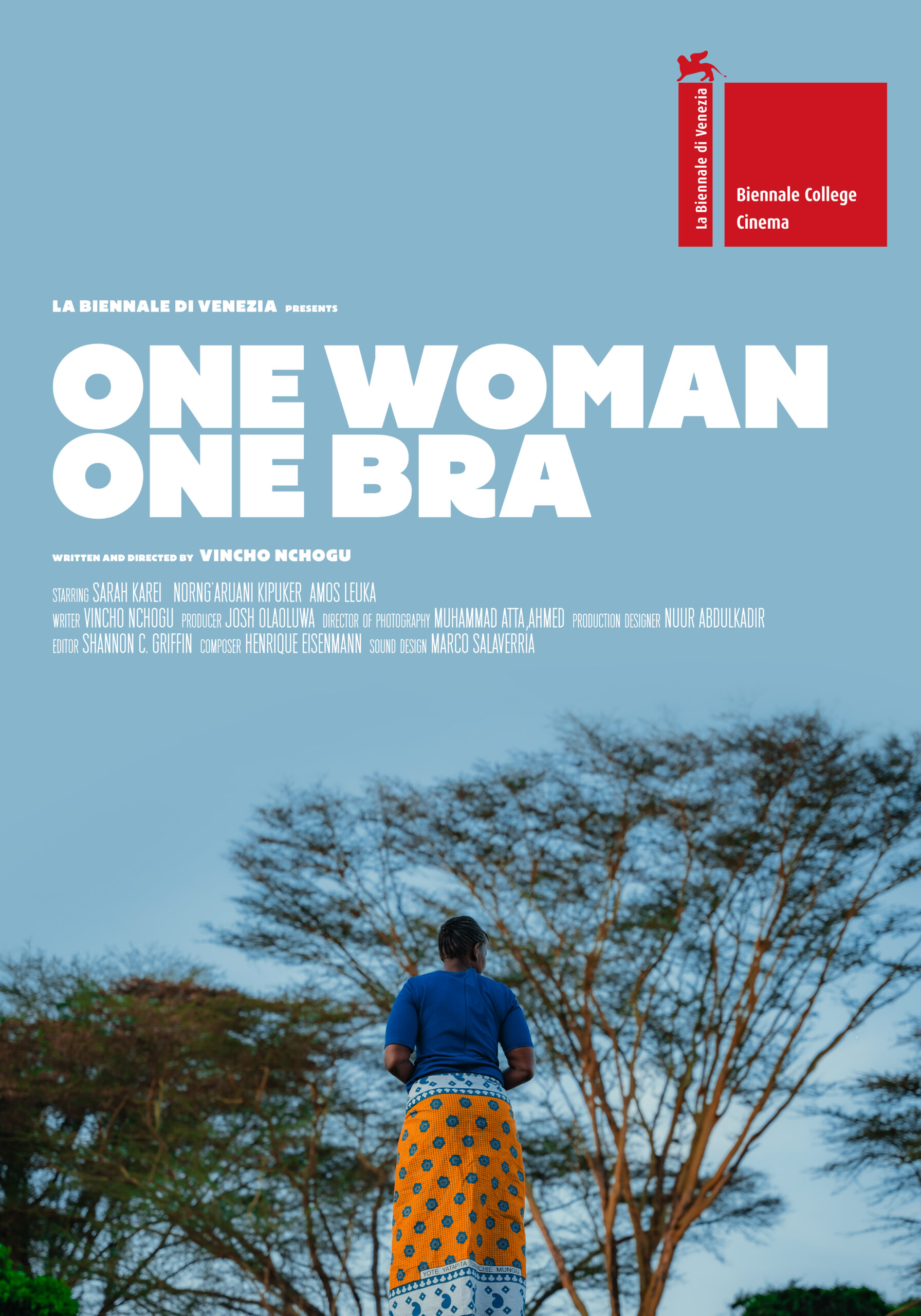
Vincho Nchogu’s feature-length directorial debut, One Woman One Bra, has been making impressive waves on the global cinema circuit, featuring at the 2026 Luanda International Film Festival within its International Competition section. Long before this screening, the movie kicked off its journey with a world premiere at the Venice Film Festival in 2025 under the Biennale College Cinema program, subsequently clinching the Sutherland Award for Best First Feature at the BFI London Film Festival. Furthermore, at the 2026 Tribeca Film Festival, it secured the Audience Award alongside a Special Jury Mention for its lead actress, Sarah Karei. Having also made stops at the Durban International Film Festival, Festival de Cine Africano de Tarifa (FCAT), and the Seoul International Women’s Film Festival, the movie is slated for a November showcase at the African International Film Festival (AFRIFF). Despite these commercial and critical accolades for a co-production spearheaded by producer Josh Olaoluwa, the central question remains: how well does the artwork hold up on artistic merit?
What is the premise of One Woman One Bra?
Written and directed by Nchogu, the project draws heavily from the filmmaker's own anecdotal background. Before attending film school, Nchogu spent time working for a non-profit organization producing promotional films. As the director previously shared in interviews, African subjects involved in such projects frequently find themselves muting their personal truths to fit an external salvation narrative dictated by institutional funding. Tackling this persistent white savior complex is a primary thematic objective of the movie. Set in the scenic rural community of Sayit, the plot initially centers on Star, a 38-year-old unmarried woman with no knowledge of her parentage. The narrative commences with a local property title deed distribution exercise. Because Star lacks immediate familial ties, a husband, or relatives, she must navigate complex bureaucratic hurdles to claim her land, either by uncovering ancestral connections or gathering personal funds. For its opening acts, the film offers a compelling examination of female identity and belonging within a rigid patriarchal framework.
Why does the narrative lose its momentum?
The film sustains this strong momentum until it begins to stumble through loosely connected subplots. The inciting incident—wherein Star spots a childhood photo of herself on the cover of a book, sparking her quest for identity—feels like a convenient narrative device for a 38-year-old protagonist. Additionally, the non-profit storyline feels abruptly introduced, lacking sufficient structural integration into the broader plot. As Star’s obsession with her origins takes center stage, the movie occasionally drifts into a sea of fragmented storylines. One scene tackles societal biases against unmarried women, the next focuses on her lineage inquiries, and another involves a conversation with a white expatriate regarding the distribution of brassieres to local women. Nchogu attempts to merge these disparate threads, resulting in a cluttered script that struggles to balance its numerous thematic ambitions.
How does it compare to other personal cinema?
It is common for filmmakers to channel lived experiences into cinema, drawing inspiration from acclaimed works like Paweł Pawlikowski’s Cold War, Alfonso Cuarón’s Roma, Greta Gerwig’s Lady Bird, Asmae El Moudir’s The Mother of All Lies, and Milisuthando Bongela’s Milisuthando. Echoing Bong Joon Ho’s famous sentiment that "the most personal is the most creative," these projects utilize unique perspectives to revitalize conventional narratives. The issue arises not from the personal nature of the story, but from the script's failure to establish a cohesive bridge between its various social critiques. Ultimately, One Woman One Bra emerges as a visually stunning yet disjointed cinematic piece attempting to address too many disparate themes at once.