
The Executive Director of the Electricity Consumer Protection Advocacy Centre, Princewill Okorie, has expressed strong reservations about the state of Nigeria's power sector, particularly thirteen years after its privatization. He attributed the ongoing challenges to the "mischievous" implementation of the privatization policy during the Jonathan administration, citing a lack of clear and transparent consumer enumeration as a primary misstep.
Okorie further criticised the incoming investors for their alleged lack of sincere financial and technical capacity, noting that much of the infrastructure was pre-existing, funded by government initiatives. He argued that distribution companies (DisCos) have largely failed to invest, instead benefiting from infrastructure upgrades undertaken by the federal government and consumers. This, he stated, is exacerbated by the abandonment of the third-party investment policy and a lack of enforcement by regulators and the Ministry of Power.
The advocate pointed out that when communities invest in infrastructure like transformers, they are often coerced into signing agreements transferring ownership to the DisCos without proper reimbursement mechanisms. He also condemned the billing practices, describing them as insincere and fraudulent, designed to extort consumers and Nigerians, with state institutions failing to uphold their constitutional duty of ensuring security and welfare.
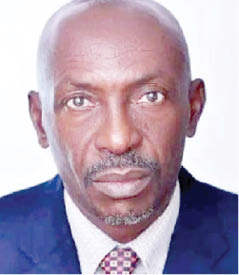
Okorie voiced strong opposition to the introduction of "bands" (Band A, B, C) in electricity supply, labelling it a criminal introduction. He questioned the feasibility of supplying 20 hours of electricity to all Band A customers across Nigeria with the current generation capacity of around 3,000 to 4,000 megawatts, calling it deceitful. He warned that DisCos are exploiting this system by favouring certain customers and secretly migrating others to Band A to charge higher tariffs for unprovided services.
Addressing the federal government's continuous interventions, Okorie described the sector as a "conduit pipe" for financial misappropriation. He cited the Central Bank of Nigeria's (CBN) various stabilization funds and the National Mass Metering Programme (NMMP), questioning the impact and accountability of billions allegedly spent. He asserted that the power sector privatization has become a "criminal enterprise" against citizens, violating constitutional provisions for government's primary role in ensuring welfare and security.
Regarding the proposed deduction of subsidy payments directly from the federation account, Okorie stated it could be beneficial if executed transparently and accountably. He referenced Aba Power as an example where improved supply has revitalised the local economy, leading to increased revenue for local and state governments. He suggested that such funds, if used to support industrial consumers like Aba Power, could be a positive step.
However, he stressed that any subsidy removal must demonstrably benefit consumers and improve power supply. He advocated for the establishment of a committee to monitor the utilisation of these funds by state and local governments, drawing a parallel to concerns about the lack of oversight on funds disbursed to state governors after petroleum subsidy removal.
Okorie re-emphasised that the DisCos are the "real thieves" in the sector, citing fraudulent practices such as bulk billing, which NERC has reportedly abolished, and the deliberate frustration of consumers seeking meters, leading to estimated bills. He also criticised the DisCos for failing to enforce the penalties for vandalism and meter tampering outlined in the Electricity Act 2023, preferring to rely on government intervention rather than investing in asset protection.
For the sector's improvement, Okorie urged the Ministry of Power to actively engage consumers and establish a dedicated unit for consumer protection. He called for effective consumer enumeration to ascertain accurate data and insisted on the implementation of the penalty provisions within the Electricity Act to curb malpractices. He also recommended abolishing the band system and addressing the issue of gas pricing, questioning why Nigerian companies must purchase gas in dollars.
Okorie called for an emergency declaration on the power sector, urging President Tinubu to form a national committee to review the privatization process, similar to the ongoing investigation by the House of Representatives.
On the issue of grid collapse, he questioned the quality of materials used in installations, suggesting that consumers' procurement of refurbished equipment and the use of untrained personnel contribute to the problem. He also pointed to issues with contract awards to unqualified entities, bypassing competent electrical contractors, and inadequate monitoring of transmission lines by security agencies.
Comments (0)
You must be logged in to comment.
Be the first to comment on this article!