
The phrase 'wells of death' might initially bring to mind the perilous stunts seen in American motor-drome racing, an exhilarating event where vehicles whirl along the steep walls of a barrel-like structure, but its meaning has shifted dramatically in Kano, Nigeria.
In fact, this term now brings to mind the rising toll of lives lost in the state due to incidents involving wells. The once entertaining image is now a painful realization for many families affected by these tragedies.
Tragic incidents involving open or poorly secured wells have become a troubling pattern in various communities within the state. Reports indicate that over a dozen fatalities have occurred from June 2024 to February 2026, with many casualties comprising children and young adults across nine local government areas.
From Nasarawa to Danbatta, and Dawakin Tofa to Gwale, the incidents share eerily similar circumstances: an uncovered or unsecured well, falls that occur during attempts at rescue, and the desperate attempts that typically end in disaster.
One of the earliest documented incidents within this timeframe took place on June 4, 2024, in the Kawon neighborhood of Nasarawa Local Government Area, where a man named Muhd Sagir fell into a dry well. Emergency responders managed to extract him but he was later pronounced dead.
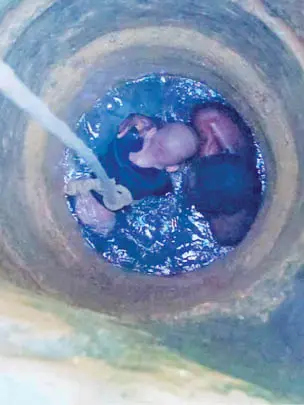
Such tragedies highlight the risks posed not just by wells filled with water but also by dry or abandoned wells left unmonitored in residential areas. In November 2025, a similar series of misfortunes occurred when two children died in separate well accidents within 24 hours; a girl in Kashirmo village and a boy in Dala Local Government Area.
Community members expressed frustration, labeling these incidents preventable and pointing out that many wells were not safeguarded, posing a significant hazard.
A particularly heart-wrenching episode in December 2025 saw four individuals perish in three separate accidents across the Danbatta, Bichi, and Nasarawa areas. A father and son fell into a well during an attempt to rescue one another, leading to a tragic loss that resonated throughout the community.
In the same timeframe, reports noted additional tragedies, totaling four deaths within days, which raised alarms about safety measures.
The Kano State Fire Service has incessantly cautioned residents against entering wells without proper equipment and emphasized the need to contact trained rescue personnel when accidents happen. The trend continued into 2026 when two individuals died in separate incidents involving wells in Madobi and Karaye.
The alarming frequency of these occurrences emphasizes widespread risks linked to unprotected wells in both rural and semi-urban environments of Kano. As incidents escalated, authorities renewed calls for vigilance and preventative actions, particularly in densely populated neighborhoods.
Significant attention was directed towards a notable incident on February 9, 2026, in the Rijiyar Zaki area of Gwale, when a man named Mustapha Aliyu attempted to retrieve a cooking gas cylinder that had fallen into a well during a domestic fire. He succumbed to fumes while trying to salvage the situation, prompting discussions amongst residents regarding the appropriate emergency response measures and the limitations faced during such attempts.
Statistical analysis of these well-related accidents reveals a repetitive pattern: child fatalities occurring from falls, young adults attempting risky rescues, and the unfortunate consequence of not waiting for professional assistance.
Moreover, numerous local government areas have been identified as hotspots for these incidents, with leaders in some communities admitting to the prevalence of not only old but abandoned wells in populated regions where water supply is often inadequate.
Community members recognize that their reliance on hand-dug wells for water continues to threaten their safety, particularly amidst a lack of enforcement concerning safety standards.
Local residents voiced concerns regarding negligence towards securing wells, indicating a necessity for collective responsibility towards the safety of community members.
Public health advocates and community leaders have since called for stringent regulations regarding the construction and upkeep of wells, asserting that there should be legal requirements enforced for property owners to properly secure or rehabilitate wells.
While the Kano State Fire Service has commended staff for their quick responses, they reaffirm the importance of proactive prevention measures over reactive responses in these dangerous situations.
The emotional toll of these incidents is profound, particularly for families who have endured loss due to well-related accidents. For those mourning their children or loved ones lost in these tragedies, the repercussions extend far beyond physical loss, embedding deep psychological scars that resonate long after the events have transpired. This growing list of casualties remains a reminder of the ever-present dangers of unsecured wells throughout Kano State.
Comments (0)
You must be logged in to comment.
Be the first to comment on this article!