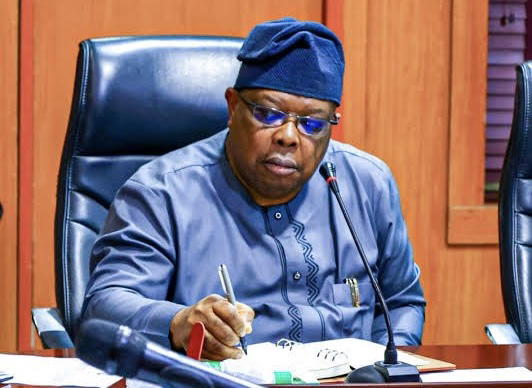
The Federal Government confirmed on Wednesday that it has authorised the start of procurement for the East and West Super Grids, a project intended to raise the nation’s electricity transmission capacity from about 5,000 megawatts to 19,000MW within the next two years. The announcement was made by Minister of Power Joseph Tegbe during a briefing for State House correspondents at the close of the Federal Executive Council (FEC) meeting chaired by President Bola Tinubu at the Council Chamber, Presidential Villa, Abuja.
Key facts:
- Target transmission capacity: 19,000MW, up from ~5,000MW.
- Procurement for East and West Super Grids approved within two years.
- N1.23 trillion of the N3.3 trillion owed to gas suppliers has already been paid.
- Over 300 containers of stranded electricity equipment are to be cleared from ports.
- A new National Control Centre is under construction in Osogbo.
- "The East and West Super Grids are not projects for one part of the country," Tegbe said, emphasizing their nationwide impact.
What are the East and West Super Grids?
The super grids are high‑capacity transmission corridors that will link generation hubs in the north with demand centres in the south. By creating robust north‑south links, the grids are expected to improve overall system resilience, reduce instability, and enable more power to reach households, businesses and industries.
Why is the project needed?
Nigeria currently possesses over 13,000MW of installed generation capacity, yet the existing transmission network can reliably move only about 5,000MW. This mismatch leaves much of the generated electricity stranded, causing frequent blackouts despite available supply.
What immediate upgrades accompany the super‑grid plan?
Three short‑term interventions were also approved for the Abuja‑Lagos axis:
- Installation of a 33kV double‑circuit line (underground and overhead) linked to the Katampe Transmission Substation, a key hub for the North‑Central zone.
- Design, manufacture and supply of three 300MVA, 330/132/33kV transformers for the Ikeja West Transmission Substation, a critical node for Lagos.
- Reconstruction of the 35.6‑km Itumola–Mapasin–Shagamu 132kV single‑circuit line into a double‑circuit line to meet rising demand along the Lagos–Shagamu corridor.
How will the required equipment be sourced?
Tegbe noted that the high‑capacity transformers must be imported because Nigeria lacks domestic facilities capable of producing units of that specification. While some companies are beginning local assembly of smaller transformers, the large units demand specialised manufacturing that can take three to six months, especially as global demand surges due to artificial intelligence and data‑centre growth.
What is the status of the nationwide technical audit?
The ministry has launched a four‑week technical audit dividing the country into three energy zones: Lagos and its industrial corridor; Abuja–Kaduna–Kano; and Enugu–Onitsha–Benin. The audit aims to pinpoint ageing assets that need replacement or rehabilitation, ensuring future spending targets the most critical gaps.
How is the government addressing existing backlogs?
The President has ordered the Ministry of Power, Nigerian Ports Authority and Nigeria Customs Service to clear more than 300 containers of stranded electricity equipment that have sat at ports for up to two decades. After clearance, technical experts will assess which items remain serviceable and can be deployed, while obsolete material will be disposed of responsibly.
What other infrastructure projects are underway?
Construction has begun on a new National Control Centre in Osogbo to replace a 64‑year‑old facility, providing modern tools for grid monitoring and management. Additionally, completed transmission substations in Kano, Katsina, Bauchi and Gombe are being energised, and solar mini‑grids are being installed at 14 federal universities (1‑5MW each) and five teaching hospitals, with further support from TETFund and the Federal Ministry of Health.
What is the government’s broader financial strategy for the power sector?
The administration has paid N1.23 trillion of the N3.3 trillion owed to gas suppliers and other stakeholders, using bonds issued under the Presidential Power Sector Debt Reduction Programme. Tegbe affirmed that the remaining liabilities will be settled and that new debt accumulation must be halted, while the electricity market structure is being reviewed to improve payment discipline and curb fresh arrears.
In summary, the approved super‑grid projects, coupled with immediate corridor upgrades, equipment clearance, and renewed focus on liquidity, aim to transform Nigeria’s power system into a reliable network that can deliver the electricity Nigerians need for homes, industry and future growth.